

Commentary
Russia has its Eurasian Economic Union, and China has its Belt and Road Initiative. For both projects, Central Asia is important.
Temur Umarov, Nargis Kassenova
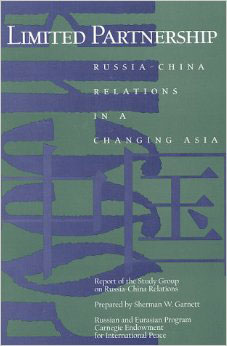
Based on the findings of a Study Group made up of American, Russian, and Chinese scholars, Limited Partnership explores the issues that will cement the budding relationship, including demilitarization, trade, and a shared view of regional and global issues.
Source: Washington, DC: Carnegie Endowment for International Peace, 1998
In April 1996, after over half a century of border disputes and deep-seated hostility, Russia and China entered into a "strategic partnership." The emergence of a Russia-China relationship will significantly affect international relations in a region already experiencing economic instability and political uncertainty.
Based on the findings of a Study Group made up of American, Russian, and Chinese scholars, Limited Partnership explores the issues that will cement the budding relationship, including demilitarization, trade, and a shared view of regional and global issues. It also discusses future challenges to strategic cooperation, such as the disparity in the economic growth of the two countries, Chinese migration, political instability in the Russian Far East, and diverging interests in East and Central Asia. After setting out various forms that the Russia-China relationship might take, the report examines the likely impact of these scenarios and offers recommendations for U.S. policy.
Note: The complete set of papers prepared for the Study Group can be found in Sherman Garnett's book, Rapprochement or Rivalry?
Carnegie does not take institutional positions on public policy issues; the views represented herein are those of the author(s) and do not necessarily reflect the views of Carnegie, its staff, or its trustees.
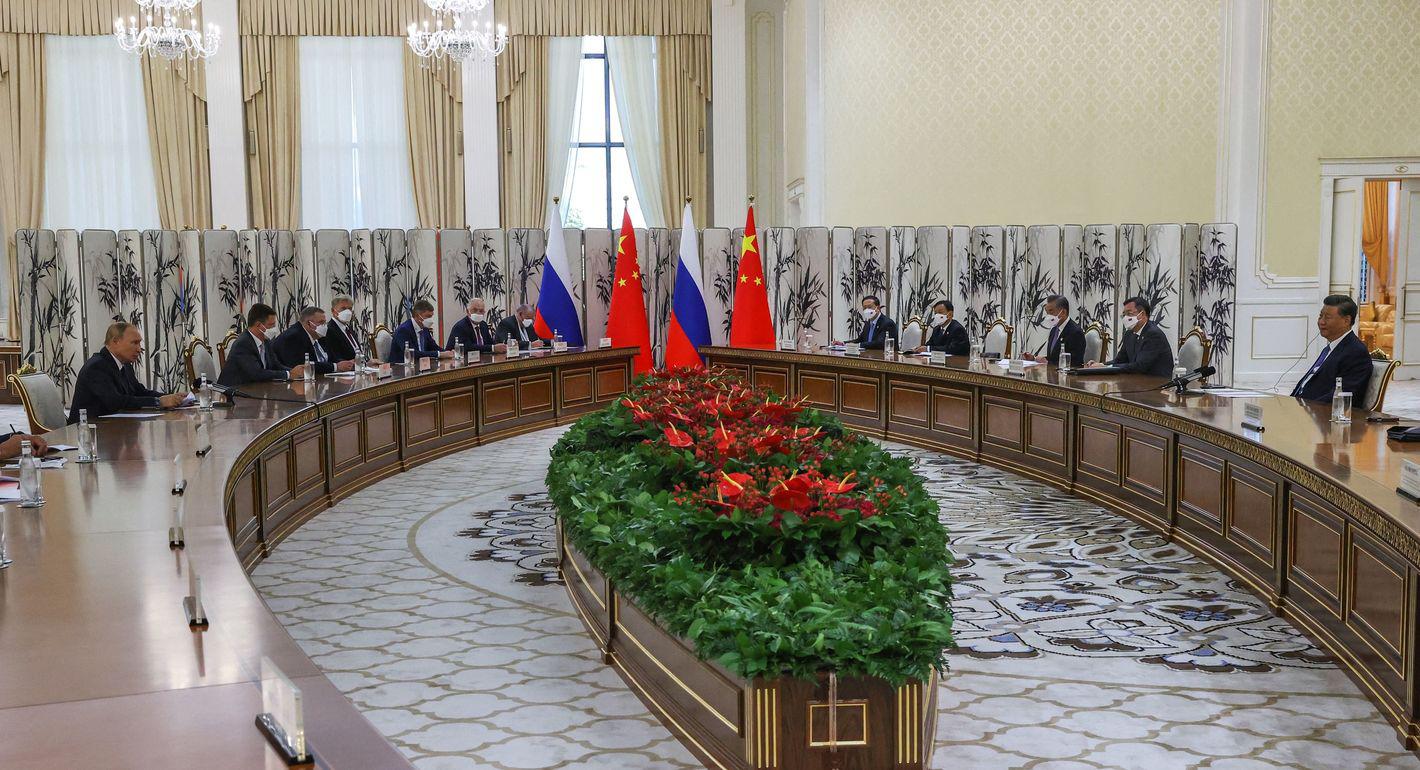
Russia has its Eurasian Economic Union, and China has its Belt and Road Initiative. For both projects, Central Asia is important.


Temur Umarov, Nargis Kassenova
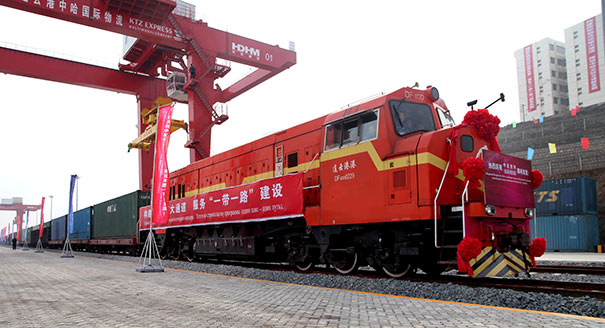
The internationalization of China, and of its companies in particular, is one of the most important phenomena of the beginning of the twenty-first century.
Philippe Le Corre

Consumed by domestic controversies and growing foreign policy crises in North Korea and the Middle East, the Trump administration has put little effort into developing a new policy approach towards Central Asia.

Paul Stronski
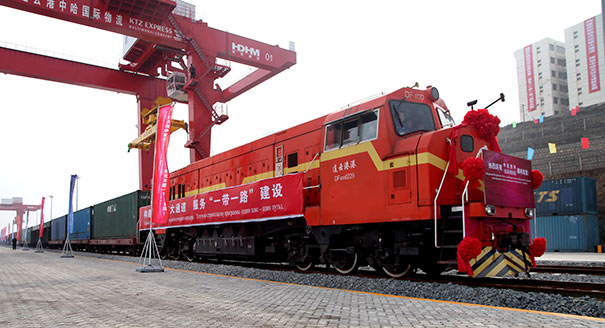
China hopes to use three strengths to make the Belt and Road Initiative a success: its large foreign exchange reserves, dominance in certain infrastructure fields, and unique forms of state backed project finance.

Evan A. Feigenbaum
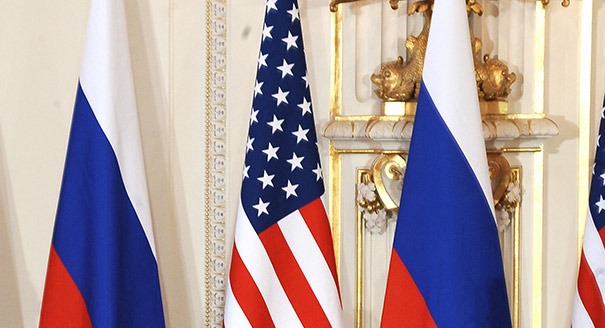
The new U.S. administration should avoid fueling unrealistic expectations of a breakthrough and instead seek incremental progress on specific topics based on a set of guiding principles.



Eugene Rumer, Richard Sokolsky, Andrew S. Weiss