

Paper
The Islamic State’s ideology is multifaceted and cannot be traced to one individual, movement, or period. Understanding it is crucial to defeating the group.
Hassan Hassan

REQUIRED IMAGE
U.N. Resolution 1284, adopted in December 1999, calls for the streamlining of economic sanctions and for their eventual suspension once UNMOVIC has reported that Iraq is cooperating with U.N. resolutions on dismantling its WMD. This resolution remains the legal basis for continuing to control Iraq's assets, but Iraq has refused to allow UNMOVIC on the ground, insisting that the sanctions should be lifted since it has disarmed to the extent called for by U.N. resolutions. U.N. Resolution 1284 places no limits on the volume of petroleum that Iraq can export for humanitarian needs.
This Carnegie analysis is taken from the Iraq chapter of Deadly Arsenals and is the final piece in a three part series.
U.N. Resolution 1284, adopted in December 1999, calls for the streamlining of economic sanctions and for their eventual suspension once UNMOVIC has reported that Iraq is cooperating with U.N. resolutions on dismantling its WMD. This resolution remains the legal basis for continuing to control Iraq's assets, but Iraq has refused to allow UNMOVIC on the ground, insisting that the sanctions should be lifted since it has disarmed to the extent called for by U.N. resolutions. U.N. Resolution 1284 places no limits on the volume of petroleum that Iraq can export for humanitarian needs.
While the sanctions against Iraq have not unraveled altogether, support in the Arab world and from European allies for them has eroded, and China and Russia are eager to resume economic ties with Iraq. An Anglo-American effort in the summer of 2001 to restructure the oil-for-food program failed to receive the support of the Security Council. While lifting most restrictions on Iraq's imports of civilian goods, the proposed resolution sought to diminish Saddam Hussein's ability to circumvent the U.N. escrow account; to tighten the embargo on dual-use technology that could aid Iraq's WMD program; and to continue the blockade on the sale of conventional arms. With Russia set to veto the resolution, the Security Council voted, instead, to continue the existing oil-for food-program.
Disturbing images of the effects of ten years of sanctions against Iraq, combined with escalating violence in Israel and the West Bank, have decisively shifted the sympathies of the "Arab street" to the once-pariah regime of Saddam Hussein. With the back drop of a collapsing Middle East peace process, sympathy for the Palestinian and Iraqi people has worked in Saddam Hussein's favor, even after September 11. Arab governments have found that their publics are in no mood to continue isolating Saddam Hussein. The United States has recognized that its political success in pursuing its policy toward Iraq is, at least in part, connected to the success of its policy in the Levant.
In public, at least, these governments, including U.S. allies in the region,
have begun to be circumspect in their support of the policy of sanctions and
no-fly zones. Among the conservative Arab Gulf states, all except Saudi Arabia
and Kuwait have flouted the sanctions and shown an interest in resuming ties
with Saddam Hussein's regime. Diplomatic and economic relations even between
Iraq and Syria have been restored for the first time since the 1990 Gulf War,
opening an oil pipeline that adds to Baghdad revenues from illegal oil sales.
Iraq also has an oil exchange program with Jordan and Turkey. The United States
hopes to reverse this trend with a new hard-line policy to remove Saddam Hussein
from power. By early 2002, it appeared that military action was all but certain,
hampered only by the continuing conflict in Afghanistan and near-war in Israel.
This Carnegie analysis is taken from the Iraq Chapter in Deadly Arsenals.
Additional Resources:
Click here to return to Proliferation News
Carnegie does not take institutional positions on public policy issues; the views represented herein are those of the author(s) and do not necessarily reflect the views of Carnegie, its staff, or its trustees.
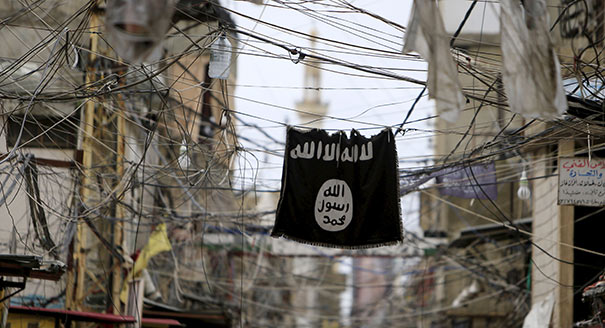
The Islamic State’s ideology is multifaceted and cannot be traced to one individual, movement, or period. Understanding it is crucial to defeating the group.
Hassan Hassan
The rapid rise of the Islamic State means core assumptions driving policy on Syria must be rethought.

Jessica Tuchman Mathews
The world can be an awfully dangerous and unpredictable place.


Thomas Carothers, Lina Khatib, Marwan Muasher, …
Given continuing sectarian strife and a rise in terrorist cells in Iraq, the U.S. invasion of the country could be a considered a military victory but is increasingly seen as the wrong political decision.

Zhang Chuanjie
No matter how long U.S. troops stay in Iraq, a stable power-sharing agreement will emerge only after all factions have tested each other’s strength and exhausted their desire to fight. Leaving Iraq is the right thing to do, for the U.S. and for Iraq.
Jessica Tuchman Mathews