

Paper
The nuclear relationship between China and the United States is increasingly shaped by widening perception gaps rather than deliberate strategic design.
Tong Zhao

REQUIRED IMAGE
On July 31, 2006 the United Nations Security Council adopted Resolution 1696, demanding that Iran “suspend all enrichment-related and reprocessing activities.” The resolution came after Iran had ignored a series of requests from the IAEA, the EU-3, and the United States for Iran to cease its enrichment program until its peaceful nature could be confirmed by the IAEA. Iran claimed that neither the IAEA nor any member of the international community had the right to prevent Iran from pursuing a domestic nuclear energy program. Resolution 1696 undermines the legal basis on which Iran has resisted suspension. As the international community awaits Iran’s response to the Security Council’s demands, it is important to understand this new legal context.
1696 was adopted after three years of negotiations between Iran and France, Germany and the United Kingdom failed to resolve outstanding questions regarding Iran’s compliance with its IAEA safeguard obligations and its Treaty on the Nonproliferation of Nuclear Weapons obligation under Article II “not to seek or receive assistance in the manufacture of nuclear weapons or other nuclear explosive devices.” Throughout these negotiations, Iran has been pressed to suspend uranium enrichment activities, as a confidence-building measure to facilitate negotiations over longer-term parameters to objectively guarantee that Iran’s nuclear activities are exclusively for peaceful purposes. Iran agreed as a voluntary, unilateral measure in November 2003 to suspend all enrichment and reprocessing activities as defined by the IAEA. It then intermittently broke the terms of the suspension until November 2004, when a more specific agreement was made with the EU-3. Iran then breached that agreement on August 10, 2005 when it removed the IAEA seals from its conversion plant in Esfahan in preparation for manufacturing UF6 gas to be enriched. (Read More)
On July 31, 2006 the United Nations Security Council adopted Resolution 1696, demanding that Iran “suspend all enrichment-related and reprocessing activities.” The resolution came after Iran had ignored a series of requests from the IAEA, the EU-3, and the United States for Iran to cease its enrichment program until its peaceful nature could be confirmed by the IAEA. Iran claimed that neither the IAEA nor any member of the international community had the right to prevent Iran from pursuing a domestic nuclear energy program. Resolution 1696 undermines the legal basis on which Iran has resisted suspension. As the international community awaits Iran’s response to the Security Council’s demands, it is important to understand this new legal context.
1696 was adopted after three years of negotiations between Iran and France, Germany and the United Kingdom failed to resolve outstanding questions regarding Iran’s compliance with its IAEA safeguard obligations and its Treaty on the Nonproliferation of Nuclear Weapons obligation under Article II “not to seek or receive assistance in the manufacture of nuclear weapons or other nuclear explosive devices.” Throughout these negotiations, Iran has been pressed to suspend uranium enrichment activities, as a confidence-building measure to facilitate negotiations over longer-term parameters to objectively guarantee that Iran’s nuclear activities are exclusively for peaceful purposes. Iran agreed as a voluntary, unilateral measure in November 2003 to suspend all enrichment and reprocessing activities as defined by the IAEA. It then intermittently broke the terms of the suspension until November 2004, when a more specific agreement was made with the EU-3. Iran then breached that agreement on August 10, 2005 when it removed the IAEA seals from its conversion plant in Esfahan in preparation for manufacturing UF6 gas to be enriched.
Iran has marshaled two main legal arguments in pursuing its nuclear policy. The most practical argument has been that its suspension of uranium enrichment is purely voluntary and not a legal obligation. The second, broader argument has concerned Article IV of the NPT, which states that “[n]othing in this Treaty shall be interpreted as affecting the inalienable right of all the Parties to the Treaty to develop research, production and use of nuclear energy…” Iran claims that Article IV provides legal protection against demands for it to suspend or otherwise forego uranium enrichment of any other nuclear activity that the IAEA cannot say conclusively is part of a nuclear weapon acquisition program.
While it remains to be seen whether or how UN Security Council Resolution 1696 will be enforced, the resolution itself renders Iran’s legal arguments hollow. Whatever the merits of these arguments before UN Resolution 1696, the resolution itself supersedes them.
After Iran broke its suspension of enrichment activities in August 2005, it justified this action by reminding the IAEA that the suspension had been voluntary and non-legally binding. Iran further argued that neither the NPT nor the IAEA statute provided a legal basis for requiring Iran to further suspend these activities. Legally, Iran was correct; the IAEA is not given the right under either the NPT or its own statute to require states to suspend fuel cycle activities.
However, UN Resolution 1696 itself created a legal obligation for Iran to suspend, rendering Iran’s earlier legal references moot. Under 1696 Iran is demanded to “suspend all enrichment-related and reprocessing activities.” Unlike the IAEA board requests of Iran to suspend such activities, this request is not voluntary and is legally-binding. According to Article 25 of the UN Charter, “members of the United Nations agree to accept and carry out the decisions of the Security Council in accordance with the present Charter,” meaning that Security Council resolutions are legally as powerful as the UN Charter itself.
And what of Iran’s “inalienable right” under NPT Article IV to nuclear energy development? Article 103 of the UN Charter clarifies this point without room for dispute: “In the event of a conflict between the obligations of the Members of the United Nations under the present Charter and their obligations under any other international agreement, their obligations under the present Charter shall prevail.” Resolution 1696 supersedes the privileges offered under the NPT.
Iran’s only resort to maintain some legitimacy in light of the resolution has been to declare the issue of its enrichment not a threat to international security and therefore outside of the jurisdiction of the Security Council. However, Article 39 of the UN Charter clearly states that it is the Security Council that “shall determine the existence of any threat to the peace,” which is exactly what it did by penning Resolution 1696.
Clearly, Iran has not responded positively to the imposition of a Security Council Resolution against its enrichment capacity. However, the future remains unwritten. It is interesting to note that throughout the dispute over Iran’s nuclear program, Tehran has continued to invoke international legal precedent to support its actions rather than brashly refusing any international responsibilities. For this reason, Resolution 1696, by severely weakening Iran’s claims of legitimacy, may be more than merely words on a page; it may, in effect, help write history.
Amy Reed is a Junior Fellow for Nonproliferation the Carnegie Endowment for International Peace.
Related Links:
Text of Resolution 1696 (2006) Adopted by Vote of 14 - 1
UN Security Council, July 31, 2006
Amy Reed
Former Junior Fellow, Nonproliferation Program
Carnegie does not take institutional positions on public policy issues; the views represented herein are those of the author(s) and do not necessarily reflect the views of Carnegie, its staff, or its trustees.

The nuclear relationship between China and the United States is increasingly shaped by widening perception gaps rather than deliberate strategic design.

Tong Zhao
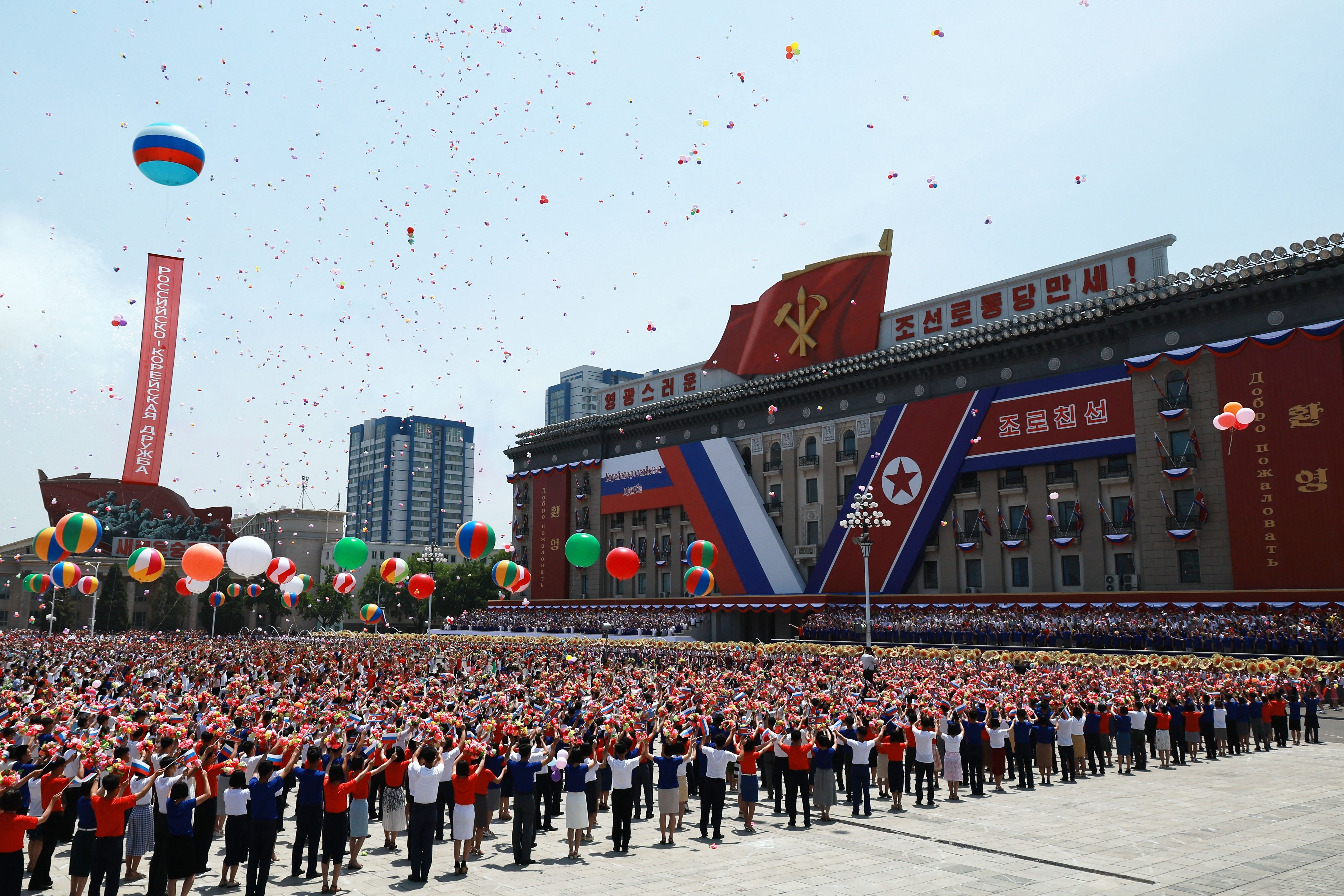
Faced with an increase in strategic maneuvering by Moscow and Pyongyang, Beijing will not sit idly by and allow Putin and Kim to shape the security environment on its behalf.
Tong Zhao
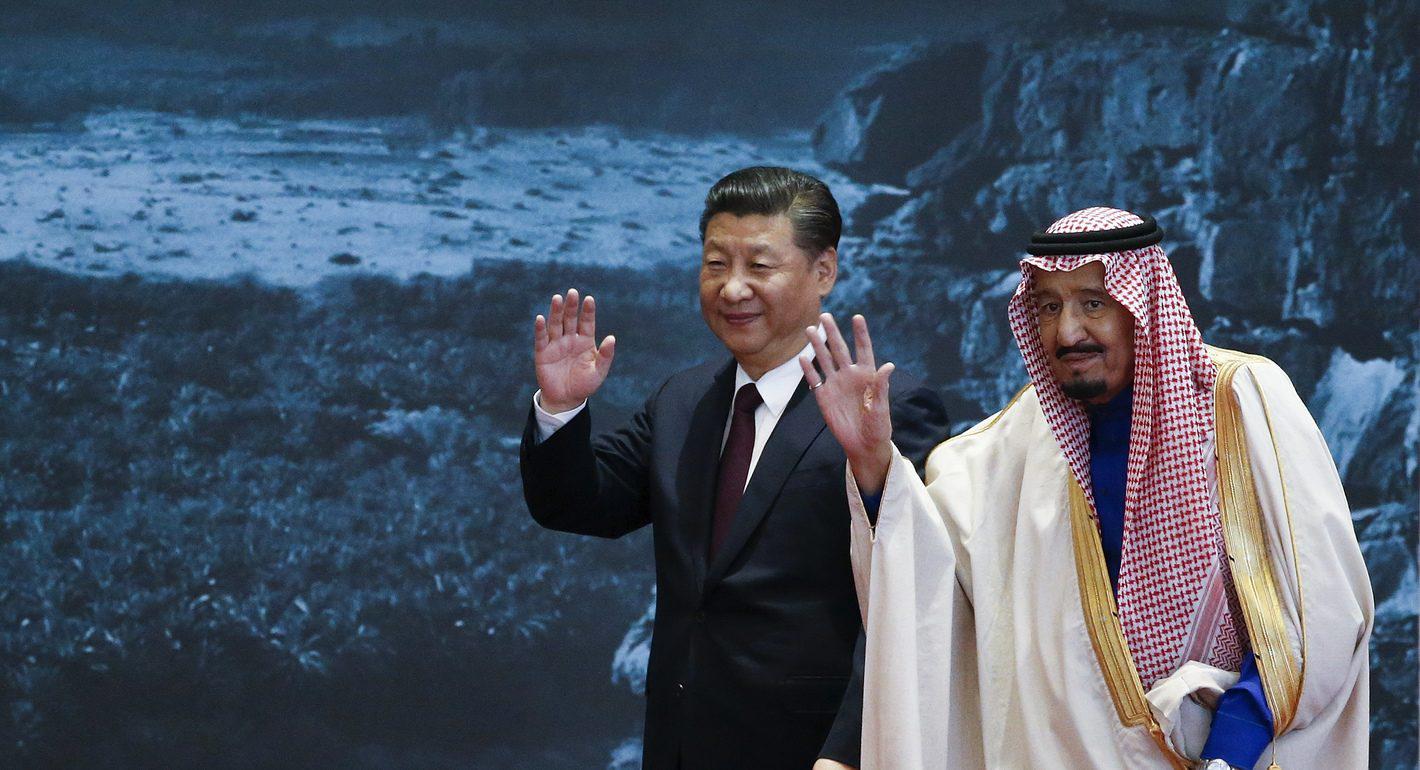
The advantage that China has over other global powers, especially America, is that its foreign policy is closely aligned with those of many of the Middle Eastern countries.


Jin Liangxiang, Maha Yahya, Hesham Alghannam
China views U.S. missile defense as posing a greater potential threat to China’s nuclear deterrent than other U.S. military capabilities.
Tong Zhao, Dmitry Stefanovich
“It’s not so clear how we’re going to get out of this.”

Paul Haenle, Philippe Le Corre