

Commentary
Nathan J. Brown

REQUIRED IMAGE
Nathan Brown examines how Jordan’s Islamic movement gained political legitimacy, but repackaged its strong beliefs in legal organizations that have a broad and deep reach into Jordanian society. As a consequence, the Jordanian regime and Islamic movement now find themselves debating whether or not this peaceful model is sustainable, and if confrontation is inevitable.
Over the past 50 years, Jordan’s rulers have encouraged Islamists to run for office, but within strict limits to discourage religious extremism. Historically, Islamist leaders have chosen to participate in the system rather than work to overthrow the regime. As a result, the Jordanian Muslim Brotherhood and the government have come to regard each other as political rivals, rather than implacable adversaries. Yet the recent pressure of regional events threatens to unravel the peace, as both sides consider whether to escalate, or contain, growing tensions.
Understanding this dynamic in Jordan helps answer some of the most critical questions about regional democratic reform: Can Islamist political parties operate within the boundaries of a democratic system? Does participation breed moderation?
In this new Carnegie Paper, Jordan and Its Islamic Movement: The Limits of Inclusion?, Nathan Brown examines how Jordan’s Islamic movement gained political legitimacy, but repackaged its strong beliefs in legal organizations that have a broad and deep reach into Jordanian society. As a consequence, the Jordanian regime and Islamic movement now find themselves debating whether or not this peaceful model is sustainable, and if confrontation is inevitable.
Using the Islamic Action Front (IAF)—the Muslim Brotherhood’s political party in Jordan—as a case study, Brown finds that “participating in a fully functioning democratic political system may indeed have a moderating effect on Islamist movements over the long term, but that opportunity is hardly likely to be offered in most Arab states. The most that will be available will be constrained competition in a partially liberalized system.”
Nathan Brown is a senior associate in the Middle East Program at the Carnegie Endowment, and co-author of the Carnegie Paper Islamist Movements and the Democratic Process in the Arab World: Exploring Gray Zones.

Nonresident Senior Fellow, Middle East Program
Nathan J. Brown, a professor of political science and international affairs at George Washington University, is a distinguished scholar and author of nine books on Arab politics and governance, as well as editor of five books.
Recent Work
Nathan J. Brown
Nathan J. Brown
Carnegie does not take institutional positions on public policy issues; the views represented herein are those of the author(s) and do not necessarily reflect the views of Carnegie, its staff, or its trustees.
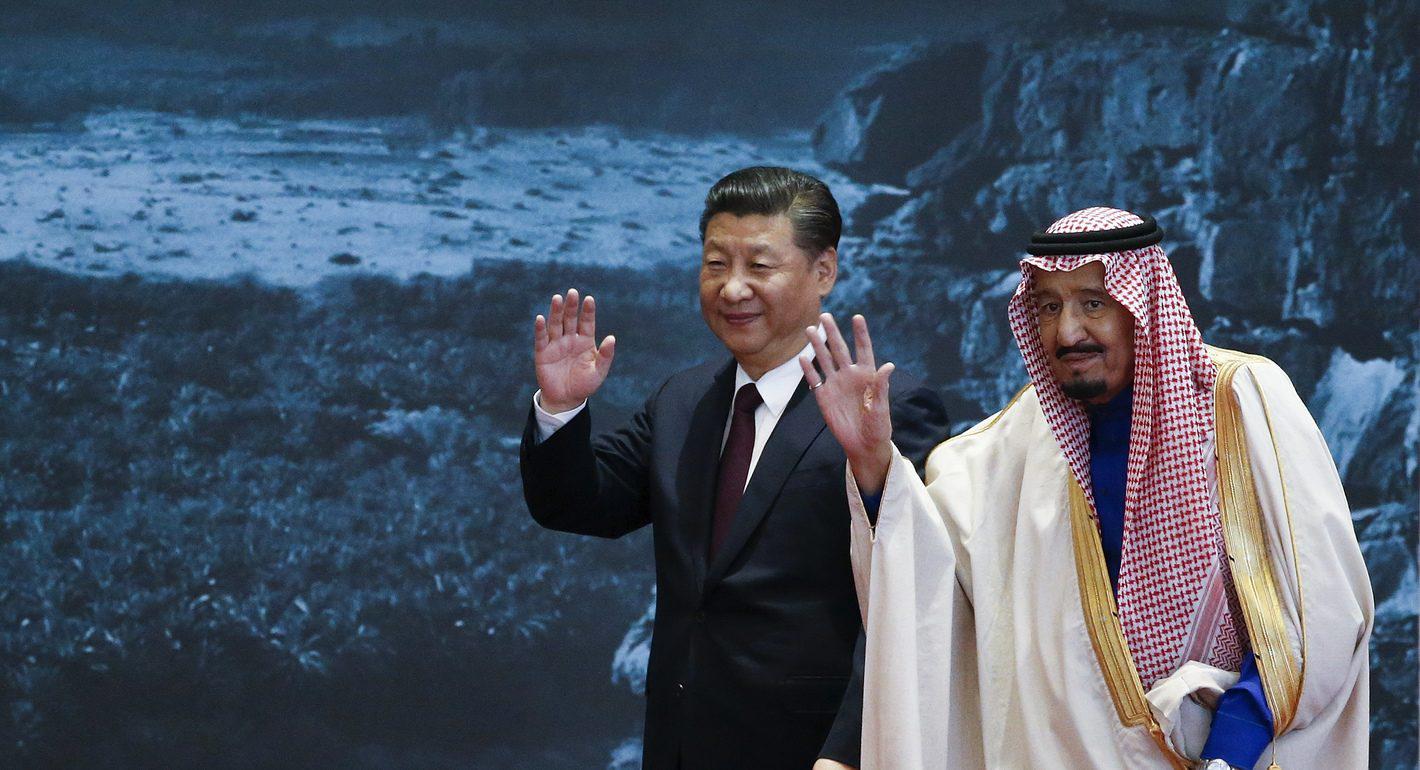
The advantage that China has over other global powers, especially America, is that its foreign policy is closely aligned with those of many of the Middle Eastern countries.



Jin Liangxiang, Maha Yahya, Hesham Alghannam

Transactional relationships are stable but can be shallow.


Paul Haenle, Maha Yahya, Benjamin Ho, …

It’s about managing oil prices, bread prices, and strategic partnerships.



Amr Hamzawy, Karim Sadjadpour, Aaron David Miller, …

The murder of George Floyd has underscored the deep inequities that have long plagued American society. In a note to the Carnegie community, Bill Burns reflects on Carnegie’s commitment to build a more just future here at home and around the world, without which peace will remain beyond our grasp.

William J. Burns

While the world hoped this pandemic might lead to more cooperation between these two great powers, American and Chinese leaders instead fell into a blame game and allowed their increasing suspicions to guide their decision-making.
Lyu Jinghua