

Commentary
In the latest Five-Year Plan, the Chinese president cements the shift to an innovation-driven economy over a consumption-driven one.
Damien Ma

REQUIRED IMAGE
As globalization spread over the last twenty years, migration expanded less rapidly than either trade or foreign investment. Yet migration remains contentious. The net impact of migration is positive for the migrants and high-income countries, and more gains are feasible. Developing countries, however, may suffer from growing brain-drain.
As globalization spread dramatically over the last twenty years, migration expanded less rapidly than either trade or foreign investment. Yet migration remains contentious, often being blamed for income stagnation, even as some economists praise it as the fastest route to raising world incomes. The reality is more limited and nuanced.
Money sent by migrants to their home countries can promote rapid growth in developing regions, and the withdrawal of laborers can induce higher wages or less underemployment for those left behind. However, the flow of money can dry up quickly and unexpectedly, as has happened recently in Mexico.
Robert Lucas is a professor of Economics at Boston University. His research has included work on internal and international migration, employment and human resources, income distribution and inter-generational inequality, international trade and industry, the environment, and sharecropping. He has served as chief technical adviser to the Malaysia Human Resource Development Program, and director of undergraduate studies and the M.A. program in Economics at Boston University. He is also a Research Affiliate at the MIT Center for International Studies. His latest book, International Migration and Economic Development: Lessons from Low-Income Countries, was published by Edward Elgar Press in 2005.
Robert E.B. Lucas

In the latest Five-Year Plan, the Chinese president cements the shift to an innovation-driven economy over a consumption-driven one.

Damien Ma

Regulation, not embargo, allows Beijing to shape how other countries and firms adapt to its terms.

Alvin Camba

Rather than climate ambitions, compatibility with investment and exports is why China supports both green and high-emission technologies.

Mathias Larsen
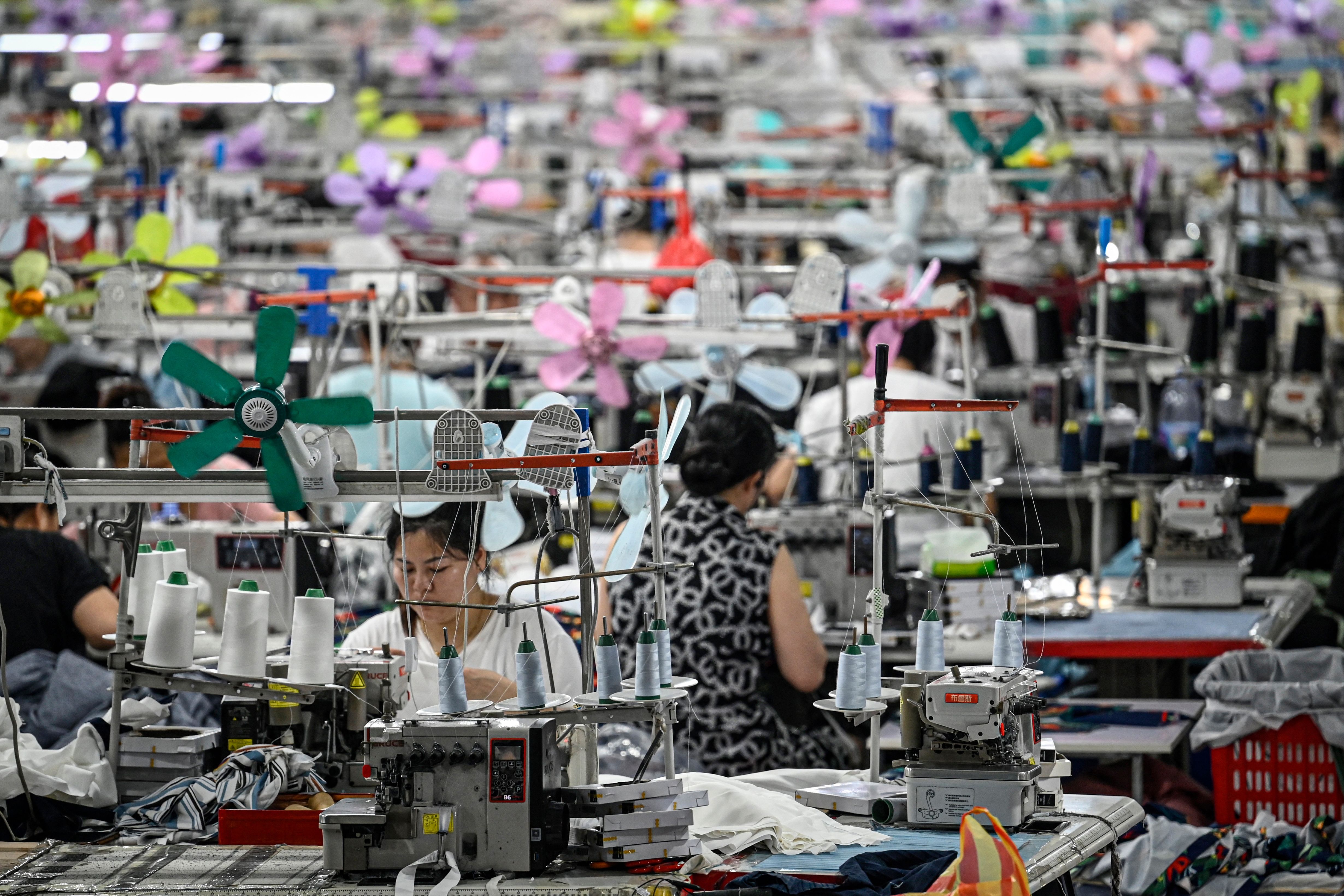
“Involution” is a new word for an old problem, and without a very different set of policies to rein it in, it is a problem that is likely to persist.

Michael Pettis

While China's investment story seems contradictory from the outside, the real answers to Beijing's high-quality growth ambitions are hiding in plain sight across the nation's cities.

Yuhan Zhang