

Commentary
In the latest Five-Year Plan, the Chinese president cements the shift to an innovation-driven economy over a consumption-driven one.
Damien Ma
Source: Getty
While developments in the manufacturing sector and financial markets point to stabilization, labor market conditions continue to worsen in major economies.
The Real Economy: Output, GDP, and Inflation
While developments in the manufacturing sector and financial markets point to stabilization, labor market conditions continue to worsen in major economies.
The U.S.’ June employment report dashed hopes that deterioration in the labor market is moderating. Unemployment losses worsened in June, with nonfarm payrolls falling by 467 thousand jobs and the unemployment rate rising 0.1 percentage points to 9.5 percent. The service sector, which includes banks, insurance companies, retailers, and restaurants, lost 244 000 jobs. Construction spending fell by 0.9 percent in May, owing to a weak residential real-estate market, following April’s revised 0.6 percent gain. The Conference Board’s consumer confidence index fell unexpectedly to 49.3 in June from 54.8 in May, reflecting a weak labor market and rising energy costs.
Other U.S. economic data were more encouraging. The manufacturing sector shrank at its slowest pace since August 2008, as the Institute for Supply Management’s factory index rose to 44.8 in June from 42.8 in May. Pending home sales rose by 0.1 percent in May (m/m), following a 7.1 percent jump in the index in April.
Labor market conditions in the euro-zone continued to deteriorate, as the unemployment rate rose to 9.5 percent in May 2009, up from 9.3 percent in April and the highest in the euro-zone since the establishment of the currency in 1999. The region’s inflation rate turned negative in June, with prices decreasing 0.1 percent (y/y). According to Eurostat, the fall in prices reflects sharply lower energy and food costs. The euro-zone Purchasing Manager’s Index (PMI) rose to 42.6 in June, up from 40.7 in May, signaling a further improvement in the pace of contraction in the manufacturing sector.
Industrial production in Asia continued to expand. Japan’s industrial output rose by 5.9 percent in May, as companies continued to rebuild their run-down inventories over the past few months. However, unemployment rose to 5.2 percent in May, up from 5 percent in the previous month. Meanwhile, China’s manufacturing expanded for the fourth month, after its PMI rose to 53.2 in June from 53.1 in May.
Brazil’s industrial output registered a gain for the fifth consecutive month, rising 1.3 percent (m/m) in May.
Economic Policy
The European Central Bank (ECB) kept its key interest rate steady at 1 percent. The Bank also signaled that it has no immediate plans to cut interest rates. The Bank of England kept its rate unchanged at a record low of 0.5 percent and decided to continue with its asset purchase scheme. Meanwhile, Iceland's central bank lowered its key rate by 100 basis points to 12 percent.
The Russian central bank followed suit, cutting its refinancing rate by 50 basis points to 11.5 percent. Russia’s international reserves grew $3.4 billion last week after a rise of $500 million in the previous week, as capital outflows stopped and the central bank refrained from currency-market intervention. Russia’s foreign currency reserves have now increased by $34.4 billion since the low of $374 billion hit in March.
Financial markets
Global equity markets ended the week lower, on worse-than-expected U.S. unemployment data. In the U.S., the S&P 500 index fell about 2.5 percent for the week. The Dow Jones and the NASDAQ were down 1.9 percent and 2.3 percent, respectively.
In Europe, the FTSE 100, the German DAX and the French CAC fell by 0.1 percent, 1.4 percent and 0.3 percent, respectively. In Asia, the Nikkei 225 closed down by 0.6 percent.
Global bonds had a mixed performance last week. The yield on U.S.10-year treasury bills fell to 3.5 percent, down 10 basis points over the week. In Europe, the UK 10-year bond was up 6 basis points to 3.74 percent. Japan’s 10-year bond yield fell modesty by 6 basis points.
In the foreign exchange market, the dollar strengthened modestly against the euro and UK pound. It ended at $1.40 and $1.63 against the euro and the pound, up 0.43 percent and 1 percent, respectively, from the week before. The dollar was unchanged against the Japanese yen at ¥96.
Carnegie does not take institutional positions on public policy issues; the views represented herein are those of the author(s) and do not necessarily reflect the views of Carnegie, its staff, or its trustees.

In the latest Five-Year Plan, the Chinese president cements the shift to an innovation-driven economy over a consumption-driven one.

Damien Ma

Rather than climate ambitions, compatibility with investment and exports is why China supports both green and high-emission technologies.

Mathias Larsen
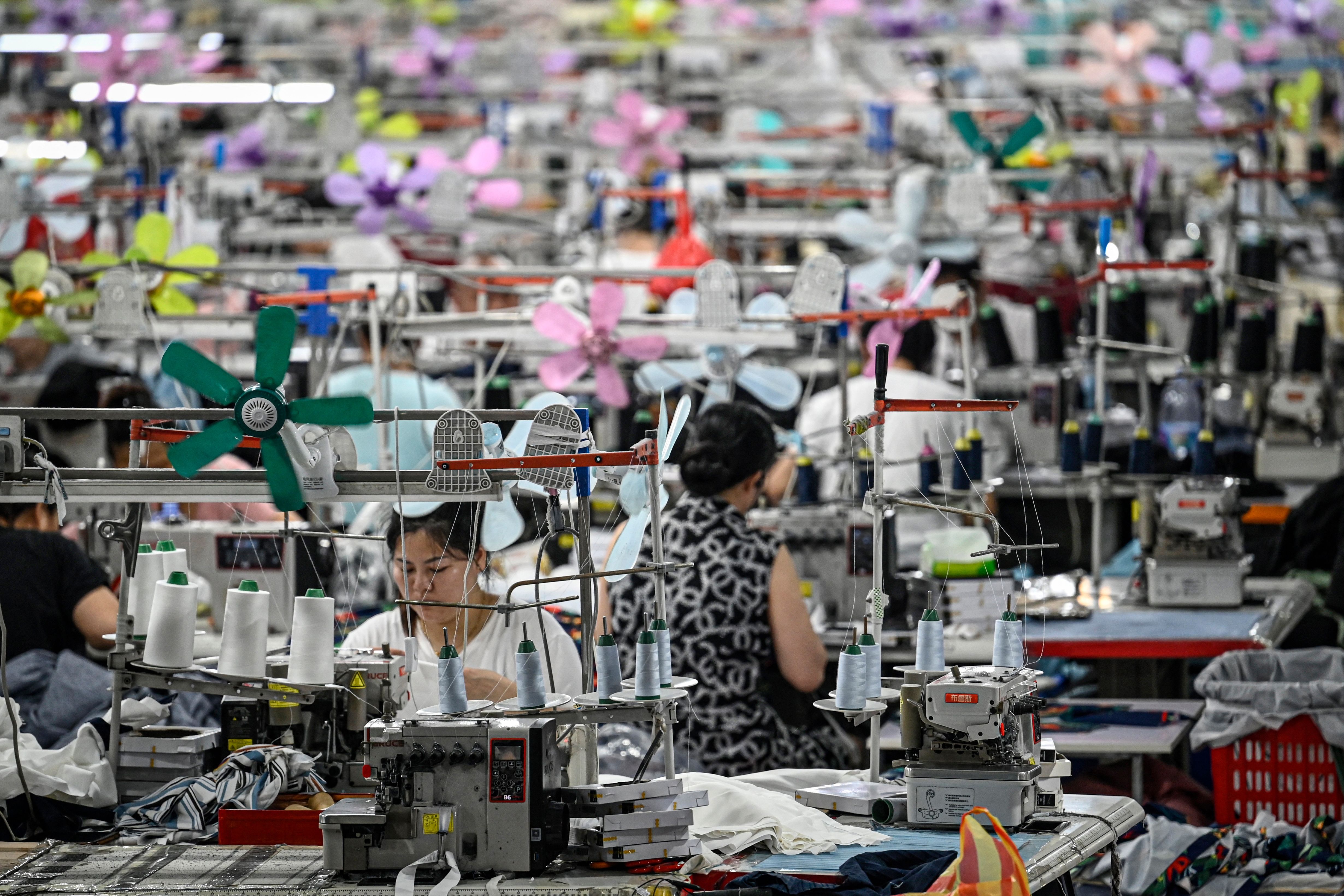
“Involution” is a new word for an old problem, and without a very different set of policies to rein it in, it is a problem that is likely to persist.

Michael Pettis

While China's investment story seems contradictory from the outside, the real answers to Beijing's high-quality growth ambitions are hiding in plain sight across the nation's cities.

Yuhan Zhang
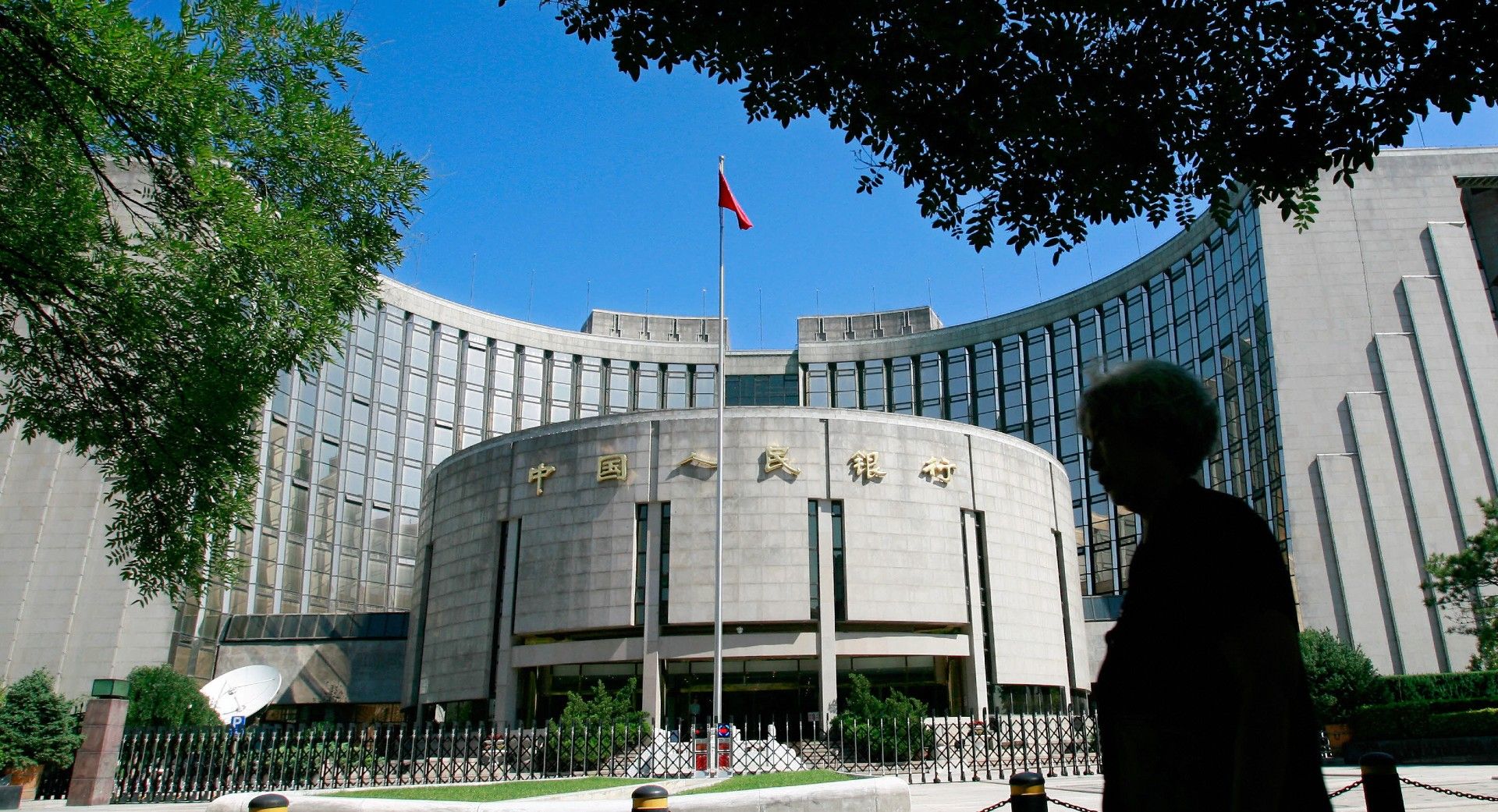
China's stimulus addiction cannot go on forever. Beijing still has policy space to clean up the country's massive debt issue, but time is running short.
Michael Pettis