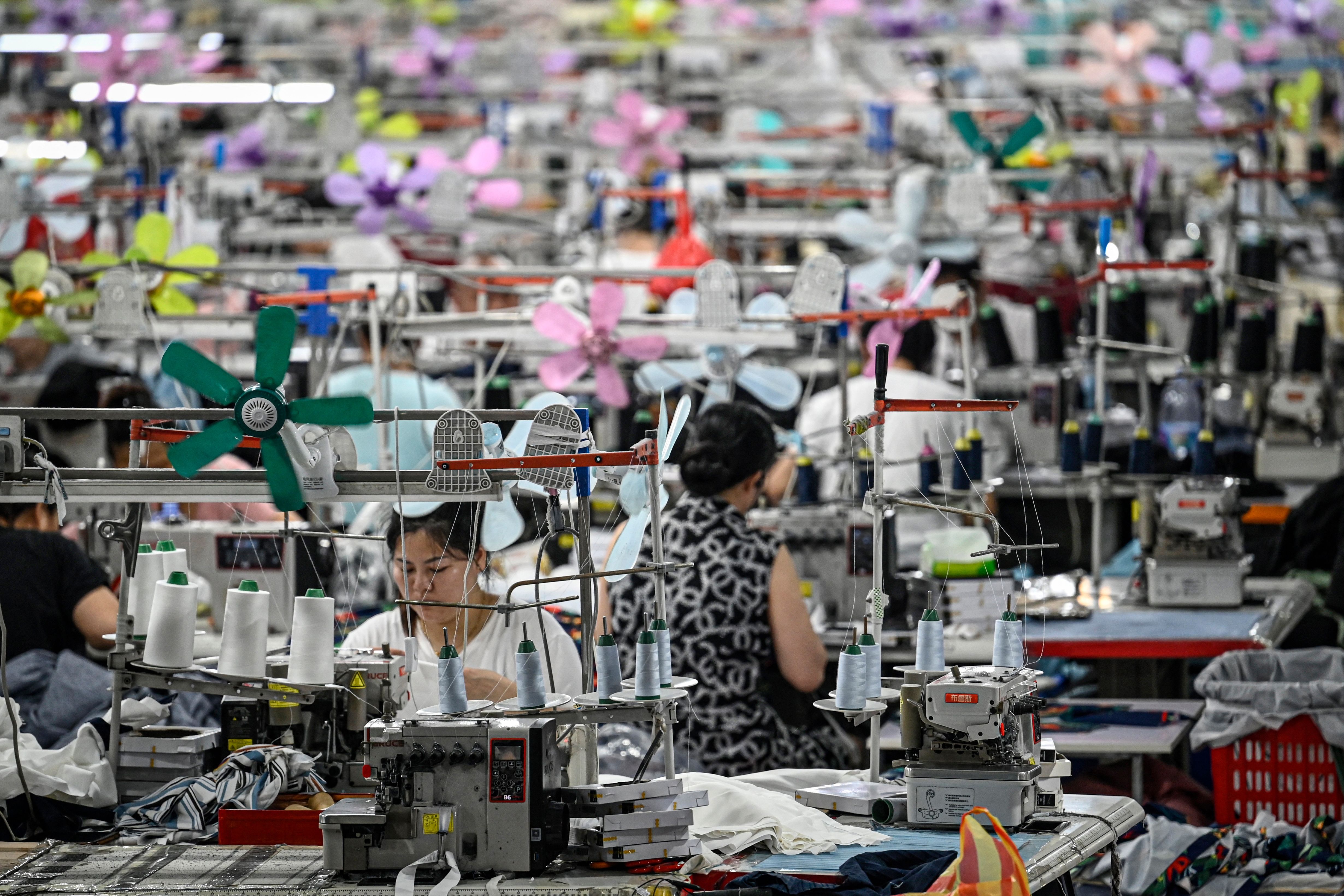
As demand indicators continue to improve and manufacturing activity increases, the evidence is mounting that the world economy will return to growth this quarter, despite some persisting weaknesses.
Link Copied
Published on Sep 25, 2009
As world leaders concluded discussions of the world economy at the G20 summit in Pittsburgh, recent economic data confirmed that the recovery is gaining traction. Rising manufacturing activity and improving demand indicators, such as retails sales, consumer confidence, housing prices, and inventory levels, reinforce expectations that the global economy will return to growth this quarter. However, important weaknesses still persist, and policy makers must follow through with their pledges to continue economic support until the recovery strengthens.
Consumer demand suggests global economy is recovering
Consumer demand data provided evidence of a return to growth. Improvements in retail sales and consumer confidence, as well as stabilization in the housing market, suggested that consumer demand is recovering. As the pace of job losses slows and equity markets continue to gain, consumer confidence will resume its upward trend.
In China, retail sales jumped by 15.4 percent (y/y) in August, the highest increase since the beginning of the year. In the United States, where consumer spending accounts for 70 percent of the economy, retail sales rose by 2.7 percent (m/m) in August, following a 0.2 percent (m/m) fall in July. Still, retail sales were down 5.3 percent from a year ago. UK retail sales increased by 2.1 percent (y/y) in August.
The U.S. Reuters/University of Michigan Index of Consumer Sentiment rose to 73.5 in September from 65.7 in August, well above the 70.3 a year ago. The ZEW Indicator of German Economic Sentiment rose by 1.6 points to 57.7 points in September, its highest level since April 2006.
The pace of job losses also appears to be moderating as the economy pulls out of the recession. U.S. initial claims for jobless insurance dropped by 21,000 to 530,000 for the week ending September 19.
Housing markets in the United States and the UK, which were among the earliest to be hit, continued to stabilize. U.S. housing starts rose by 1.5 percent (m/m) to an annualized 598,000 in August, the highest in nine months. Permits to build new homes also increased by 2.7 percent (m/m) to an annualized 579,000 in August. U.S. home prices rose 0.3 percent in July (m/m). New home sales also ticked up by 0.7 percent last month to an annual rate of 429,000.Existing home sales, however, fell 2.7 percent in August compared with a 7.2 percent rise in July. UK house prices were up 0.6 percent (m/m) in September.
U.S. household net worth, bolstered by the continued rally in the stock markets, rose by about $2 trillion in the second quarter, the first quarterly gain in two years.
More evidence emerges that business investment is improving in Europe and United States
A sharp pick up in orders for consumer durable and capital goods and moderation of inventory reductions suggest that the recovery of the manufacturing sector may provide a significant boost to GDP.
The Euro area’s new orders for durable consumer goods increased by 5.6 percent in July (m/m), while capital goods grew by 2.9 percent (m/m).
U.S. business inventories decreased by 1 percent in July, the eleventh consecutive monthly decline. Down 17.8 percent from a year ago, they are at the lowest level since March 2006, indicating that manufacturing may pick up in the coming months as retailers begin to replenish their inventories.
Chinese fixed asset formation, which measures purchases of capital goods and investment, jumped 33 percent from January to August compared to the same period last year, suggesting acceleration in China’s economic recovery.
Net exports offer boost to GDP in US and Europe
An improvement in global trade balances, which helped stabilize world GDP in the second quarter, will add to GDP growth in the third quarter.
World trade rose by 3.5 percent (m/m) in July, the strongest rise in more than 5 years. July exports were up 3.5 percent (m/m) in the U.S., 5. 7 percent (m/m) in euro area, and 3.7 percent (m/m) in Asia. However, world trade was still 15.9% below its peak in April 2008.
The Euro area’s trade balance recorded a surplus of $18.5 billion in July, the largest in seven years. Japan posted a trade surplus of $2 billion in August, the seventh consecutive monthly trade surplus. China's trade balance recorded a surplus of $15.70 billion in August, $5 billion more than in July.
The U.S. current account deficit narrowed further in the second quarter from $104.5 billion to $98.8 billion, declining to 2.8 percent of GDP, its lowest level since 1999.
Worldwide production improves further
Production continues to improve in the United States, on further signs that the global economy is recovering, but world industrial production remains 8.5 percent below its peak in March 2008.
U.S. industrial production rose for the second consecutive month, increasing by 0. 8 percent (m/m) in August, following a 0.5 percent (m/m) rise in July.
The Euro area’s industrial production fell by 0.3 percent (m/m) in July, but the services Purchasing Manager’s Index (PMI) reached 50.6, topping 50, the threshold between expansion and contraction, for the first time in 16 months.
U.S. equity markets reached their highest levels in 2009 this week, but many analysts expect the impressive gains since March lows to moderate for the rest of the year.
Policy makers note that recovery is underway, but hold rates steady
The U.S. Federal Open Market Committee kept its federal funds rate target at 0 – 0.25 percent and reaffirmed its intention to hold its rate low “for an extended period.” Though Norway’s Norges Bank also maintained its key rate at 1.25 percent, central bankers indicated they may raise the rate as early as next month.
The Fed will extend its $1.25 trillion mortgage backed securities purchase program into the first quarter of 2010, while Germany plans to cut its fourth-quarter debt sales by 22 percent.
For more information on policy this week, see our G20 commentary.
This analysis was produced by the editorial staff of the International Economic Bulletin, including Shimelse Ali, Vera Eidelman, Bennett Stancil, and Uri Dadush.
Carnegie does not take institutional positions on public policy issues; the views represented herein are those of the author(s) and do not necessarily reflect the views of Carnegie, its staff, or its trustees.
The Plaza Accord was not an externally imposed punishment of Japan but part of a broader restructuring that Japanese economists and policymakers themselves recognized was necessary. Its effects were undermined, however, when Tokyo responded to the resulting slowdown with policies that exacerbated investment, credit expansion, and the very imbalances the adjustment was intended to resolve.
China’s banking crisis in the 2000s was resolved by transferring the costs to households through financial repression—a decision that recapitalized the banks while exacerbating the structural imbalances that continue to shape the Chinese economy today.