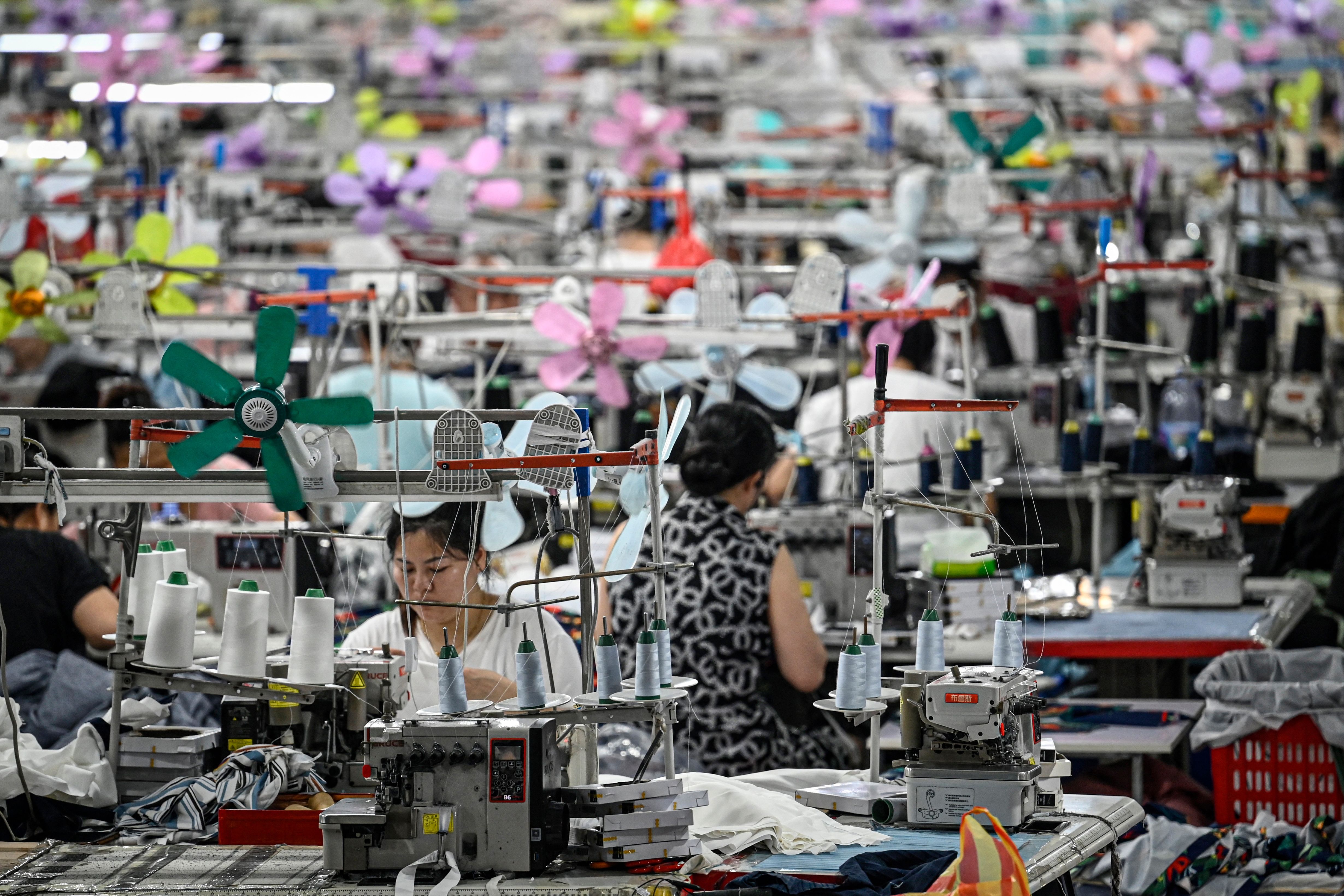
Investors fled from developing countries for U.S. and European safe havens during the crisis, but the rapid recovery in emerging economies has sparked a potentially dangerous rush of capital inflows.
Link Copied
Published on Nov 10, 2009
During the financial crisis, capital flows to emerging markets plummeted as investors fled riskier markets for U.S. and European safe havens. As emerging markets have recovered, many of them faster than advanced economies, investors are moving capital back to developing economies. However, flows remain significantly depressed relative to 2007, the last complete year before the crisis erupted.
A recent note by the Institute of International Finance (IIF) details these trends in emerging market capital flows, providing an improvement on IMF and World Bank forecasts.
Strengthening Flows
Capital flows to emerging markets have been surging since they hit March lows, as improving economic prospects in the developing world have encouraged both foreign direct investment (investment in productive assets in which the investor has an ownership stake) and bond and equity investment.
According to the Economist Intelligence Unit, 2009 will mark the first time emerging economies attract more foreign direct investment (FDI) than developed economies. However, total FDI in 2009 is expected to be $1 trillion, less than half of total FDI in 2007.
Foreign investment surged in China, climbing 18.9 percent in September from a year earlier, following a 7 percent jump in August.
Emerging market international sovereign bond issuance soared to $50 billion since March. By contrast, there was only one emerging market deal in 2008 after the collapse of Lehman Brothers in September.
As demand for riskier assets has increased, the extra yield investors demand to own emerging markets bonds instead of U.S. Treasuries has narrowed to 328 basis points (one basis point represents 1/100 of a percentage point), from 700 basis points in early March.
Benchmark equity indexes in every major emerging market have rallied. The MSCI emerging market equity index has risen 68 percent this year.
Surging equity markets in emerging economies have attracted $63.1 billion in inflows this year, higher than the record $52.7 billion in 2007. This year’s $32.3 billion of equity inflows into the BRICs—Brazil, Russia, India and China—has already surpassed the previous high of $23.6 billion in 2006.
In October alone, investors pumped $2.44 billion in to Brazilian equities.
Asia Leads
Asia and Latin America have benefit from stabilizing markets and recovering portfolio inflows. Financial stresses have eased in Eastern Europe, though the region remains the most affected by the crisis.
The IIF forecasts net private flows to emerging Asia to rise to $191 billion in 2009 and $273 billion in 2010, from $171 billion in 2008 and $422 billion in 2007. The main turnaround has occurred in investment in equities, from sizeable net outflows in 2008 ($57 billion) to net inflows in 2009 ($51 billion).
Net private inflows in emerging Latin American markets will be about $100 billion in 2009, with five countries—Brazil, Chile, Colombia, Mexico and Peru—accounting for 92 percent of the total net inflow. Net private flows to this region were $132 billion in 2008 and $228 billion in 2007.
Emerging Europe is still deeply affected by the strains of the crisis. The absolute decline in private flows has been extreme: from a peak of $446 billion in 2007, net inflows are projected to fall to $20 billion in 2009. This decline is equivalent to about 7 percent of GDP per year for 2008-09.
Improvements Expected to Persist
Improvements in bond and equity markets are expected to be maintained, though weaknesses still persist.
The IMF reports that, after falling to $5.7 billion in the fourth quarter of 2008, $31.4 billion of bonds were issued in the first quarter and $47 billion were issued in the second quarter of 2009. Bond issuance through September is still 39 percent below the same period in 2008, suggesting that there is room for additional improvement.
However, this improvement has come largely from public sector bond issuance. Issuance of sub-investment grade bonds, or those perceived as high risk, has declined enormously, leaving many banks and corporations in emerging markets with fewer options to find financing.
According to the IIF, net inflows of portfolio equity to emerging markets will reach $82 billion in 2009, a huge turnaround from the net outflow of $82 billion in 2008.
After a period of almost complete inactivity, initial public offerings (IPOs) picked up in July, indicating that corporations are beginning to regain faith in emerging equity markets.
Capital flows are expected to continue to rebound through 2010, though they will remain below the 2007 peaks.
The IIF predicts net private capital flows to emerging markets to rise by 92 percent, from $349 billion in 2009 to $672 billion in 2010, although this will still be below the $1.25 trillion of inflows in 2007.
Foreign direct investment is expected to improve from $343 billion to $459 billion, nearly returning to the 2007 level of $500 billion.
Risks of a Bubble
Countries that have most successfully emerged from the recession are now facing the risk of asset bubbles and currency appreciation as liquidity from slowly recovering countries searches for a destination. Record low U.S. dollar short-term interest rates and the possibility of further dollar decline are underpinning a large dollar “carry trade,” borrowing in dollars to fund punts on emerging market assets. Policy makers are looking to a variety of responses, from taxes in specific sectors to capital controls.
Signs of asset bubbles are already emerging, particularly in Asia. Housing prices are soaring in Hong Kong and Singapore, and prices in China rose at the fastest pace in a year in September.
Currency appreciation pressure is rising in emerging countries. The Brazilian real performed better against the U.S. dollar than any other major currency this year, gaining 36 percent and threatening international competitiveness.
Policy makers are trying to balance maintaining international competitiveness with quelling asset bubbles.
China is considering plans to reduce leverage ratios, particularly in the real estate sector, in an attempt to prevent an asset bubble from developing.
Brazil imposed a 2 percent tax on capital inflows on October 20, and other Latin American countries may follow suit. The IMF, fearing that rising capital inflows now pose a bigger threat than capital controls, no longer opposes such action.
Experience suggests that risks of overheating and capital flow reversals will escalate once monetary policy in the industrial countries begins to tighten again.
Elsewhere, equity markets benefited from strong data in the Euro-area. Indicators in the United States were mixed.
U.S. productivity surged 9.5 percent in the third quarter, the largest gain since 2003. U.S. unemployment hit 10.2 percent in October, up from 9.8 percent in September.
The Dollar Index fell 1.7 percent from a week ago to 75.05 as the Euro strengthened.
Industrial output in Germany rose 2.7 percent in September (m/m) and exports increased 3.8 percent in that same period.
The Dow, Nasdaq, and S&P500 are all up from a week ago, 4 percent, 4.6 percent, and 4.2 percent respectively.
The G20 Finance Ministers confirmed their intention to continue stimulus policies in the foreseeable future.
Looking Ahead
Several major economies in Europe will release initial GDP estimates on Friday, November 13, including Germany, France, Italy, and the European Commission’s estimate for the European Union.
This analysis was produced by the editorial staff of the International Economic Bulletin, including Shimelse Ali, Vera Eidelman, Bennett Stancil, and Uri Dadush.
Carnegie does not take institutional positions on public policy issues; the views represented herein are those of the author(s) and do not necessarily reflect the views of Carnegie, its staff, or its trustees.
The Plaza Accord was not an externally imposed punishment of Japan but part of a broader restructuring that Japanese economists and policymakers themselves recognized was necessary. Its effects were undermined, however, when Tokyo responded to the resulting slowdown with policies that exacerbated investment, credit expansion, and the very imbalances the adjustment was intended to resolve.
China’s banking crisis in the 2000s was resolved by transferring the costs to households through financial repression—a decision that recapitalized the banks while exacerbating the structural imbalances that continue to shape the Chinese economy today.