• Commentary
  • Research
  • Experts
  • Events
Carnegie China logoCarnegie lettermark logo
Five Alternatives that Make More Sense than Offshore Oil

Source: Getty

Paper

Five Alternatives that Make More Sense than Offshore Oil

Offshore oil reserves are too small to significantly impact world oil prices or U.S. reliance on foreign oil. Alternatives to offshore drilling exist and could maximize long-term environmental, economic, and security gains.

Link Copied
By Whitney Angell Leonard
Published on Nov 3, 2009

Additional Links

Full Text

Proponents of offshore oil drilling ignore reality: offshore oil reserves are too small to significantly impact world oil prices or U.S. reliance on foreign oil. Offshore oil, which necessitates costly and environmentally dangerous drilling, would produce about 514 million barrels annually by 2030—less than 1 percent of global oil production.

This paper identifies five alternatives to offshore oil for the transportation sector that would decrease energy demand, limit U.S. dependence on foreign oil, cut costs for consumers, and reduce carbon emissions. The transportation sector accounts for nearly three quarters of all petroleum use in the United States and is responsible for 42 percent of carbon emissions.

Five alternatives that make more sense than offshore oil:

  1. Increasing fuel economy standards: This is the single most important, efficient, and cost-effective way to reduce petroleum consumption. Raising the average fuel economy from 23 to 35 mpg could save 1.2 billion barrels of oil and up to $150 billion per year.
     
  2. Hybrid-electric vehicles (HEVs): If half the cars on the road by 2030 were HEVs, the United States could reduce petroleum consumption by 1.2 billion barrels per year, saving consumers up to $120 billion annually.
     
  3. Alternative commuting patterns: If twenty percent of Americans worked from home three days a week, they could collectively save 149 million barrels of oil. Additionally, the United States could save 54 million barrels of oil a year if half of eligible workers switched to a four-day work week.
     
  4. Plug-in hybrids (PHEVs): While currently constrained by cost and technological advancements, plug-in hybrids could be an attractive option in the future, potentially saving 1.6 billion barrels of oil if PHEVs one day accounted for 50 percent of vehicles. But the full environmental benefits from plug-in hybrids will only be realized if the electric grid in the United States can be converted to use more renewable energy sources.
     
  5. Cellulosic ethanol: Unlike corn ethanol, cellulosic ethanol—produced from the fiber of plants like switchgrass—could reduce emissions 87–94 percent compared to gasoline. Cellulosic gasoline is predicted to produce 133 million barrels of oil annually by 2030, saving consumers $5.6 billion dollars per year.


“The first step toward weaning our nation off petroleum is to take full advantage of the efficient technologies we already have,” writes Leonard. “We can then supplement these with more advanced technologies to maximize our long-term environmental, economic, and security gains.”

About the Author

Whitney Angell Leonard

Carnegie Endowment for International Peace

Whitney Angell Leonard
Carnegie Endowment for International Peace
North AmericaUnited StatesClimate Change

Carnegie does not take institutional positions on public policy issues; the views represented herein are those of the author(s) and do not necessarily reflect the views of Carnegie, its staff, or its trustees.

More Work from Carnegie China

  • Commentary
    When It Comes to Superpower Geopolitics, Malaysia Is Staunchly Nonpartisan

    For Malaysia, the conjunction that works is “and” not “or” when it comes to the United States and China.

      Elina Noor
  • Commentary
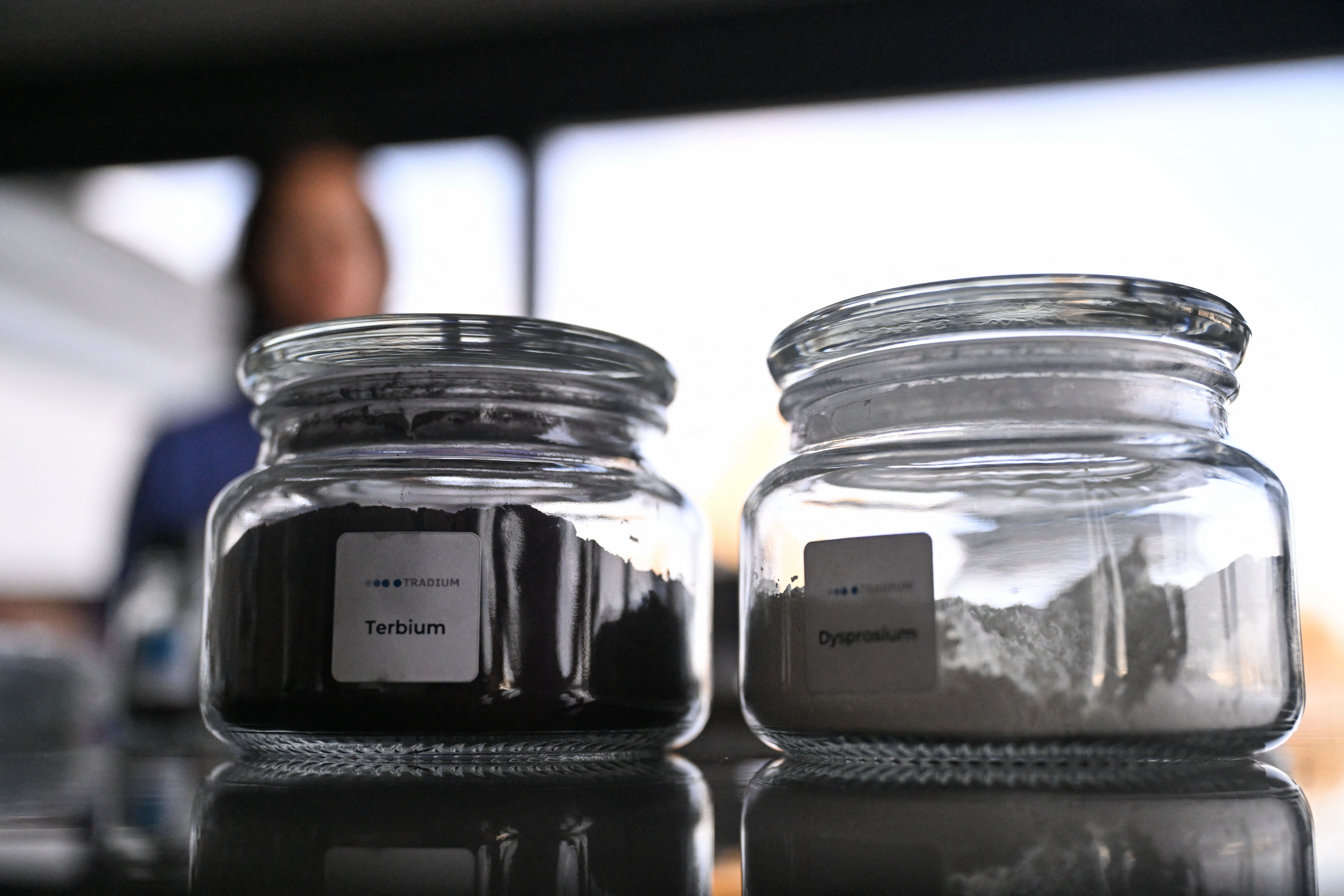
    Today’s Rare Earths Conflict Echoes the 1973 Oil Crisis — But It’s Not the Same

    Regulation, not embargo, allows Beijing to shape how other countries and firms adapt to its terms.

      Alvin Camba
  • Trump and Xi on a red background
    Commentary
    Emissary
    China Is Determined to Hold Firm Against Trump’s Pressure

    Beijing believes that Washington is overestimating its own leverage and its ability to handle the trade war’s impacts. 

      • Sheena Chestnut Greitens

      Rick Waters, Sheena Chestnut Greitens

  • Commentary
    A Second Trump Term: Will Southeast Asia Tilt Toward China?

    Tapping our network of China experts in the region, Carnegie China offers this latest “China Through a Southeast Asian Lens” report to offer preliminary assessments of whether the U.S. effort to reshape the global trading order will lead countries in the region to tilt toward Beijing. 

      • +6

      Selina Ho, Khin Khin Kyaw Kyee, Joseph Ching Velasco, …

  • Commentary
    Is China Willing to Influence Russia on the Ukraine War?

    Beijing is trying to navigate the overall situation regarding Ukraine, especially the substance of interactions between Washington and Moscow.

      • Ellen Nakashima
      • Zhao Long
      • +1

      Ellen Nakashima, Zhao Long, Pavlo Klimkin, …

Get more news and analysis from
Carnegie China
Carnegie China logo, white
Keck Seng Tower133 Cecil Street #10-01ASingapore, 069535
  • Research
  • About
  • Experts
  • Events
  • Contact
  • Careers
  • Privacy
  • For Media
Get more news and analysis from
Carnegie China
© 2026 Carnegie Endowment for International Peace. All rights reserved.