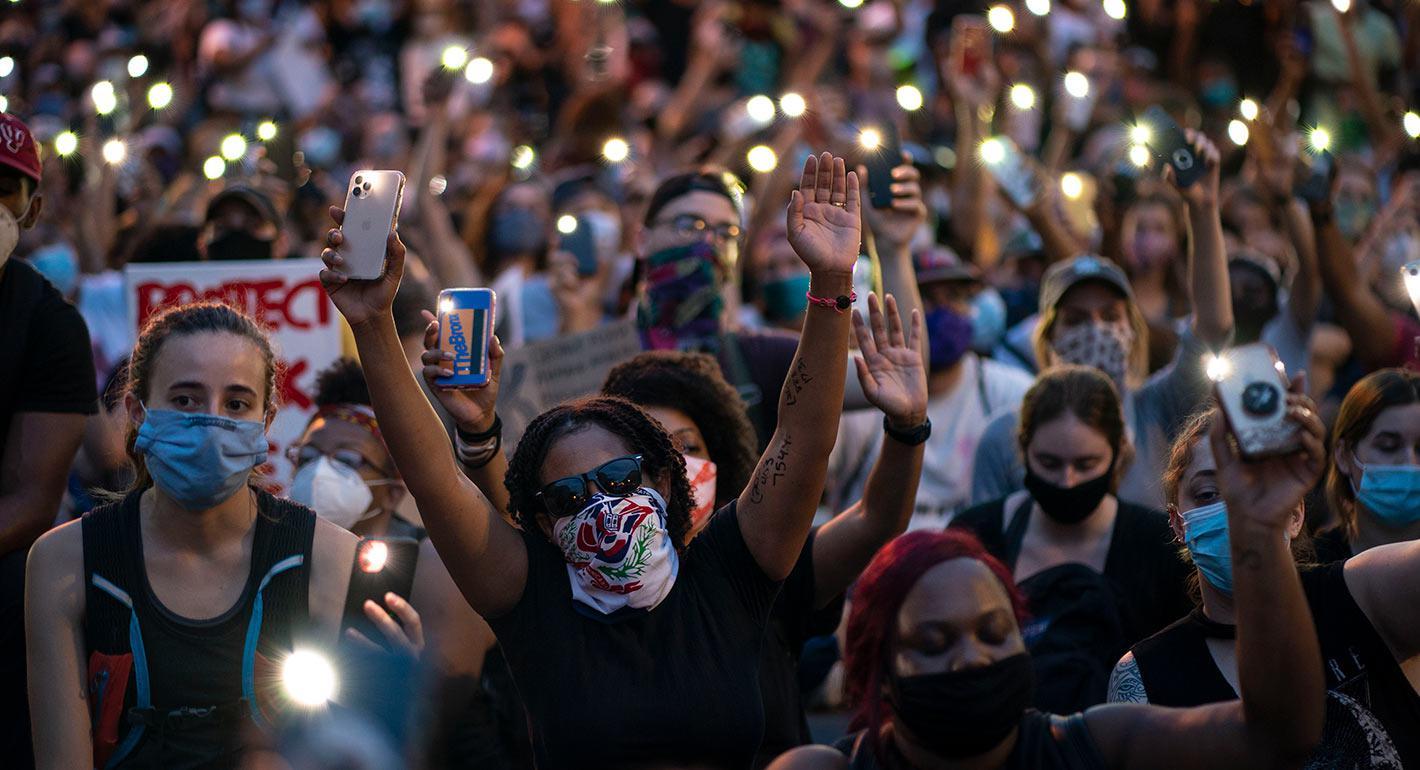
One of the most striking features of recent U.S. policy toward the Middle East has been that it often appeared out of touch with current realities to the point of being anachronistic—almost quaint. The dogged push for Israeli-Palestinian negotiations, for example, flew in the face of truths including the facts that Prime Minister Netanyahu had no interest in reaching an agreement and Palestinian President Abbas was so weakened by the Fatah-Hamas rift that he would be unable to reach an agreement even if a good offer were put on the table. The most recent example of this unreality is U.S. calls for “reform” and “national dialogue” in Egypt in response to the escalating uprising.
Reform? Sorry, the time to call for that was a year ago, five years ago, ten years ago. Egyptians no longer want President Mubarak to reform; they simply want no more Mubaraks. Top-down political reform is now over in Egypt. In its place we are seeing bottom-up change, with all its many risks.
How did Egyptians go from demanding gradual, peaceful, political reform to wanting to overthrow their leader by whatever means possible? It did not happen overnight. Rather, over the last five years the idea of reform became discredited as Mubarak and his inner circle cynically manipulated the concept to enable their own particular brand of crony capitalism while staving off improvements in civil liberties or a real expansion of political contestation. Mubarak allowed some breathing room in the 2005 parliamentary elections, only to follow them with a harsh crackdown on the Muslim Brotherhood and on Ayman Nour, who dared to run a real campaign against him. Mubarak delivered on his 2005 pledge to sponsor constitutional reforms in an extremely damaging manner in 2007, actually managing to push through amendments that significantly impaired the political and human rights of his citizens even further.
In fact, Mubarak succeeded in discrediting not only the idea of reform but also that of formal political processes altogether. He managed to damage not only the long-coopted legal opposition parties but also to diminish the relevance of oppressed movements such as the Muslim Brotherhood. In the last few years, it has been clear that young Egyptians were no longer putting their faith in such opposition groups but rather forming broader, more amorphous movements that had no intention of participating in corrupt formal politics.
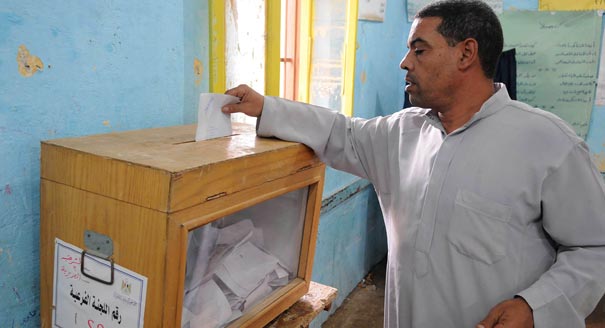
The final straw was perhaps the rigged parliamentary elections in November 2010, when the ruling National Democratic Party used every form of corruption and political manipulation to shutout nearly all opposition candidates and then added insult to injury by crowing about how the party’s successful policies had won the support of the voters. By the beginning of December 2010, the tinder for a conflagration had become very dry indeed; and then a young man in far off Tunisia lit a match.
And what was the United States doing all this time when it could have been trying more sincerely to persuade Mubarak to carry out reforms—or at least to show the Egyptian public that it was on the side of their legitimate demands? For a brief time, from 2002 to 2005, the administration of President George W. Bush rather persistently raised with Mubarak the need for democratic reform and implied that the U.S.-Egyptian relationship would stay close only if Mubarak heeded calls from Egyptian civil society and opposition groups for greater political freedoms and respect for human rights, as well as economic reforms needed to increase prosperity. The Bush administration went as far as to impose some penalties on Mubarak, withdrawing a pledge of over $130 million in supplemental assistance in 2003 and then cutting off free trade talks in early 2006 in reaction to repressive measures Mubarak took against peaceful dissidents.
But in early 2006, the Bush administration backed off pressing Mubarak, having seen few fruits from its efforts and facing escalating crises in Palestine and Iraq. Over the next two years, Bush annoyed Mubarak repeatedly by speaking up for democracy and human rights and his administration increased its spending on democracy programs in Egypt, but the wind had clearly gone out of the sails of the Freedom Agenda. Mubarak carried out repressive measures and excluded opposition from local elections with no real consequences in his relations with the United States.
The Obama administration further rolled back U.S. support for democracy in Egypt in an ill-advised attempt to restore the sweetness to relations with Mubarak in early 2009 by dropping all references to human rights or democracy in statements on Egypt and revising democracy assistance policies to appease him. The administration gradually went from 0 to 30 miles per hour in developing its rhetoric on how human rights and democracy fit in foreign policy over the next two years. Officials, including Obama, began to raise with Mubarak the need to take certain steps, such as lifting the state of emergency under which Egypt has been governed since 1981 and allowing domestic monitors and international observers access to elections. But Mubarak stiffed Obama completely and the U.S. administration, still wanting to keep a positive and polite relationship, issued some mildly critical public statements and wrung its hands in private about how to handle the issues. But clearly the United States was far behind the curve of what was happening in Egypt.
And now? U.S. officials are having to dance pretty fast to come up with rhetoric and policies to show that they supported the legitimate demands of Egyptian citizens all along and are fully on the side of democratization in Egypt. It will not be easy, because the bad news is that Egyptians followed U.S. policy on these questions closely all along and are well aware of how inconsistent, ineffective, and unserious the United States was about promoting real reform—back in the days when it was still possible.
If the Obama administration wants to show that it is serious about respecting political freedom and human rights, it should shift gears on Egypt quickly. It should press ahead with the current U.S. call for an orderly transition to democratic presidential and parliamentary elections, but it stop implying that it envisions Mubarak (or his unpopular new vice president) remaining in office. The United States should privately encourage the Egyptian government to begin negotiations immediately with the opposition committee headed by Mohamed ElBaradei. And it should say privately and publicly that it will suspend all U.S. assistance should the Egyptian government fail to negotiate a transition or resort to violence against the protestors. Pulling punches now will only continue past policy errors and escalate the costs to U.S. interests.