





• Commentary
  • Research
  • Experts
  • Events
Carnegie China logoCarnegie lettermark logo
After Fukushima: Early Implications for Nuclear Industry and Policy Makers

Source: Getty

Article

After Fukushima: Early Implications for Nuclear Industry and Policy Makers

Amidst the drama of the worst seismic catastrophe in Japan’s recorded history, the Japanese government and its nuclear industry have been struggling to prevent a power reactor core melt accident similar to that which occurred at Three Mile Island in the United States three decades ago.

Link Copied
By James M. Acton, Toby Dalton, Mark Hibbs, Ariel (Eli) Levite, George Perkovich
Published on Mar 15, 2011

Additional Links

Full Text

Amidst the drama of the worst seismic catastrophe in Japan’s recorded history, the Japanese government and its nuclear industry have been struggling since last Friday to meet their greatest-ever challenge: preventing a power reactor core melt accident similar to that which occurred at Three Mile Island in the United States three decades ago.

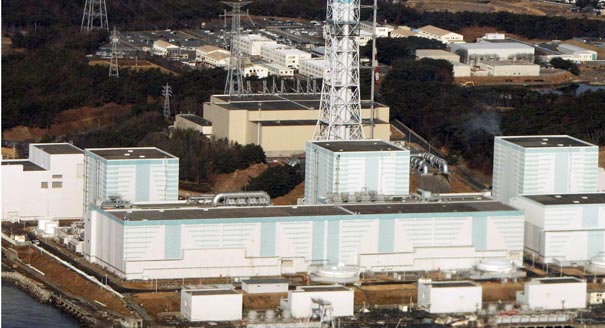
The scope of this challenge to Japan is almost inconceivable. When a force 9.0 earthquake struck off the Pacific coast on Friday, March 11, two nuclear power stations, Fukushima-Daiichi and Fukushima-Daini, with a total of ten reactors, suffered a loss of external power. Shortly after the seven operating reactors at these stations shut down automatically in response to the shock, emergency cooling systems—needed to remove decay heat from the reactors’ radioactive fuel—ceased operating. Without external power, the cooling systems were reliant on local backups that, according to Japanese experts, were damaged by the devastating tsunami that followed the earthquake.

Since Friday afternoon in Japan, Japanese authorities and the plant’s utility owner have been implementing a strategy to provide backup power and coolant water to the beleaguered reactors. The objective is to lower the temperature and pressure inside the reactor vessels, assure that the fuel is covered by water, avert significant fuel melting, and minimize the consequences if it does occur.

Thus far we know very little about how Japanese authorities managed this accident. Until Sunday, the world had very little information about whether authorities were taking concrete measures to get the situation under control. With events at the site still unfolding, that could be troubling because Japan’s nuclear sector does not have a history of alacrity about its problems and transgressions of regulations by plant owners.

But given the shock, uncertainty, and massive overall logistical challenges faced by Japan beginning on Friday, we should not expect perfection in how information was made available to the outside world in this case. It may turn out that Japan’s government and industry in fact supremely rose to the challenge and responded to the meltdown threat by taking effective and well-coordinated action.

Recognizing that it is going to take many months to fully understand what has transpired in Fukishima, there nevertheless are a few preliminary conclusions one may draw from these events:

  • First, the accident dramatically underscored that using nuclear reactors to generate electricity requires extraordinary and in-depth know-how, resources, infrastructure, and planning and management experience. During the last decade, in step with growing energy demand worldwide and recognition of the threat of global warming, nuclear power has gained in esteem and promise. Some existing operators have been significantly scaling up their nuclear operations and about 50 countries are considering launching nuclear power programs. The unfolding of events in Japan should prompt them and the international community to ask whether they have fully identified, and can meet, the necessary preconditions for safe operation of power reactors, including the ability to manage a severe accident. Greater international cooperation and time may be needed to demonstrate that suitable social and physical infrastructure is in place around current and prospective nuclear power plants, particularly those to be built in active seismic zones.
     
  • In addition, the experience from Japan clearly demonstrates why safety and licensing standards—for design, construction, operation, and maintenance—of power reactors must be high and continually improved whenever and wherever possible. The reactors at severe risk in Japan this week are about 40 years old. Japan’s regulators would never award this reactor design a construction or operating license today. In recent years, some countries have extended the licensed lifetimes of older power reactors. China and India, two countries that expect to significantly expand nuclear energy, continue to build reactors which were designed more than 25 years ago. The events in Japan suggest that the safest option for moving forward with nuclear power is to build the most modern and safe reactors available.
     
  • Two earthquakes—one in 2007 and the second last week—have been far more powerful than anticipated for their location and disenabled all but two of the seventeen reactors owned by Tokyo Electric Power Co. at two sites in northern Japan. This suggests that countries that are highly dependent on nuclear power to generate their electricity could be thrown into a power supply crisis should a major nuclear accident there take place. Overdependence on nuclear power may also pressure decision makers to operate reactors under conditions that are not safe. It also suggests that the existing methodology for seismic risk analysis for nuclear reactors ought to be urgently reviewed given its repeated failures to predict the type of challenges that nuclear power plants (and other sensitive facilities) must be built to withstand.
     
  • Countries aiming to set up their first nuclear power plants will be tempted by dire energy need, reasons of prestige, and financial limitations to concentrate on building the plants and getting ready to operate them as soon as possible. There is a danger that seemingly less-immediate needs that do not contribute directly to energy production—such as spent fuel and waste management, but also emergency preparedness—will be only superficially addressed. Japan is working overtime to try to prevent loss-of-coolant accidents at three reactors from becoming a radiological catastrophe. If Japan succeeds, it will be because it brought to bear discipline, management, organization, experience, and advance preparation.
     
  • Reactor-owning utility companies, governments, power plant vendors, international organizations, and non-governmental organizations worldwide will and should consider whether all other current and prospective nuclear power plant operators would be similarly prepared and equipped to deal with largely unpredictable environmental and logistical challenges as extreme as those that Japan faced at Fukushima. Given the implications of a nuclear catastrophe for the global commons, this is an interest shared by all.

About the Authors

James M. Acton

Jessica T. Mathews Chair, Co-director, Nuclear Policy Program

Acton holds the Jessica T. Mathews Chair and is co-director of the Nuclear Policy Program at the Carnegie Endowment for International Peace.

Toby Dalton

Senior Fellow and Co-director, Nuclear Policy Program

Toby Dalton is a senior fellow and co-director of the Nuclear Policy Program at the Carnegie Endowment. An expert on nonproliferation and nuclear energy, his work addresses regional security challenges and the evolution of the global nuclear order.

Mark Hibbs

Nonresident Senior Fellow, Nuclear Policy Program

Hibbs is a Germany-based nonresident senior fellow in Carnegie’s Nuclear Policy Program. His areas of expertise are nuclear verification and safeguards, multilateral nuclear trade policy, international nuclear cooperation, and nonproliferation arrangements.

Ariel (Eli) Levite

Senior Fellow, Nuclear Policy Program, Technology and International Affairs Program

Levite was the principal deputy director general for policy at the Israeli Atomic Energy Commission from 2002 to 2007.

George Perkovich

Japan Chair for a World Without Nuclear Weapons, Senior Fellow

George Perkovich is the Japan Chair for a World Without Nuclear Weapons and a senior fellow in the Carnegie Endowment for International Peace’s Nuclear Policy Program. He works primarily on nuclear deterrence, nonproliferation, and disarmament issues, and is leading a study on nuclear signaling in the 21st century.

Authors

James M. Acton
Jessica T. Mathews Chair, Co-director, Nuclear Policy Program
James M. Acton
Toby Dalton
Senior Fellow and Co-director, Nuclear Policy Program
Toby Dalton
Mark Hibbs
Nonresident Senior Fellow, Nuclear Policy Program
Mark Hibbs
Ariel (Eli) Levite
Senior Fellow, Nuclear Policy Program, Technology and International Affairs Program
Ariel (Eli) Levite
George Perkovich
Japan Chair for a World Without Nuclear Weapons, Senior Fellow
George Perkovich
East AsiaJapanAsiaNuclear PolicyNuclear Energy

Carnegie does not take institutional positions on public policy issues; the views represented herein are those of the author(s) and do not necessarily reflect the views of Carnegie, its staff, or its trustees.

More Work from Carnegie China

  • Commentary
    China’s Energy Security Doesn’t Run Through Hormuz but Through the Electrification of Everything

    Across Asia, China is better positioned to withstand energy shocks from the fallout of the Iran war. Its abundant coal capacity can ensure stability in the near term. Yet at the same time, the country’s energy transition away from coal will make it even less vulnerable during the next shock.


      • Damien Ma

      Damien Ma

  • An aerial view shows containers stacked at a port in Taicang, in eastern China's Jiangsu province on May 18, 2025.
    Commentary
    How to Predict China’s Economic Performance for 2025: A Sectoral Approach

    GDP growth means something fundamentally different in China than in most countries.

      Michael Pettis

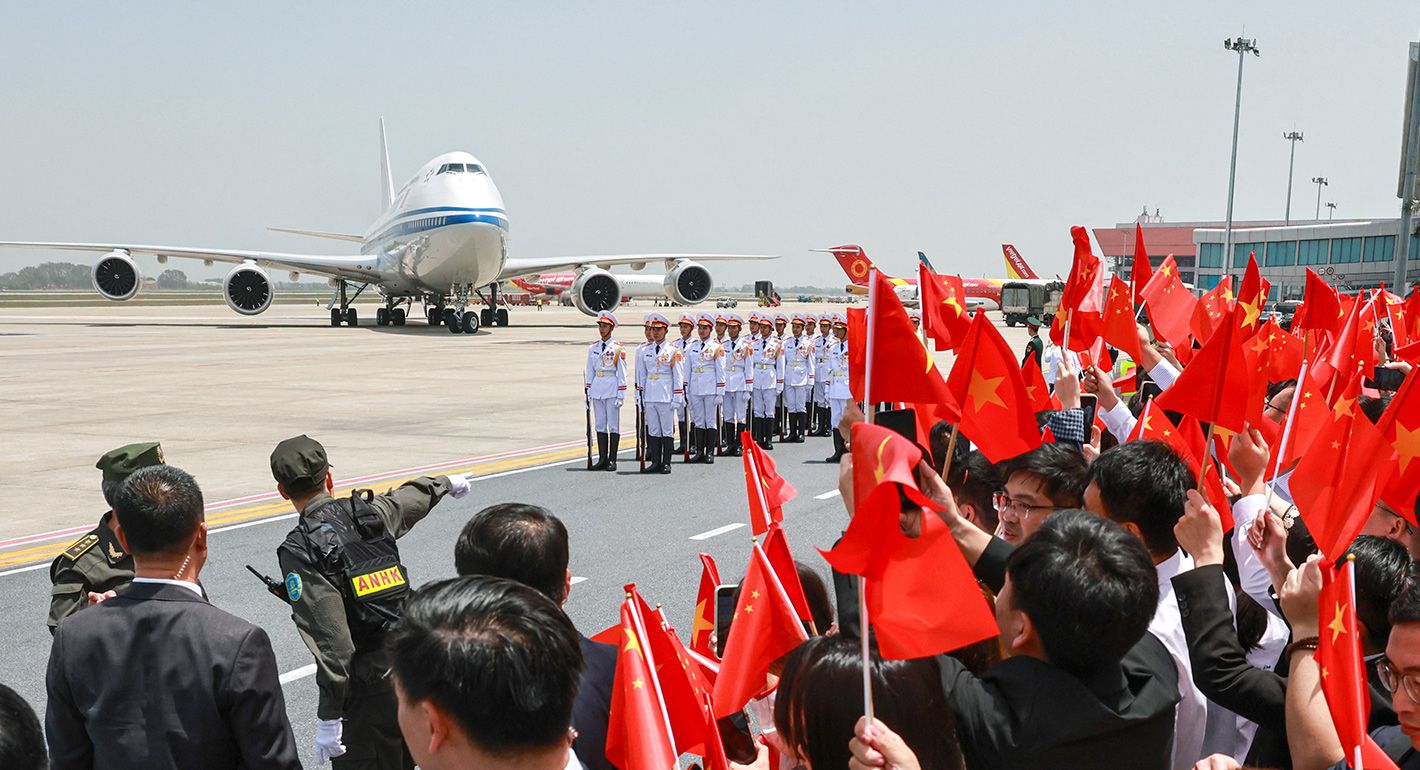
  • People wave Chinese flags as the plane carrying Chinese President Xi Jinping arrives for a two-day state visit at Hanoi's Noi Bai International Airport in Hanoi on April 14, 2025
    Article
    How Southeast Asia Sees Xi Jinping’s Regional Push Amid U.S.-China Tensions

    The Trump administration’s effort to reshape the global trading system and reset overseas security commitments is creating an historic inflection point.  Less clear is how far China will be able to capitalize on these dynamics.

      • +1

      Li Mingjiang, Le Hong Hiep, Ngeow Chow Bing, …

  • Article
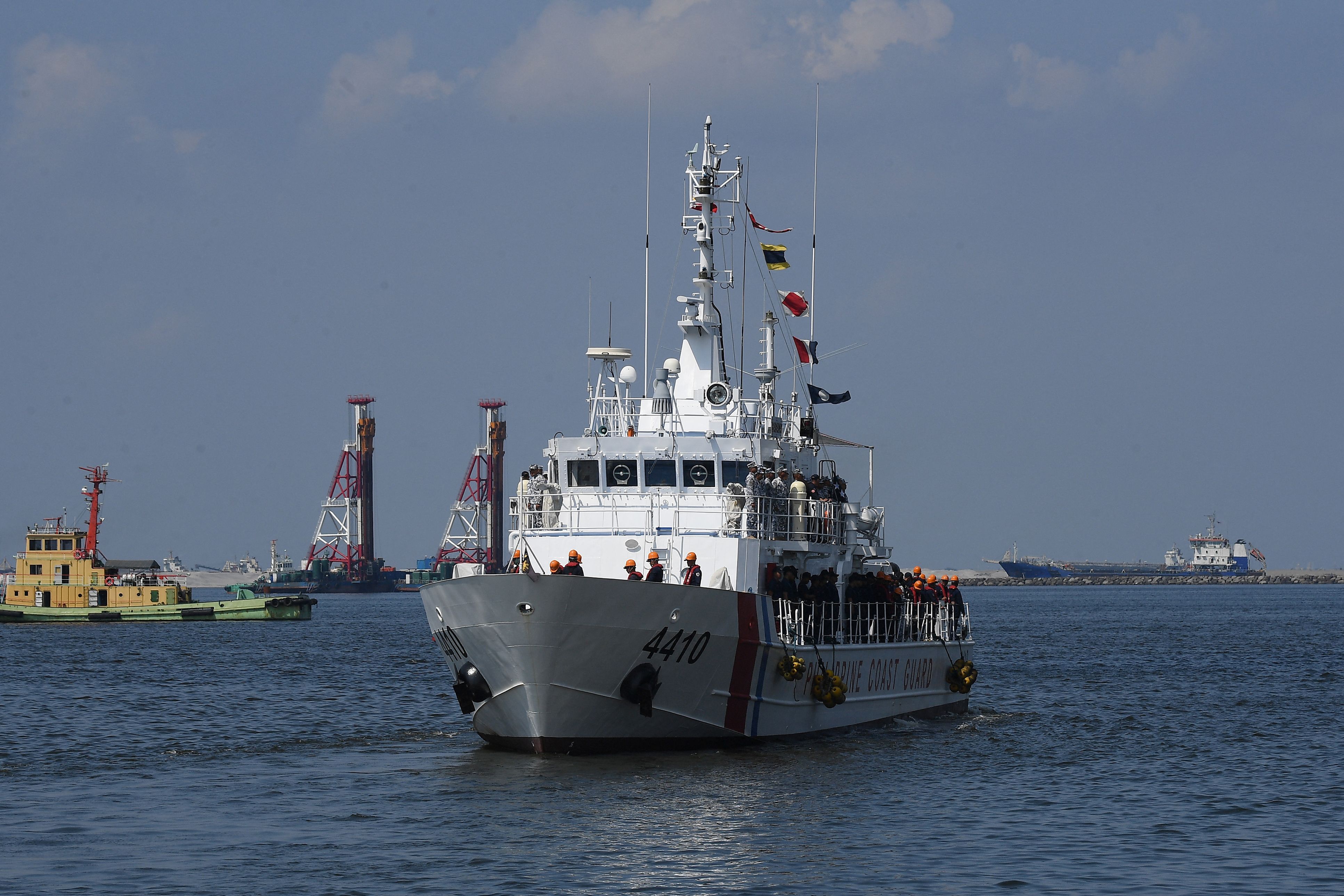
    Northeast Asia Is for Deterrence and Southeast Asia Is (Mostly) for Freeriding: Appreciating Divergent East Asian Approaches to Order, Uncertainty, and Contestation

    Most Southeast Asian states behave as if the actions of their Northeast Asian neighbors and the Philippines will be sufficient to maintain a regional status quo from which they can benefit.

      Chong Ja Ian

  • Commentary
    The Commercialization of Cyber Nationalism in China

    Patriotic and nationalist sentiments have been co-opted by self-media and social media platforms to generate profit. This has given rise to a traffic-driven business of cyber nationalism that relies on extreme xenophobic rhetoric.

      Wang Qiyue, Li Mingjiang

Get more news and analysis from
Carnegie China
Carnegie China logo, white
Keck Seng Tower133 Cecil Street #10-01ASingapore, 069535Phone: +65 9650 7648
  • Research
  • About
  • Experts
  • Events
  • Contact
  • Careers
  • Privacy
  • For Media
Get more news and analysis from
Carnegie China
© 2026 Carnegie Endowment for International Peace. All rights reserved.