

Commentary
Olga Shumylo-Tapiola
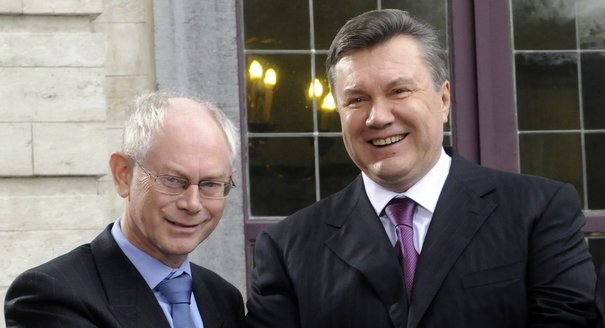
Source: Getty
While the Eastern Partnership summit is unlikely to deliver many positive results, there are still important lessons that leaders from both sides can take away from the summit.
This week, leaders from the European Union (EU), Eastern Europe, and the Southern Caucasus are gathering in Poland to discuss the progress of the Eastern Partnership(EaP)—the EU’s policy towards its eastern neighbors, launched in spring 2009 in Prague. An event to celebrate achievements in the EU’s Eastern neighborhood is not going to be an easy one. With disappointment spreading among EU member states, divergent agendas and disagreements among the participants, and little progress having been made towards achieving the EaP’s main goals, the summit is unlikely to have a celebratory atmosphere, or deliver many positive results. There are, however, important lessons that leaders from both sides can take away from this summit.
The heads of five EaP states—Armenia, Azerbaijan, Georgia, Moldova, and Ukraine—are expected to attend, while Belarus isn't. High-level attendance from the EU, however, will likely be limited to the European Commission President José Manuel Barroso, the European Council President Herman van Rompuy, the High Representative for Foreign Affairs and Security Policy Catherine Ashton, German Chancellor Angela Merkel, Polish Prime Minister Donald Tusk and Hungarian Prime Minister Viktor Orban. This comparatively poor turnout from EU member states may be explained by the busy schedules of some former EaP supporters. It may, however, also indicate a level of disappointment among some EU member states over recent, negative developments in certain EaP countries.
Preparations for the summit were marked by high, yet diverging expectations on both sides. Many EaP countries were hoping for a clearer signal on perspective EU membership and visa-free travel agreements, while the EU was hoping to see more democracy and reform in the EaP region. Negotiations on the summit’s joint declaration also brought surprises. Coupled with these two factors, the rollback of democracy that has taken place in some EaP countries over the last year, and the lack of positive progress in others will be the leitmotiv of this week’s high-level gathering.
Many would agree that it is too early to judge the successes of the EU’s policy towards its Eastern neighborhood. However, one success is clear—the EaP remains symbolic to all partner countries. It is a symbol of the EU’s ability to remain involved in its immediate neighborhood despite internal crisis and changes in the southern neighborhood.
In addition, participants at the summit are likely to announce the successful conclusion of talks on an Association Agreement (AA) between the EU and Ukraine, as well as the launch of the talks on a Deep and Comprehensive Free Trade Agreement (DCFTA) with Moldova and Georgia. The resolution of “5+2” talks on Transnistria is likely to be presented as yet another success, while energy issues may stir some lively debate, particularly following recent energy talks between Kyiv and Moscow.
However, the summit will not produce ground-breaking surprises. Nor, ultimately, will it be able to present positive developments on the implementation of the EaP’s main goal of accelerating “political association and further economic integration between the EU and its eastern neighbors”. The reason for this is simple—only one out of six countries in the partnership—Moldova—has in reality made progress towards further integration with the EU.
The bilateral track of the EaP will be the main focus of discussions. The bilateral AAs offered to the EaP countries within this track may be the only means of influence the EU has on them. To date, only three of the six EaP states—Ukraine, Moldova and Georgia—have started talks on new agreements. However, there is hope that the implementation of these agreements will at least have a significant impact on these three countries.
With the EaP’s multilateral track lacking clear goals, EaP countries finding it difficult to agree on joint interests and come up with joint projects—with the possible exception of the energy sphere—and the EU struggling to find enough money to finance regional cooperation projects between EaP countries, there will be little substantive discussion about the partnership policy itself. Moreover, the one thing that already came out of the multilateral track—regional solidarity during the preparation of the summit declaration—is not something that pleased the EU. Five capitals objected to the EU’s proposal to add strong language on Belarus in the declaration.
When the summit is over and the leaders return to their capitals, they will need to take certain key lessons with them. EU leaders will need to keep an eye on their neighborhood. High-level contact with EaP leaders should be on their agenda, as the heads of EaP countries are more readily swayed by messages from their peers. The EU also needs to have a discussion on its values and interests in the region. The recently-adopted ‘more-for-more’ principle—more support for more reforms—could serve as a useful tool to pressure the EaP governments. Yet, it should be applied to all in the neighborhood and not only those with natural resources.
Ultimately though, it is the EaP leaders who will have to make up their minds. The Eastern Partnership with its integration tools is available to them. They will have to decide whether they really want to be part of it, and if they are ready to share the EU’s values.

Former Nonresident Associate, Carnegie Europe
Shumylo-Tapiola is a nonresident associate at Carnegie Europe in Brussels, where her research focuses on Eastern Europe and Eurasia.
Recent Work
Olga Shumylo-Tapiola
Olga Shumylo-Tapiola
Carnegie does not take institutional positions on public policy issues; the views represented herein are those of the author(s) and do not necessarily reflect the views of Carnegie, its staff, or its trustees.
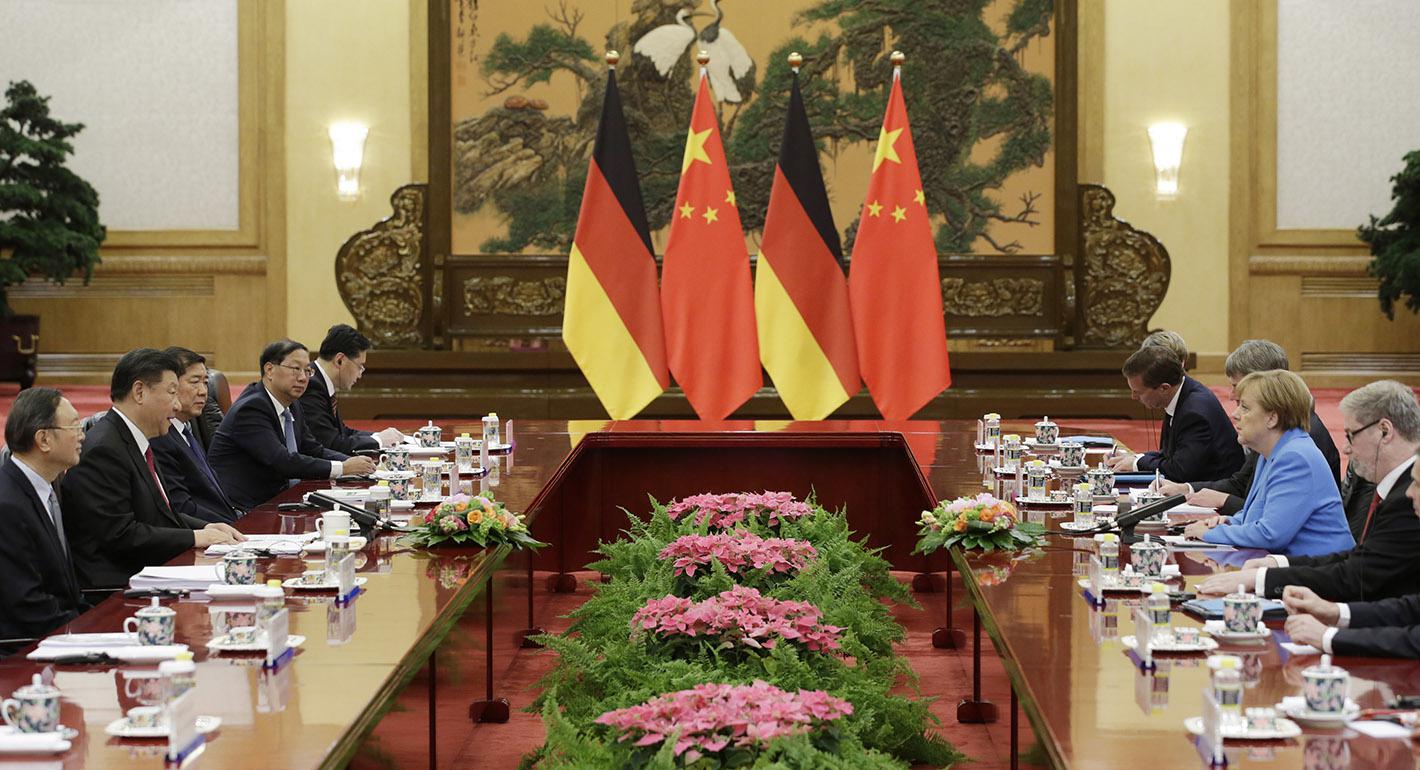
As the United States confronts China more directly, Merkel is exploring deeper cooperation with Xi. Economic upheaval from the coronavirus could reinforce the temptation in Berlin to keep Beijing close.

Noah Barkin
The 2017 G20 summit exposed the United States' isolation on the key issues of climate and trade.

Marc Pierini

A selection of experts answer a new question from Judy Dempsey on the foreign and security policy challenges shaping Europe’s role in the world.

Judy Dempsey
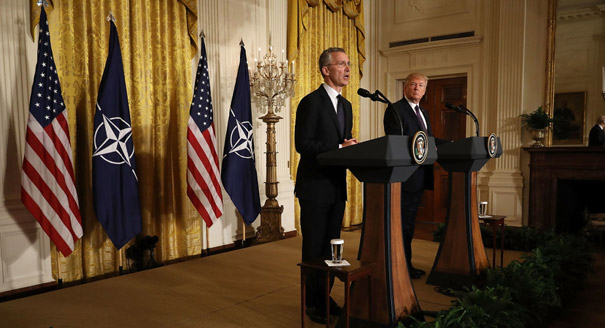
Europe may need to start planning for defense of the continent without the United States, but first it should do its utmost to prevent Trump from turning his back on NATO.
Tomáš Valášek
Citizens across Europe are taking to the streets and the Internet to counter the Euroskeptic and anti-immigrant messages of far-right populists and nationalists.
Caroline de Gruyter