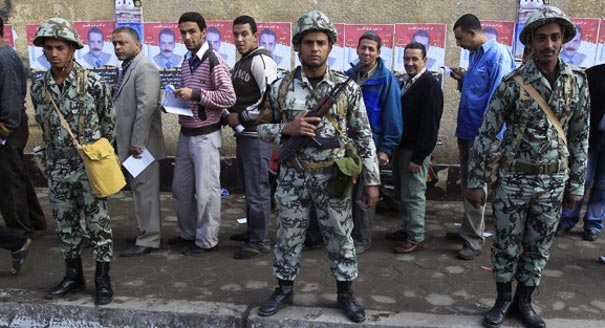
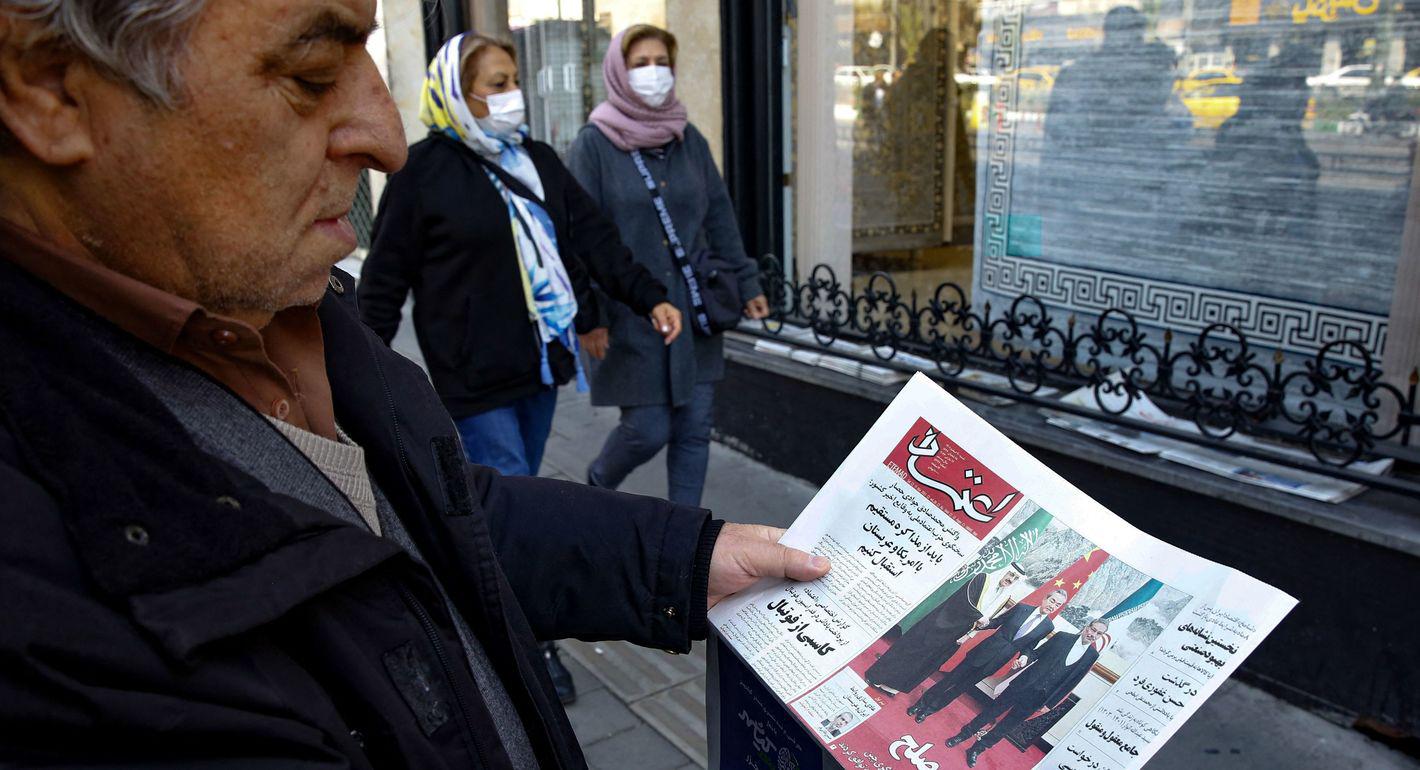
Early returns from the Egyptian elections leave no doubt that Islamist parties are winning by a landslide. The Muslim Brotherhood’s Freedom and Justice Party (FJP) has apparently received 40-45 percent of the vote, with another 20-25 percent going to the hardline Salafi al-Nour party. Elections have so far been held in only nine of Egypt’s 27 governorates, but there is no reason to believe that results of the next two rounds, scheduled respectively for mid-December and early January, will be substantially different.
Whether Egypt is now headed toward a government dominated by Islamists, including hardline Salafis, or a less threatening alliance of the FJP and secular parties depends on the response of the military and secular parties, as well as on the political acumen of the FJP.
The success of Islamist parties will make it much more difficult, if not impossible, for the Egyptian military to prolong its political control and to recreate a political system along the lines of Hosni Mubarak, as it appeared intent on doing. After coming to power with the promise of a return to civilian rule within six months, the military had postponed parliamentary elections until now and announced that presidential elections would only be held after the approval of a new constitution, pushing the date for a new president into 2013. The Supreme Council of the Armed Forces (SCAF) also allowed members of the disbanded National Democratic Party (NDP) to run for elections, either by forming their own parties or by joining the lists of others.
Most recently, the SCAF presented the country with a set of supra-constitutional principles that would have guaranteed the military—and its budget—freedom from civilian oversight while also giving it a great deal of control over the writing of the new constitution. In the same document, known as the Selmy document for the deputy prime minister who formally presented it, the SCAF tried to gut the parliament of any real power over the writing of the constitution by mandating a complicated allocation of seats on the 100-member constitutional commission to an array of organizations mostly controlled by Mubarak-era leaders.
The proposals led to a new wave of protest and to violence that almost derailed the elections, forcing the military to announce that presidential elections will be held before the end of June 2012. Nonetheless, the SCAF never clearly retracted the Selmy document and it remains in limbo. The military rejected calls from the protesters and political parties for a government of national salvation after the resignation of the cabinet, instead asking Kamal al-Ganzouri, who held the post of prime minister under Mubarak, to form a new government. It also offered to form a civilian advisory committee, but it did not specify what it would advise on or what powers it would have, if any.
The success of Islamist parties will make it extremely difficult for the SCAF to maintain as much control as it intended. Indeed, the election results probably signal the true end of the Mubarak regime.
The military will now be confronted with an activist parliament demanding a real political role. Already, the FPJ and the Muslim Brotherhood claimed the right to head a new government as the party with the largest number of votes. Technically, they have no such right, because Egypt has a presidential rather than a parliamentary system and thus parliament does not select the prime minister. The FJP quickly retracted the demand as premature. Politically, they have a strong argument that will make it even more difficult for the SCAF to impose a Mubarak-era holdover as the new prime minister.
It is also highly unlikely that the new parliament will allow the military to dictate the composition of the constitutional commission and thus the character of the constitution. The SCAF will have a much narrower margin to maneuver from now on if it wants to avoid a direct confrontation with the elected parliament and major protests like the ones that occurred on November 18 and led to the latest round of violence.
While it is certain that the Islamists will be challenging the power of the SCAF through the parliament, the real question is how they will use their influence. The FJP and the Muslim Brotherhood have already made it clear that they want the new constitution to create a parliamentary rather than presidential system, making the prime minister and cabinet responsible to parliament. They have also declared that they will seek an alliance with secular parties.
This statement has credibility. The FJP did enter into an alliance with secular parties as far back as March, setting up the Democratic Alliance comprised of virtually all the parties that existed under the old regime, except of course for the disbanded ruling NDP. It was the secular parties that abandoned the alliance one by one, until only a small number of virtually unknown parties remained. At the same time, when Salafi parties, including al-Nour and the Gama’a al-Islamiyya Building and Development Party, formed an Islamic Alliance to contest the elections, the FJP refused to participate.
So far, the FJP and the Brotherhood have shown a great deal of political acumen in not embracing an alliance with the Salafis. It is crucial that secular parties show equal acumen by cooperating with the FJP and abandoning their previous recriminations. As for the SCAF, it needs to get the message, which it has resisted so far, that the military is no longer Egypt’s political arbiter.