

Article
As the United States confronts China more directly, Merkel is exploring deeper cooperation with Xi. Economic upheaval from the coronavirus could reinforce the temptation in Berlin to keep Beijing close.
Noah Barkin
Source: Getty
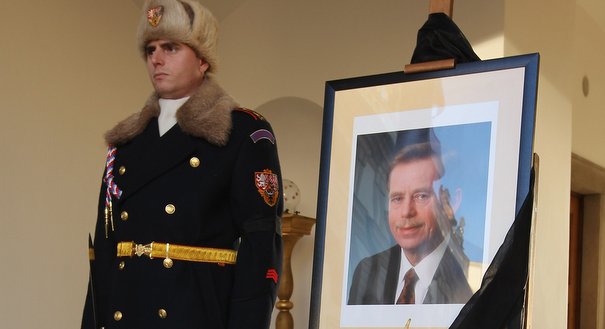
Vaclav Havel, the last president of Czechoslovakia and the first president of the Czech Republic, died on December 18, 2011. He lived according to his principles and never compromised on matters of conscience.
Vaclav Havel, the last president of Czechoslovakia and the first president of the Czech Republic, died at the age of seventy-five on December 18, 2011.
In 1989, when an era of total falsehood and oppression of the individual came to an end, the Czechs and the Slovaks needed someone who could show them that they could, as Aleksandr Solzhenitsyn urged, “live not by lies.” Vaclav Havel became such a man. Back in 1978 in his famous essay “The Power of the Powerless,” the dissident Havel wrote: “If you live by the truth, that is always dangerous for the system.” And he finished his reflections with a simple question: “Is the bright future always as far away as it seems to us? And what if it is already with us for a long time, and only our blindness and weakness prevent us from seeing it in us and around us?”
Havel himself took credit for having always lived in accordance with his own principles. This is undoubtedly true, though in the fourteen years of his three presidencies, even he had to make some compromises. But they were never compromises of his conscience.
Havel’s arrival to the presidential palace in Prague Castle became a visible symbol of the crushing defeat of the old order and the starting point of a new era. In fact, for the entire fourteen years, the main business of this classical representative of Central European literary, cultural, and intellectual circles was precisely that—to be a symbol. Thanks to the fact that the presidency does not involve a large number of powers, the playwright, essayist, and former political prisoner could play his role of the “uncrowned King of the Czech Republic”—a moral authority who was always ready to hold a mirror to society so that it would not lose sight of reality.
But in the corridors of the residence (through which he sometimes rode on a scooter), Havel still did not come to feel at home—though he wore a tuxedo skillfully and was quite a good speaker, a holder of foreign state awards, and a welcome guest throughout the world. Not without reason did he title his memoirs, a signed volume of which lies before me now, To the Castle and Back.
As for me, I remember him as an elderly man in a corduroy jacket, pullover, and felt slippers, tired from illness and taking stock of his remarkable life.
No sooner had Vaclav Havel left this world than in the Russian segment of the Internet, zealots of dictatorship in its various guises spoke out against “the Russophobe.” Havel was indifferent to this in life—and it is all the less important now. Reread his last article in Novaya Gazeta—full of hope for peaceful change in Russia and sympathy for its people—to understand this.
He liked America and even—in contrast to most Europeans, including his fellow citizens—supported the invasion of Iraq. But he believed that the United States was too cavalier, even with regard to its own allies. He led the Czech Republic to a market economy and doubted the unequivocal goodness of globalization. He, an agnostic, fought for the triumph of democracy and of human rights and at the end of his life, reflected on whether modern society could exist without higher values, without a spark of God.
Vaclav Havel became a successful politician because he remained himself. Such a phenomenon occurs rarely in history—and as a rule, at the turn of eras. The end of 1980s marked precisely such a time. Havel accepted the challenge of the century and conquered it. He will not be forgotten.
Konstantin von Eggert is a member of the Royal Institute of International Affairs (London, UK) and a member of the advisory board of the journal Pro et Contra.
Konstantin von Eggert
Carnegie does not take institutional positions on public policy issues; the views represented herein are those of the author(s) and do not necessarily reflect the views of Carnegie, its staff, or its trustees.
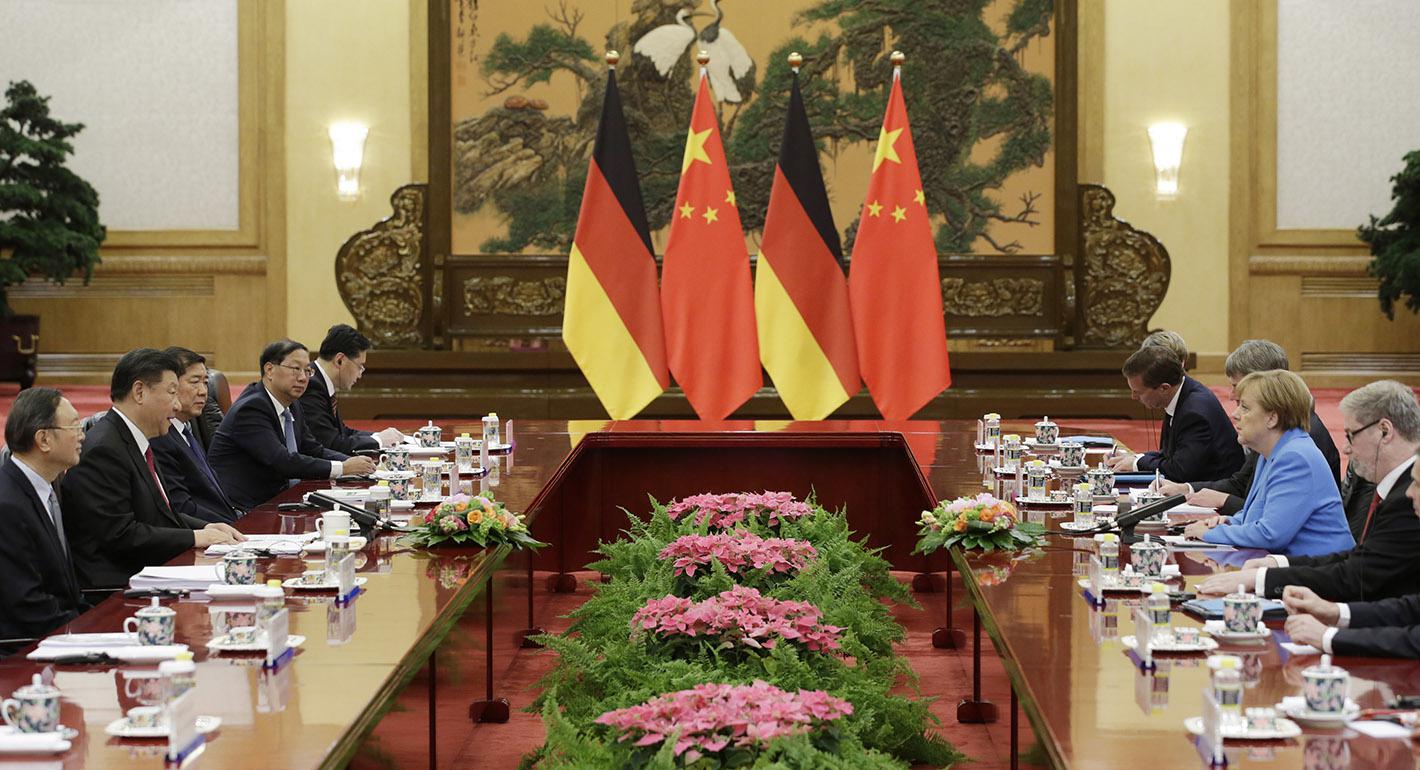
As the United States confronts China more directly, Merkel is exploring deeper cooperation with Xi. Economic upheaval from the coronavirus could reinforce the temptation in Berlin to keep Beijing close.
Noah Barkin
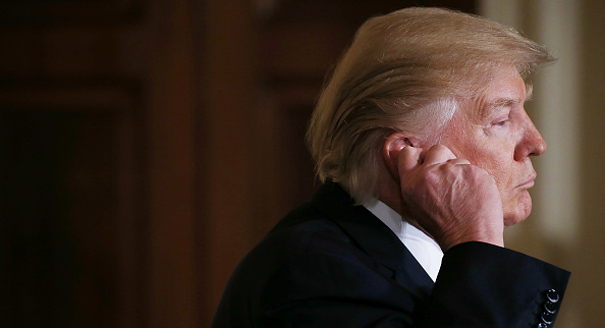
The 2017 G20 summit exposed the United States' isolation on the key issues of climate and trade.

Marc Pierini
A selection of experts answer a new question from Judy Dempsey on the foreign and security policy challenges shaping Europe’s role in the world.

Judy Dempsey
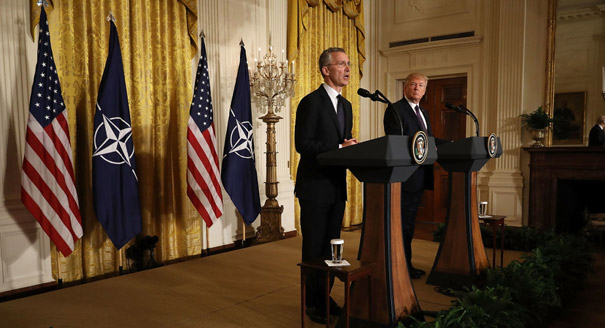
Europe may need to start planning for defense of the continent without the United States, but first it should do its utmost to prevent Trump from turning his back on NATO.
Tomáš Valášek
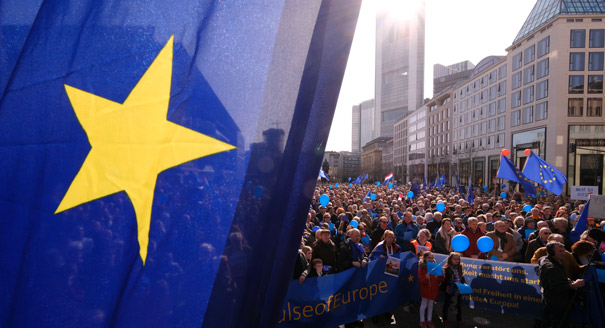
Citizens across Europe are taking to the streets and the Internet to counter the Euroskeptic and anti-immigrant messages of far-right populists and nationalists.
Caroline de Gruyter