

Other
Sarah Yerkes, Natalie Triche
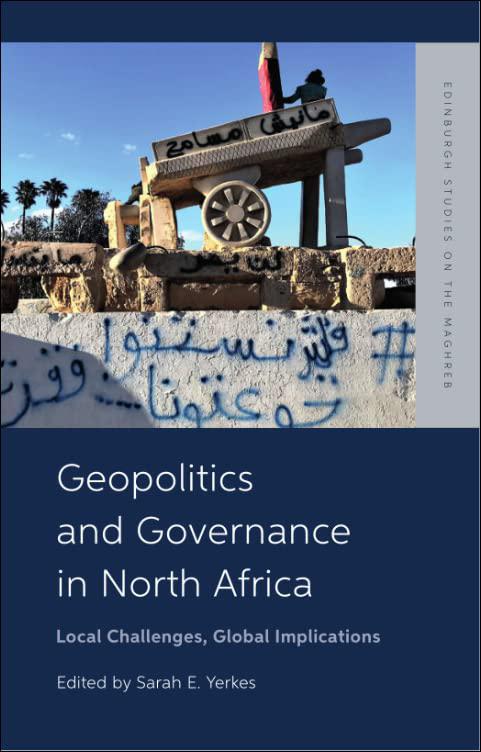
North Africa, sometimes considered a backwater within a broader Middle East context, is actually the leading edge of change for the region and deserving of far more attention from the international community.
Source: Edinburgh University Press
North Africa was once on the geopolitical periphery of Middle East dynamics, but it has increasingly come to shape regional trends. In addition to internal political and economic transformations that were accelerated by the protests of 2011 and that have upended or reshaped the lives of millions of the region’s inhabitants, the region is also contending with a range of external challenges. These include the COVID-19 pandemic and its associated economic transformation, changing market dynamics including energy markets, the growing presence of new regional actors like Russia and China, and the changing role of traditional allies such as the European Union, Gulf Cooperation Council countries, and the United States. These dynamics are compounded by other natural and man-made climate changes and demographic changes that worsen them.
This volume shows why North Africa, sometimes considered a backwater within a broader Middle East context, actually is the leading edge of change for the region and deserving of far more attention from the international community. North African countries are facing a dizzying array of challenges related to domestic and global trends—political transformation either recent or underway, economic stagnation now worsened by the pandemic, social challenges associated with a frustrated young population—are giving the region more geopolitical relevance with implications for the broader Middle East, Europe, and sub-Saharan Africa.
“Yerkes and her contributors present a sobering assessment of the challenges confronting governments and societies in an understudied but vital region. Through sharp, insightful country studies, the authors highlight troubling economic, social and climate conditions that governments have shown little capacity to manage, even while persistent geopolitical fissures strain weak institutions. This book makes a compelling case for greater engagement with North Africa and underscores the risks of further neglect.”
—Steven Heydemann, Smith College

Senior Fellow, Middle East Program
Sarah Yerkes is a senior fellow in Carnegie’s Middle East Program, where her research focuses on Tunisia’s political, economic, and security developments as well as state-society relations in the Middle East and North Africa.
Recent Work
Sarah Yerkes, Natalie Triche

Sarah Yerkes, Amr Hamzawy
Carnegie does not take institutional positions on public policy issues; the views represented herein are those of the author(s) and do not necessarily reflect the views of Carnegie, its staff, or its trustees.

But their "principal to principal" model will only be as effective as the political strength of each leader back home.

Damien Ma

U.S. unpredictability has allowed China to capitalize on its positioning as the “responsible great power”. Paradoxically, the more China wins the perception game, the more likely expectations will rise for Beijing to deliver not just words but to demonstrate with its deeds.

Chong Ja Ian

Hanoi and Beijing have long treated each other as distant cousins rather than comrades in arms. That might be changing as both sides draw closer to hedge against uncertainty and America’s erratic behavior.

Nguyễn Khắc Giang

Across Asia, China is better positioned to withstand energy shocks from the fallout of the Iran war. Its abundant coal capacity can ensure stability in the near term. Yet at the same time, the country’s energy transition away from coal will make it even less vulnerable during the next shock.
Damien Ma

Malaysia’s chairmanship sought to fend off short-term challenges while laying the groundwork for minimizing ASEAN’s longer-term exposure to external stresses.

Elina Noor