

Article
Stefan Lehne
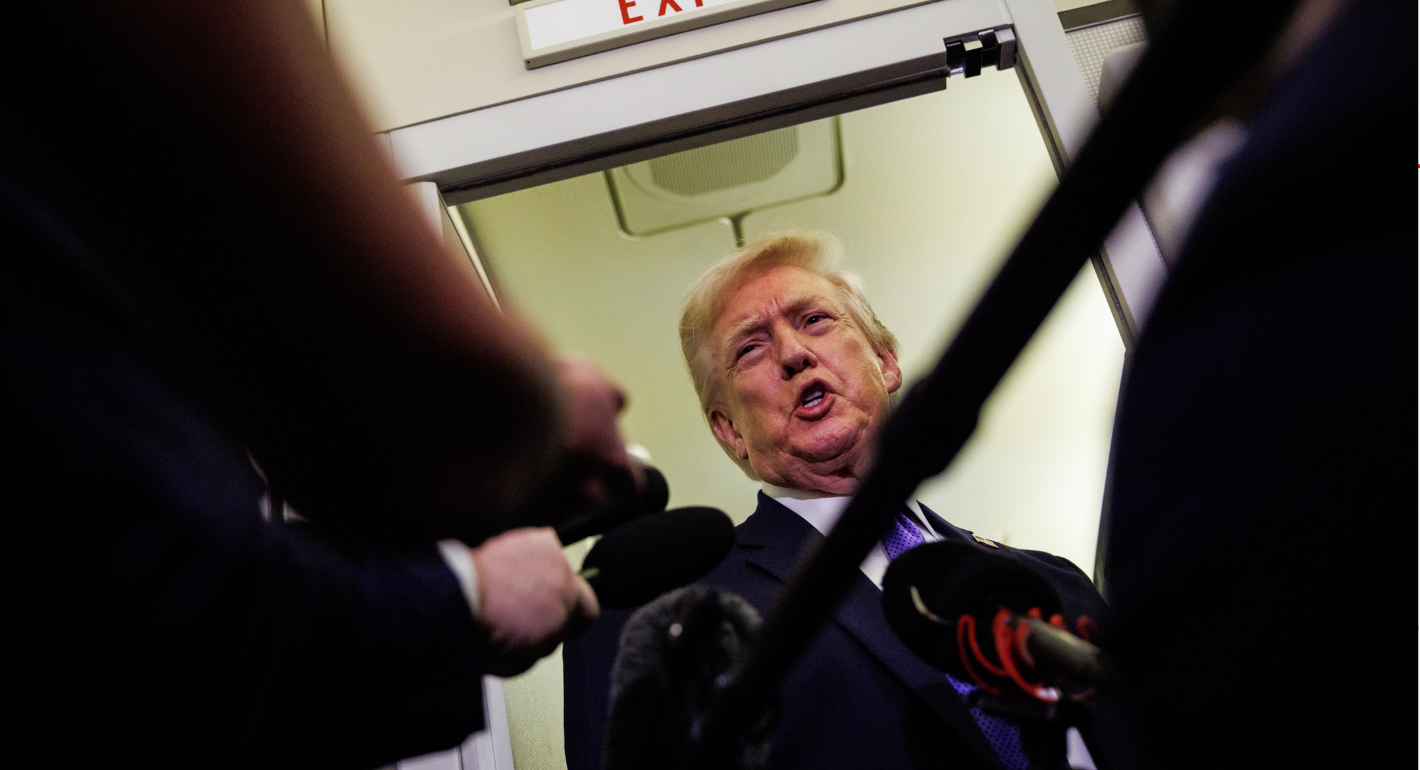
Source: Getty
Europe’s policy of subservience to the Trump administration has failed. For Washington to take the EU seriously, its leaders now need to combine engagement with robust pushback.
After a year of Donald Trump’s second U.S. presidency, the EU is still in a state of shock. So far, European leaders have responded to multiple provocations and pressures by trying to accommodate the U.S. administration’s demands, accepting an unfair trade deal, and following Washington’s political lead, even as they have disagreed with its direction of travel. But now, with Trump having threatened to take over Greenland, an autonomous region of an EU member state, it is time to acknowledge that the policy of subservience has not worked.
The EU needs a new approach that combines strong engagement with the United States with a willingness to push back. The union will have to work to reduce its military and economic dependencies, invest meaningfully in its capabilities, and intensify its cooperation with like-minded partners. Serious leadership and determination will be needed to deal with the costs and risks of such a change of policy. But if this shift is handled correctly, the EU could emerge stronger from one of the most severe challenges in its history.
During his second mandate, Trump’s foreign policy has become truly revolutionary. In six key respects, the second Trump administration has gone beyond his first term in office and distanced itself radically from eight decades of U.S. foreign policy.
U.S. Vice President JD Vance’s speech at the February 2025 Munich Security Conference amounted to a declaration of ideological war. He accused European countries of systematically censoring opposition voices and suppressing free speech and insisted that the greatest threat to Europe was not Russia or China but the “retreat of Europe from some of its most fundamental values.” The 2025 U.S. National Security Strategy went one step farther by warning of the “stark prospect of civilizational erasure” in Europe, brought about mostly by irresponsible migration policies. U.S. officials have repeatedly expressed their support for “patriotic” political parties and far-right candidates.
On Europe’s greatest security challenge, the ongoing Russian war against Ukraine, the Trump administration has sharply reduced its support for the country. U.S. diplomatic engagement on ending the conflict has tended to favor the interests of the aggressor over those of Ukraine. European leaders have sometimes succeeded in modifying U.S. proposals only to be confronted later with another unbalanced initiative.
Trump’s new policy approach has prioritized restoring U.S. preeminence in the Western hemisphere. The so-called Donroe Doctrine—baptized by Trump himself as a portmanteau of Donald and the Monroe Doctrine—not only commits the United States to fight migration and drug cartels and roll back the influence of outsiders in the region but also asserts the United States’ will to dominate the region and extract economic benefits for itself.
Washington favors selected like-minded governments in the region and pressures others that are not ideologically aligned. Following the January 3 capture of Venezuela’s then president Nicolás Maduro, Trump declared his intention to “run” Venezuela and invited U.S. oil companies to take over and revamp the country’s oil sector. The massive wealth thus created would be shared between Venezuela and the United States.
Trump’s second term started with multiple diplomatic initiatives aimed at ending conflicts in various regions; some of these projects were successful. Trump-style dealmaking—often managed by close associates of the president rather than by professional diplomats—employs Washington’s unique economic, political, and military leverage, again usually with the aim of extracting economic benefits for the United States.
This high-profile diplomacy has coincided with a radical turn away from multilateral diplomacy and international regimes. Ignoring long-standing rules of international commerce, the administration has used tariffs as a multipurpose tool to secure political and economic concessions. It has dismantled its own development aid organization and withdrawn U.S. support for international efforts on climate change, global health, and poverty reduction. On top of pulling out of several institutions in 2025, Washington in January 2026 left a further sixty-six international organizations and UN entities and cut or froze most financial contributions to the UN.
As symbolized by the renaming of the U.S. Department of Defense as the Department of War, Trump 2.0 displays a much greater appetite for military force, even while aiming to minimize the loss of American lives and the risk of costly long-term engagement. As well as spectacular attacks on Iran’s nuclear program and the capture of the Venezuelan leader, the second Trump administration has so far employed military force in the Caribbean, Yemen, Syria, Iraq, and Nigeria. The administration evidently considers the United States’ unique military strength not only in terms of national defense but also as a key instrument in pursuing U.S. interests across the globe.
Trump has openly expressed a desire to expand U.S. control to other territories in the Western hemisphere—unilaterally if necessary. This questioning of long-established borders is probably the most far-reaching rupture with U.S. foreign policy since World War II.
For example, Trump has repeatedly threatened to take back the Panama Canal, warning of the risk of it coming under Chinese control. Massive U.S. pressure resulted in Panama’s agreement to allow U.S. troops to be deployed in the country and in legal proceedings to transfer the waterway’s Chinese-owned ports to a U.S. consortium. The president’s repeatedly expressed wish to turn Canada into the fifty-first U.S. state was probably a tactical move to unsettle the Canadian leadership ahead of difficult economic negotiations.
By contrast, Trump’s ambition to take over Greenland, an autonomous territory of Denmark, is serious. He has explained his insistence on U.S. ownership of the island as a strategic necessity to forestall potential Russian and Chinese threats. He has said that he would prefer to bring this about through a deal but that he is prepared to do it “the hard way” if necessary.
As a first step in the latter direction, Trump threatened to impose punitive tariffs on Denmark and seven other NATO allies that have supported Denmark’s defense of its sovereignty. Faced with robust opposition from Europe, significant criticism from the U.S. Congress, and negative fallout in the financial markets, the president pulled back, insisting that the United States would not use military force or implement the threatened tariffs. However, his ambition to control Greenland has not changed.
In an interview with CNN, Stephen Miller, Trump’s deputy chief of staff, justified the president’s intention to take over Greenland as follows: “We live in a world, in the real world . . . that is governed by strength, that is governed by force, that is governed by power. These are the iron laws of the world.” This and other similar statements indicate a return to an atavistic “might is right” mindset that was widely assumed to have been overcome long ago.
Earlier U.S. leaders aimed—not always successfully—at developing consistent and predictable policies. They understood that this was the only way to maintain the necessary trust to manage multiple alliances across the globe. The current president’s approach could not be more different. Trump cultivates an air of unpredictability and is not afraid of contradictions. Obsessed by the need to dominate the news cycle, he flits from topic to topic, suddenly applies then withdraws pressure, and launches initiatives with little follow-up.
Coming from the strongest country in the world, performative power play will have results in the short term, as the deference displayed by most world leaders has shown. However, in the longer term, uncertainty spreads, confidence diminishes, and countries will try to reduce their dependencies and hedge their investment in their partnership with the United States.
The six innovative features of Trump’s second mandate show that the world’s greatest power has turned its back on the international system that the United States itself initiated and shaped after World War II.
It is true that as the world’s preeminent power, the United States has always been somewhat ambivalent in its commitment to a normative and institutional order. In critical situations, such as the struggle against Islamist terrorism, the country has broken or stretched international rules. It stayed away from some of the most ambitious international projects, such as the UN Convention on the Law of the Sea or the International Criminal Court. And its appetite for continuing its role as the supreme arbiter of the international system rapidly diminished after the failed wars in Afghanistan and Iraq.
However, for most of the past eighty years, U.S. leaders understood that support for multilateralism and international law remained in the United States’ interest. Backed by allies and other friendly states, Washington continued to have enormous sway in international forums, and its leadership in multilateral diplomacy complemented the worldwide network of military and economic alliances that were a major foundation of U.S. global strength.
So, what happens if the world’s strongest state walks away from its global responsibilities and embarks on a course of unconstrained power politics? Three consequences are easy to identify.
In international politics, just as in personal life, cooperative and rules-based behavior depends on a degree of reciprocity. If actors begin to defect from a cooperative arrangement, it becomes difficult for others to justify continuing to play by the rules. Zero sum will tend to crowd out positive sum; the more powerful the defector, the greater the damage to the system.
Autocratic leaders of other great powers, such as Russia’s Vladimir Putin and China’s Xi Jinping, have probably been following recent developments in U.S. foreign policy with mixed feelings. On the one hand, the aggressive pursuit of American interests and the unpredictability of U.S. policies must be concerning. Important Russian and Chinese interests in the Middle East and Latin America are under threat.
But on the other hand, U.S. rule breaking and expansionism vindicates their own revisionist policies. If the long-term guarantor of the international order engages in similar behavior, the cases against Russia’s land grab in Ukraine and China’s expansionism in the South China Sea are significantly weakened. And in fact, the U.S. administration has shown a great deal of understanding for Russian security interests. Despite a spectacular flare-up of trade tensions with China, from which Beijing emerged stronger, the U.S. administration’s positions on the South China Sea and Taiwan appear much softer than those of former U.S. president Joe Biden.
The reduction of Washington’s commitment to the international order has also expanded the room for maneuver of middle powers in the Global South. Many of them, including Egypt, India, Iran, Pakistan, Saudi Arabia, Turkey, and the United Arab Emirates, have become increasingly assertive international actors. They forge new coalitions, enhance their political and economic influence, and increase their military clout. Regional struggles for hegemony result in less security for weaker countries, which are forced to either seek an alliance with bigger powers or attempt to balance between them.
Trump celebrates himself as a champion for peace and has in fact achieved some notable successes in defusing individual conflicts. However, ad hoc diplomatic efforts cannot compensate for the United States’ systematic retreat from its global engagement. Current U.S. policies overall are likely to weaken the remaining constraints on the use of military force and accelerate the proliferation of intra- and interstate conflicts.
There are scores of unresolved territorial disputes in the world today. If the most powerful states show less respect for the principles of territorial integrity and the renunciation of force, then middle powers will likely also succumb to the temptation to enforce their claims through military threats and violence. Recent studies show an upsurge of violence over the past five years, reaching sixty-one conflicts across thirty-six states in 2024. If the U.S. retreat from international rules and institutions carries on, this trend will continue, too.
The Trump administration is committed to ensuring that the United States remains the strongest and most dominant nation in the world, but it does not claim that America is the only great power. U.S. Secretary of State Marco Rubio has acknowledged as much: “It’s not normal for the world to simply have a unipolar power . . . that was an anomaly. It was a product of the end of the Cold War, but eventually you were going to reach back to a point where you had a multipolar world, multi-great powers in different parts of the planet. We face that now.”
In the Trumpian worldview, managing the relations between these great powers through transactional dealmaking is the central feature of international politics. This again is a departure from decades of U.S. foreign policy, when alliances, international organizations, and international law also played crucial roles. Trump’s firm belief in the power hierarchy of relationships explains why he consistently shows great respect for the presidents of China and Russia while sometimes treating leaders of long-standing U.S. allies with disdain and even contempt.
This focus on great-power diplomacy reduces the influence of less powerful states, which often struggle to be consulted, even on issues that directly affect their interests. The U.S. handling of the Ukraine peace process has shown this again and again. European leaders have repeatedly had to push hard to avoid being sidelined in U.S.-Russian bilateral diplomacy. Australia, Japan, and South Korea worry about having similar experiences when it comes to China.
Washington’s reassertion of the Monroe Doctrine has prompted speculation that the Trump administration envisages the division of the world into several spheres of influence, each centered on one great power. The United States’ openness toward Russian views on Ukraine and its rather muted positions on Taiwan can be read in this way. But it is equally possible that the United States will claim its dominance over the Americas as an exclusive right of the strongest superpower and does not intend to grant similar hegemonic privileges to others.
What is already clear, however, is that this U.S. administration is highly unlikely to criticize other big powers because of their human rights records, their treatment of minorities, or their violations of other standards and norms. As the National Security Strategy underlines, U.S. interests are the only metric against which other nations’ behavior is measured.
The Trump administration feels deep-seated hostility toward multilateral cooperation. It considers many international institutions and forums to be threatening to national sovereignty, committed to a globalist agenda inimical to U.S. values, and captured by anti-American interests.
Trump’s so-called Board of Peace—initially conceived for Gaza but now also meant to deal with other conflicts—seems to be envisaged as a new type of U.S.-dominated international organization that might eventually rival the UN. The idea has met with a mixed reception, with many governments hesitant to join a body to which Putin and Belarusian President Alexander Lukashenko have been invited.
However, while the United States wishes to radically curtail the UN’s international role, it has so far accepted the need to remain a member. It also takes a somewhat more benevolent view of financial institutions, such as the World Bank and the International Monetary Fund, where it pursues a policy of “back to basics.” And it continues to engage in NATO, though the U.S. threat against Greenland puts the alliance’s survival at risk.
The U.S. retreat from major parts of the world’s multilateral infrastructure is unlikely to provoke a total collapse of global governance. Decades of liberal economics have brought about a dense network of ties and interdependencies that can only be abandoned at huge cost. The vast majority of governments understand that international cooperation remains vital and requires an institutional and legal framework.
A complete relapse into a Hobbesian world of unrestrained selfish competition is thus implausible. However, the radical reduction of U.S. engagement severely weakens the institutions that are the basis for much of the work on cross-border challenges, such as climate change, transnational crime, migration, poverty, and global pandemics. Such a shift sidelines these institutions politically, undercuts their capacity and effectiveness, and sets back rather than promotes the reforms that many of them need.
In the first year of Trump 2.0, European leaders did not exactly project an image of strength and resilience. Their interactions with Washington consisted of desperate efforts to limit damage and gain time. Above all, they tried to keep the United States engaged in supporting Ukraine and working toward an outcome of the war that would ensure the country’s survival as a viable, democratic state.
To protect this objective, they chose in July 2025 to sacrifice their considerable bargaining power on trade and accept an unbalanced tariff deal, known as the Turnberry agreement, which is likely to significantly harm Europe’s economy. In a similar way, European NATO members (with the exception of Spain) signed up to raise their military spending to the equivalent of 5 percent of GDP, an objective arbitrarily imposed by the U.S. president. All of this was accompanied by an embarrassing level of flattery and sycophancy, which the enormous ego of the present occupant of the Oval Office seems to require.
After a year of trying to accommodate Washington in every possible way, it has become evident that this approach does not work. The Trump administration clearly considers European subservience a sign of weakness. U.S. anti-EU rhetoric and interference in European politics continued, and the pressure for additional economic concessions increased. In particular, the EU’s digital regulations, which displease U.S. tech barons, have become a prime target.
Looking ahead, European leaders should adopt a fresh approach focused on engagement and pushback, autonomy and competitiveness, and unity and outreach.
European leaders should make clear to Washington that they are fully prepared to cooperate with the United States in protecting Greenland from external threats. Talks between Trump and NATO Secretary General Mark Rutte have prepared the ground. The objective must be a serious package of measures for the territory’s defense under the NATO umbrella that would help Trump abandon his insistence on owning the island.
At the same time, European leaders must be unyielding in their position that only Greenland and Denmark should decide on the island’s future. They should communicate to the administration and other relevant U.S. interlocutors that further threats to take over Greenland could lead to a radical rupture of the transatlantic relationship, with severe negative consequences for U.S. interests. Polling indicates that public support in the United States for annexing Greenland is modest, and many U.S. lawmakers have spoken out against it. There is a good possibility that domestic resistance to this plan will eventually force the president to reconsider.
The Europeans should also make it clear that further use of Trump’s favorite weapon of tariffs against European states will be met with a robust response. Such a move would obviously call into question the July 2025 trade agreement. The EU could reactivate a package of countermeasures prepared in spring 2025 or employ the EU’s anticoercion instrument.
There is clearly a risk that any European pushback would trigger escalatory steps from the United States. If this reaction takes the form of more economic pressure, the EU has effective instruments to defend its interests—if only it would choose to use them. Another risk is that the United States would further draw down its commitment to European security and abandon its cooperation with Europe on Ukraine. The imperative of securing Ukraine’s survival has, for some Europeans, been an argument for accepting practically any price for continued U.S. engagement.
However, current U.S. policies, which have undermined the credibility of any U.S. security guarantee—whether to NATO partners or to Ukraine—leave Europe little choice. Discussions of European strategic autonomy have long been hampered by a clash between Europe’s desire for independence and its fear of losing essential U.S. support. Now, the time has come to break the deadlock. European governments need to enhance their support for Ukraine, including in areas where the United States is still strongly involved. This needs to be combined with an accelerated buildup of European military capacity, achieved to the maximum extent through joint and well-coordinated efforts.
The current rift in transatlantic relations should also galvanize progress on reducing economic vulnerabilities with regard not only to China but also to the United States. When it comes to high technology, Europeans now understand that they can no longer rely on the EU’s regulatory prowess—the so-called Brussels effect—but need to ramp up investment in their own capabilities if they want to avoid becoming a permanent U.S. colony.
Restoring the competitiveness of the European economy has also become an even more urgent task. This requires finally getting serious about creating a fully integrated market for savings and investments and completing the EU’s internal market. Ongoing efforts to diversify the union’s trade relationships through comprehensive agreements are also essential to reduce Europe’s dependence on the United States.
Without doubt, the Trump administration will attempt to divide the Europeans. Trump has always distinguished between those European leaders he favors and others for whom he has little use. His team will leverage its influence with ideologically aligned governments and parties to impede the EU in making decisions the administration dislikes. And indeed, it is highly unlikely that Hungary’s right-wing Prime Minister Viktor Orbán will support any kind of pushback against U.S. coercive policies.
However, most of the EU’s relevant economic instruments require decisions made only by a majority of members, as opposed to unanimously. And as the EU’s December 2025 freezing of Russian assets has shown, when unanimity is the rule, there are ways to get around it, if a broad majority of EU members is determined to reach a particular outcome. Still, it will require the strong leadership of a core group of like-minded countries to convince a majority of EU governments to break with decades of obedience to Washington and embark on a political course that involves a considerable amount of pain and struggle. However, if the EU manages to pull together, build capacity, and, eventually, achieve genuine autonomy, the bloc will be in a much better position to safeguard its interests in a contested multipolar world.
As important as ensuring internal unity in the EU is reaching out to other countries that oppose a U.S. land grab of Greenland. In particular, there is a need for close coordination with Canada, Norway, and the UK—all NATO partners that have strong interests in the Arctic security environment and can help persuade the United States that there are better alternatives to taking over the island.
Beyond the acute crisis over Greenland, active diplomatic outreach will be an essential element of the EU’s survival strategy for the remainder of Trump’s presidency. As a complex multilevel entity, the EU is ill equipped for raw power politics. It can thrive only in an international system in which basic rules are respected and problems are solved through dialogue and cooperation. Multiparty negotiations that aim at broadly acceptable outcomes are the EU’s daily bread and one of the bloc’s comparative advantages as an international actor.
Most governments across the planet share the same positive attitude to multilateral diplomacy. The defection of the most powerful country from major parts of the international order will certainly damage and weaken it. But it need not destroy it if enough stakeholders cooperate in securing what has been achieved and continue working on the most urgent transnational problems. Given the turmoil and disruption of 2025, three more years of the Trump administration might seem a very long time, but they will be over eventually.
In a recent interview with the Financial Times, Bill Burns, a former CIA director and former president of the Carnegie Endowment for International Peace, struck a hopeful note when he paraphrased the nineteenth-century French historian Alexis de Tocqueville, who wrote that America’s greatness lies not in being enlightened but in its ability to correct its faults.

Senior Fellow, Carnegie Europe
Stefan Lehne is a senior fellow at Carnegie Europe in Brussels, where his research focuses on the post–Lisbon Treaty development of the European Union’s foreign policy, with a specific focus on relations between the EU and member states.
Recent Work
Stefan Lehne
Stefan Lehne
Carnegie does not take institutional positions on public policy issues; the views represented herein are those of the author(s) and do not necessarily reflect the views of Carnegie, its staff, or its trustees.

The nuclear relationship between China and the United States is increasingly shaped by widening perception gaps rather than deliberate strategic design.

Tong Zhao

But their "principal to principal" model will only be as effective as the political strength of each leader back home.

Damien Ma

U.S. unpredictability has allowed China to capitalize on its positioning as the “responsible great power”. Paradoxically, the more China wins the perception game, the more likely expectations will rise for Beijing to deliver not just words but to demonstrate with its deeds.

Chong Ja Ian

Hanoi and Beijing have long treated each other as distant cousins rather than comrades in arms. That might be changing as both sides draw closer to hedge against uncertainty and America’s erratic behavior.

Nguyễn Khắc Giang

Across Asia, China is better positioned to withstand energy shocks from the fallout of the Iran war. Its abundant coal capacity can ensure stability in the near term. Yet at the same time, the country’s energy transition away from coal will make it even less vulnerable during the next shock.
Damien Ma