

Paper
The Islamic State’s ideology is multifaceted and cannot be traced to one individual, movement, or period. Understanding it is crucial to defeating the group.
Hassan Hassan

REQUIRED IMAGE
The failure to find weapons of mass destruction in Iraq has led to a close scrutiny of the role of intelligence agencies in both the United States and Britain. As Brigadier General (ret.) Shlomo Brom, points out, Israeli intelligence, which was in full agreement with American and British intelligence estimates, has, however, remained "in the shadows." General Brom, a senior research associate at Tel Aviv University's Jaffe Center, calls for an inquiry into the performance of Israeli intelligence agencies. In an article titled "The War in Iraq: An Intelligence Failure," first published in "Strategic Assessment," General Brom makes three key points: (1) Israeli intelligence agencies failed because they did not realize that Saddam Hussein's main goal was survival; (2) Israeli intelligence tends to adopt the worst-case scenario; (3) Inflated threat assessments exact a heavy price.
Brom posits that Saddam's desire for survival obviates both theses developed by Israeli intelligence agencies as explanations of why Iraq might attack Israel with non-conventional weapons. The first thesis predicted that "when Saddam's "back was against the wall"… he would strive for a dramatic conclusion to his regime - one that 'would take Israel with him.'" The second theory argues that Saddam would try to hamper American military operations by preemptively striking Israel before the war.
"Both [theses] disregarded the unequivocal indications in Saddam's behavior prior to the war that he was focused on strengthening his chances of survival. This was manifested first in his attempt to prevent the war, and then in his search for a way to survive even if war erupted. However, no intelligence efforts were made to assess whether or not an attack on Israel would contribute to his survival… All signs indicated that on the eve of the war, Saddam was trying to convince the international community that he did not possess weapons of mass destruction and that there was therefore no reason to go to war. Had he initiated a preemptive strike, he would have given the United States the ultimate excuse for war….The back-to-the-wall thesis [similarly]… disregards the fact that a survivor like Saddam would strive to resurface even after defeat, especially given the not infrequent phenomenon among Arab dictators of surviving severe losses and bitter defeats. … Furthermore, this thesis ignores the difficulty people have - especially people of Saddam Hussein's type - to acknowledge that they are "done for" until the very last moment. Thus, the dogmatic, one-dimensional conception of Saddam tainted all pieces of information and prevented the emergence of any alternative interpretation."
Worse-Case Scenario Assessments
General Brom attributes the Israeli intelligence community's adoption of
the worst-case scenario to a desire to evade culpability for under-preparedness.
According to Brom, the intelligence lapse prior to the Yom Kippur War created
a culture of "assigning culpability and punishing those responsible as
a primary purpose in assessing events." The Israeli media is particularly
responsible for encouraging this tendency. As a result, Brom argues, intelligence
estimates tend to be dire.
"If investigating the truth, that is, aiming to uncover the facts and learn lessons to prevent the recurrence of similar mistakes, does not lie at the heart of the investigation of an event, rather it is driven by finding and punishing the responsible party, even for inadvertent mistakes, then every decision-maker will tend to make decisions completely devoid of risk, even if it is not done consciously. This has created an unworkable situation in the intelligence community, since generating intelligence means creating a picture of reality in a state of uncertainty. ..Intelligence analysts feel that by giving bleak assessments they decrease the threat to themselves: if the assessment ends up being correct they will be heroes, and if it ends up being untrue, no one will give them any trouble because everyone will be pleased that their bleak prophecies did not materialize."
Costs of Inflated Intelligence Assessments
General Brom warns that making faulty and overblown intelligence assessments
can exact a heavy price. It erodes the public's trust in the intelligence community
and in decision makers. It can seriously harm international relations, rendering
foreign services wary of accepting Israeli intelligence. The psychological impact
and the propensity to panic amongst the population, as witnessed prior to the
war, reduces the "public's fortitude." It may also be detrimental
to Israel's security concerns because it propagates an image of weakness and
vulnerability. "Israel's potential enemies might conclude in retrospect
that if Israel was so frightened by what was apparently such a negligible threat,
it clearly has good reason to be." Investigating Israel's intelligence
failure in the war in Iraq, he says, is crucial for ensuring Israel can evade
these costs in the future.
Additional Resources:
Carnegie does not take institutional positions on public policy issues; the views represented herein are those of the author(s) and do not necessarily reflect the views of Carnegie, its staff, or its trustees.
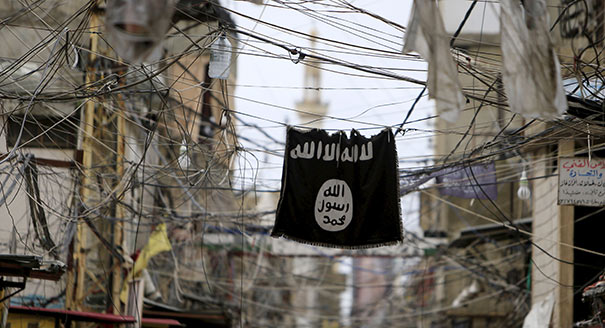
The Islamic State’s ideology is multifaceted and cannot be traced to one individual, movement, or period. Understanding it is crucial to defeating the group.
Hassan Hassan
The rapid rise of the Islamic State means core assumptions driving policy on Syria must be rethought.

Jessica Tuchman Mathews
The world can be an awfully dangerous and unpredictable place.


Thomas Carothers, Lina Khatib, Marwan Muasher, …
Given continuing sectarian strife and a rise in terrorist cells in Iraq, the U.S. invasion of the country could be a considered a military victory but is increasingly seen as the wrong political decision.

Zhang Chuanjie
No matter how long U.S. troops stay in Iraq, a stable power-sharing agreement will emerge only after all factions have tested each other’s strength and exhausted their desire to fight. Leaving Iraq is the right thing to do, for the U.S. and for Iraq.
Jessica Tuchman Mathews