• Research
  • About
  • Experts
Carnegie India logoCarnegie lettermark logo
Technology
{
  "authors": [
    "Giorgi Lomsadze"
  ],
  "type": "legacyinthemedia",
  "centerAffiliationAll": "",
  "centers": [
    "Carnegie Endowment for International Peace",
    "Carnegie Russia Eurasia Center"
  ],
  "collections": [],
  "englishNewsletterAll": "",
  "nonEnglishNewsletterAll": "",
  "primaryCenter": "Carnegie Endowment for International Peace",
  "programAffiliation": "",
  "programs": [],
  "projects": [],
  "regions": [
    "Caucasus",
    "Russia",
    "Georgia"
  ],
  "topics": [
    "Security",
    "Foreign Policy"
  ]
}
In The Media

Abkhazia: The Post-Soviet Revolution the World Blinked and Missed

Mass protests forced the president of the Georgian breakaway republic from power last week. Will Moscow use this chance to annex another pro-Russian area?

Link Copied
By Giorgi Lomsadze
Published on Jun 9, 2014

Source: Guardian

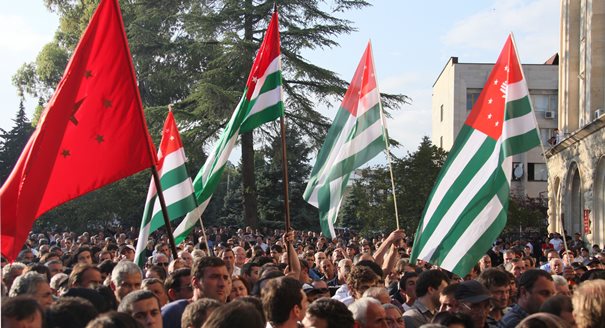
Last week's hair-trigger uprising in Abkhazia, the Georgian breakaway region supported by Russia, ended in a matter of days. It was over before it could be properly understood or even noticed by the outside world.

The proximity to events in Ukraine, both geographical and political, grabbed attention. But in Abkhazia, no lasting geopolitical shifts are expected. This was a change from within.

De-facto President Aleksander Ankvab resigned on June 1 after putting up only token resistance to a diverse band of opposition groups who stormed the building from which he governed. A new presidential vote has been called for 24 August. In the meantime, de-facto Parliamentary Speaker Valery Bganba is serving as the region's leader.

Local observers see this outcome as both the result of Ankvab's own shortcomings and as a failure of the breakaway region's system of governance.

Inal Khashig, editor-in-chief of the Sokhumi-based Chegemskaya Pravda newspaper, argued that 61-year-old Ankvab had failed to serve as Abkhazia's "chief foreman" and fix all of the territory's many problems, ranging from limited jobs to a crumbling public order, as had been expected of him. “What was expected of him was to set things in order in various fields,” Khashig said in commentary broadcast by the online Asarkia TV.

When anti-government sentiment erupted in late May, Ankvab made tactical mistakes, argued RFE/RL reporter Demis Palandov. “He failed to go out to meet the people… which created an image of a president, who is afraid to face his own people and does not respect the authority of the elders, who demanded him to come out to meet with the people gathered outside [the presidential office],” Palandov said in comments to the Tbilisi-based Netgazeti.ge.

He failed to go out to meet the people… which created an image of a president, who is afraid to face his own people

In his departure speech, Ankvab blamed his opponents for leading an uprising against him. He accused them of making past attempts on his life and claimed that his resignation was the only way to bring the temperature down, and preserve Abkhazia's statehood (which is only recognised by Russia and some of its allies). His current whereabouts are not clear.

Looking beyond Ankvab’s personality, some blamed Abkhazia's de-facto constitution and the powers it vested in the president. Hastily drafted and largely unmodified since Abkhazia cast off Georgian rule in the early 1990s, the document provides for a president, who is a “czar” and “king of the heap,” said analyst Alkhas Tkhagushev. The founding law was a post-war, transitional document, which now does not reflect the current thirst for more democracy and communal decision-making, Tkhagushev told Asarkia.

Moscow, the regional power with the most direct influence on Abkhazia, which houses hundreds of Russian troops, played the role of arbiter between Ankvab and the opposition.

For Tbilisi, developments in Abkhazia remain out of reach, behind a heavy cordon of Russian troops. The most immediate concern for Tbilisi is the fate of those ethnic Georgians who remain in Abkhazia and whose status is debated by separatist politicians.

This article was originally published by Giorgi Lomsadze for Eurasianet. It is part of the Guardian's New East network.

Giorgi Lomsadze
SecurityForeign PolicyCaucasusRussiaGeorgia

Carnegie India does not take institutional positions on public policy issues; the views represented herein are those of the author(s) and do not necessarily reflect the views of Carnegie, its staff, or its trustees.

More Work from Carnegie India

  • Commentary
    The Impact of U.S. Sanctions and Tariffs on India’s Russian Oil Imports

    This piece examines India’s response to U.S. sanctions and tariffs, specifically assessing the immediate market consequences, such as alterations in import costs, and the broader strategic implications for India’s energy security and foreign policy orientation.

      Vrinda Sahai

  • Article
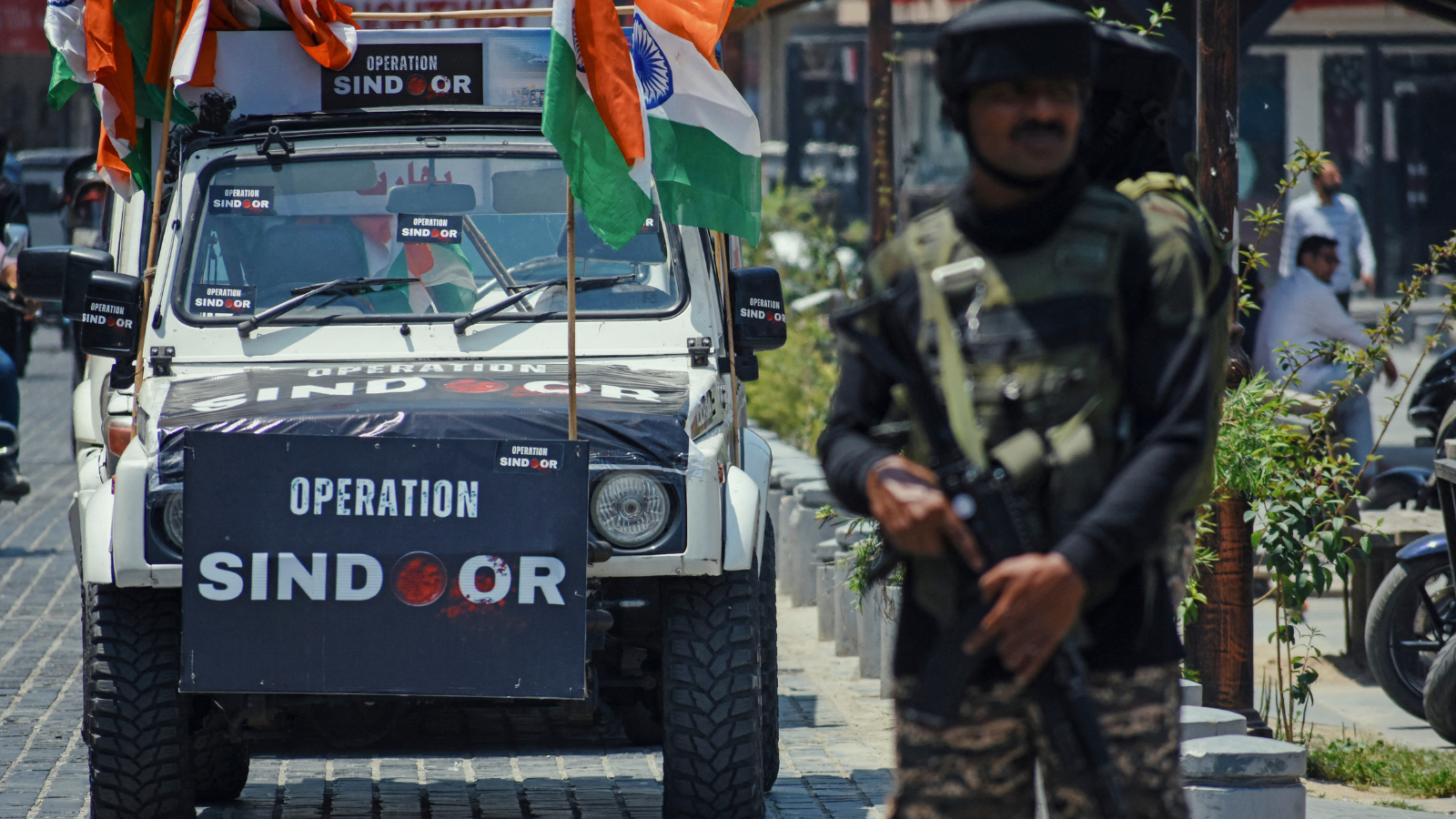
    Military Lessons from Operation Sindoor

    The India-Pakistan conflict that played out between May 6 and May 10, 2025, offers several military lessons. This article presents key takeaways from Operation Sindoor and breaks down how India’s preparations shaped the outcome and what more is needed to strengthen future readiness.

      Dinakar Peri

  • Book
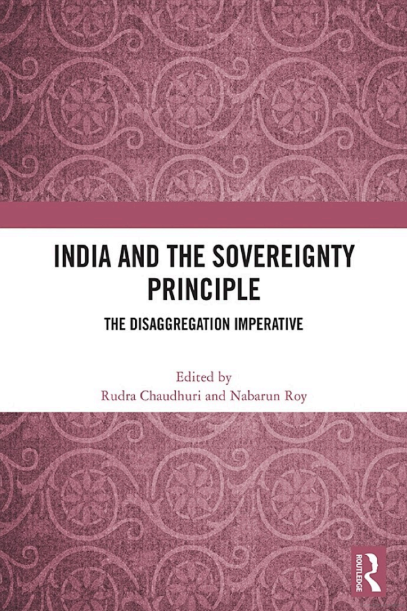
    India and the Sovereignty Principle: The Disaggregation Imperative

    This book offers a comprehensive analysis of India's evolving relationship with sovereignty in a complex global order. Moving beyond conventional narratives, it examines how the sovereignty principle shapes India's behavior across four critical domains—from traditional military power to contemporary data governance.

      Rudra Chaudhuri, Nabarun Roy

  • Commentary
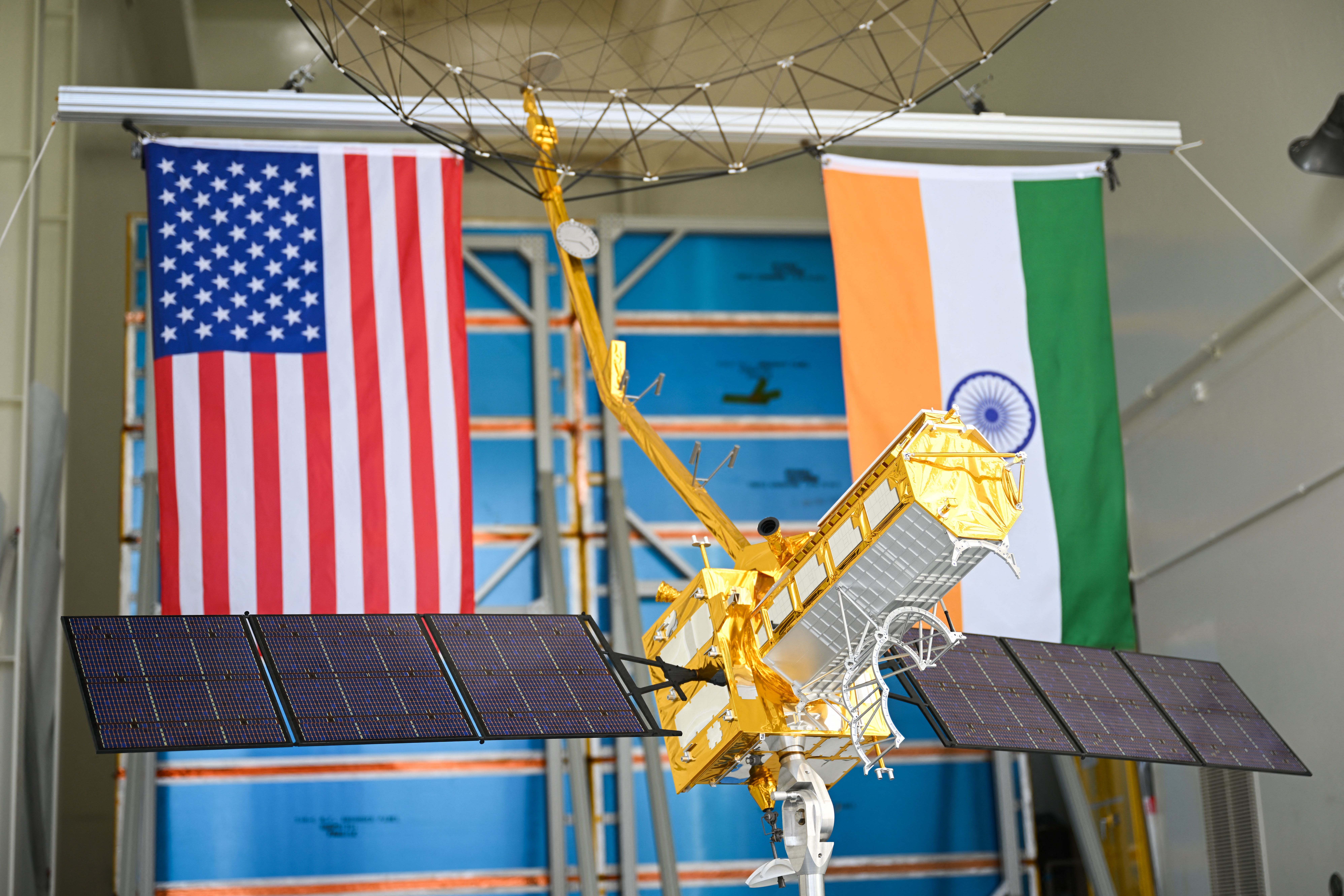
    NISAR Soars While India-U.S. Tariff Tensions Simmer

    On July 30, 2025, the United States announced 25 percent tariffs on Indian goods. While diplomatic tensions simmered on the trade front, a cosmic calm prevailed at the Sriharikota launch range. Officials from NASA and ISRO were preparing to launch an engineering marvel into space—the NASA-ISRO Synthetic Aperture Radar (NISAR), marking a significant milestone in the India-U.S. bilateral partnership.

      Tejas Bharadwaj

  • Article
    Hidden Tides: IUU Fishing and Regional Security Dynamics for India

    This article examines the scale and impact of Chinese IUU fishing operations globally and identifies the nature of the challenge posed by IUU fishing in the Indian Ocean Region (IOR). It also investigates why existing maritime law and international frameworks have struggled to address this growing threat.

      Ajay Kumar, Charukeshi Bhatt

Get more news and analysis from
Carnegie India
Carnegie India logo, white
Unit C-4, 5, 6, EdenparkShaheed Jeet Singh MargNew Delhi – 110016, IndiaPhone: 011-40078687
  • Research
  • About
  • Experts
  • Projects
  • Events
  • Contact
  • Careers
  • Privacy
  • For Media
Get more news and analysis from
Carnegie India
© 2026 Carnegie Endowment for International Peace. All rights reserved.