• Research
  • About
  • Experts
Carnegie India logoCarnegie lettermark logo
{
  "authors": [
    "Dmitri Trenin"
  ],
  "type": "testimony",
  "centerAffiliationAll": "",
  "centers": [
    "Carnegie Endowment for International Peace",
    "Carnegie Russia Eurasia Center"
  ],
  "collections": [],
  "englishNewsletterAll": "",
  "nonEnglishNewsletterAll": "",
  "primaryCenter": "Carnegie Russia Eurasia Center",
  "programAffiliation": "",
  "programs": [],
  "projects": [],
  "regions": [
    "North America",
    "United States",
    "Russia"
  ],
  "topics": [
    "Security",
    "Foreign Policy"
  ]
}
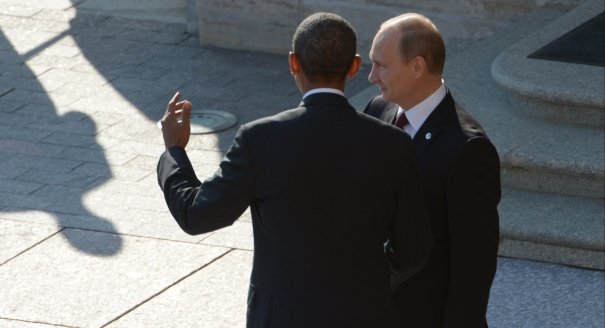
Source: Getty

Testimony
Carnegie Russia Eurasia Center

Russia and the United States: A Temporary Break or a New Cold War?

Russia and the United States have entered a period of severe confrontation. Caution, sober calculations, and strategic vision of possible international developments are necessary in the present circumstances.

Link Copied
By Dmitri Trenin
Published on Dec 8, 2014

Source: State Duma Committee on International Affairs

Mr. Chairman, respected members of the committee, colleagues.

  1. It is evident that the Russian Federation and the United States have entered a period of severe confrontation. In essence, this is an extremely fierce competition which takes the form of confrontation. This is the logical result of the non-inclusion/non-participation of Russia in the Euro-Atlantic security system and more broadly the failure to formulate a stable international order after the Cold War. A new period of rivalry will continue for a long time; it will not end with Barack Obama’s administration, regardless of the outcome of the 2016 presidential election in the United States.
     
  2. This confrontation is a matter of principle. On the one hand, Russia is defending its right to full sovereignty—domestic and international—and its vision of the world order. On the other hand, the United States is defending the international order it leads, the order that emerged as a result of the end of the Cold War and the disappearance of the USSR. In the foreseeable future, compromise on these issues will be unattainable.
     
  3. Russian-U.S. confrontation is asymmetrical. The stakes are significantly higher for Russia than for the United States. Unlike during the Cold War, the front line of today’s conflict is a dotted line: it crosses mainly issues of global governance, regional geopolitics, geoeconomics, as well as in the information- and cyber-spheres. Russia and the United States have common interests in a number of these spheres. There is no Iron Curtain.
     
  4.  The asymmetry and scope of the confrontation, rather than its direct nature, present serious dangers. The notion that Russia is a “former power” in irreversible decline has put down deep roots in the United States. In Russia, too, expectations of the imminent collapse of the United States have emerged.  Not only is there mutual alienation between Russian and American political classes, but there is also no mutual respect, to say nothing of trust.
     
  5. In these circumstances, a compromise is practically impossible—especially from the point of view of the United States—which leaves no room for a normal political dialogue, and no opportunity to agree on “rules of the game,” as existed during the Cold War. In the United States, Russia’s significance has been discounted to the extent that Russian nuclear capabilities have been placed outside the context of bilateral Russian-American relations.   This creates a high probability of mistakes and miscalculations that could lead to a direct Russian-American confrontation, including a military one.
     
  6. Caution, sober calculations, and strategic vision of possible international developments are necessary in the present circumstances.
     
  7. Caution means preventing escalation of tensions to the level of armed conflict. The present situation is more akin to the period before World War I than to the Cold War.

    Meeting this challenge demands at a minimum to stabilize the “front line” in Ukraine and to achieve provisional agreements for preserving the geopolitical status quo in Europe:
     
    1. NATO’s non-expansion eastward, which should be guaranteed not by a treaty with the West, not by the federalization of Ukraine, but by the real possibility of direct military confrontation with Russia should Ukraine join NATO.
       
    2. Reaffirmation of the principle of territorial integrity of states, stabilization of the situation in Ukraine on the principle “Crimea is with Russia, Donbas is with Ukraine.”
       
    This requires a sound understanding of the opponent: where he comes from, what he aspires to, what he is counting on.

    As official Russo-American contacts become much less frequent and devoid of substance, reliable channels for informal, trusted contact with the Americans become more important.

    Despite the bipartisan consensus on Russia, there are influential circles in the United States capable of a serious evaluation of relations with Russia. Developments in the world could stimulate such thinking.
     
  8. Sober analysis means concrete, objective assessment of interests, goals, and resources—ours and those of our rival. Trying too hard—as well as not trying hard enough—can prove fatal. What is needed is skillful maneuvering of resources and economy of force. Sober analysis also includes an understanding of common resources and goals where they coincide or are similar.
     
  9. Strategic vision means understanding that:
     
    1. Russian-American relations now are different than during the Cold War; they do not determine world development by themselves, though they fully conform to its logic.
       
    2. The new competition is not “a life and death struggle,” but a struggle to set the terms of future interaction, in other words, tough competition.
        
    3. The outcome of Russian-American confrontation will be determined not in Ukraine or Syria but mainly in the areas of economics, science, and technology, social development, and, more broadly, the internal state of Russia.
       
  10. We should not expect the collapse of the United States in the foreseeable future. Nor should we expect that Russia will be able to form a powerful anti-American coalition. The United States cannot win in this struggle, but Russia can lose. The result of Russo-American competition depends to a greater extent on what the people of Russia and her political, economic, and intellectual elite do at home, than on what the United States does in the international arena.

About the Author

Dmitri Trenin

Former Director, Carnegie Moscow Center

Trenin was director of the Carnegie Moscow Center from 2008 to early 2022.

    Recent Work

  • Commentary
    Mapping Russia’s New Approach to the Post-Soviet Space

      Dmitri Trenin

  • Commentary
    What a Week of Talks Between Russia and the West Revealed

      Dmitri Trenin

Dmitri Trenin
Former Director, Carnegie Moscow Center
SecurityForeign PolicyNorth AmericaUnited StatesRussia

Carnegie India does not take institutional positions on public policy issues; the views represented herein are those of the author(s) and do not necessarily reflect the views of Carnegie, its staff, or its trustees.

More Work from Carnegie India

  • Commentary
    India Signs the Pax Silica—A Counter to Pax Sinica?

    On the last day of the India AI Impact Summit, India signed Pax Silica, a U.S.-led declaration seemingly focused on semiconductors. While India’s accession to the same was not entirely unforeseen, becoming a signatory nation this quickly was not on the cards either.

      Konark Bhandari

  • Commentary
    The Impact of U.S. Sanctions and Tariffs on India’s Russian Oil Imports

    This piece examines India’s response to U.S. sanctions and tariffs, specifically assessing the immediate market consequences, such as alterations in import costs, and the broader strategic implications for India’s energy security and foreign policy orientation.
      Vrinda Sahai
  • Article
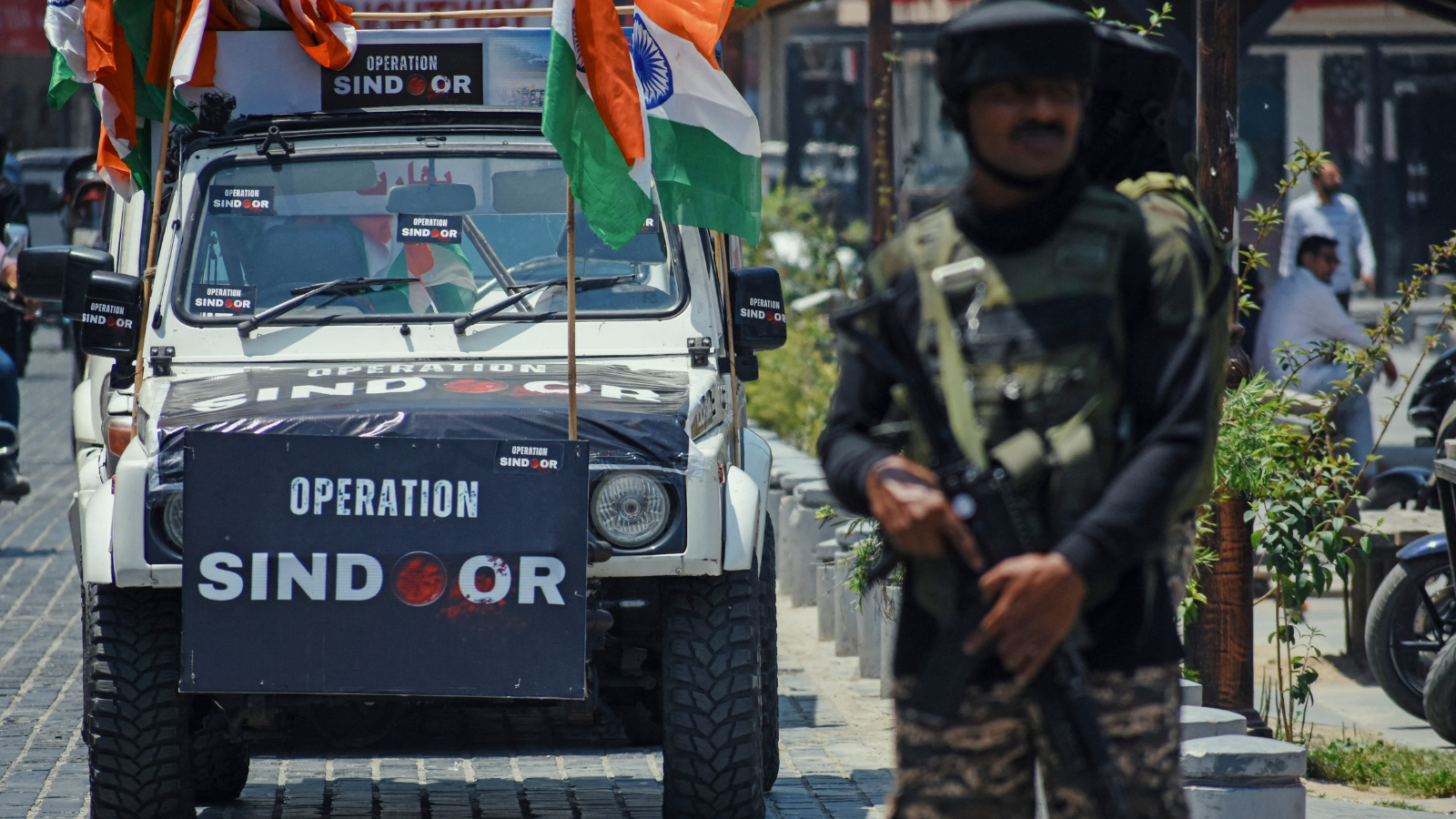
    Military Lessons from Operation Sindoor

    The India-Pakistan conflict that played out between May 6 and May 10, 2025, offers several military lessons. This article presents key takeaways from Operation Sindoor and breaks down how India’s preparations shaped the outcome and what more is needed to strengthen future readiness.

      Dinakar Peri
  • Book
    India and the Sovereignty Principle: The Disaggregation Imperative

    This book offers a comprehensive analysis of India's evolving relationship with sovereignty in a complex global order. Moving beyond conventional narratives, it examines how the sovereignty principle shapes India's behavior across four critical domains—from traditional military power to contemporary data governance.

      Rudra Chaudhuri, Nabarun Roy
  • Commentary
    NISAR Soars While India-U.S. Tariff Tensions Simmer

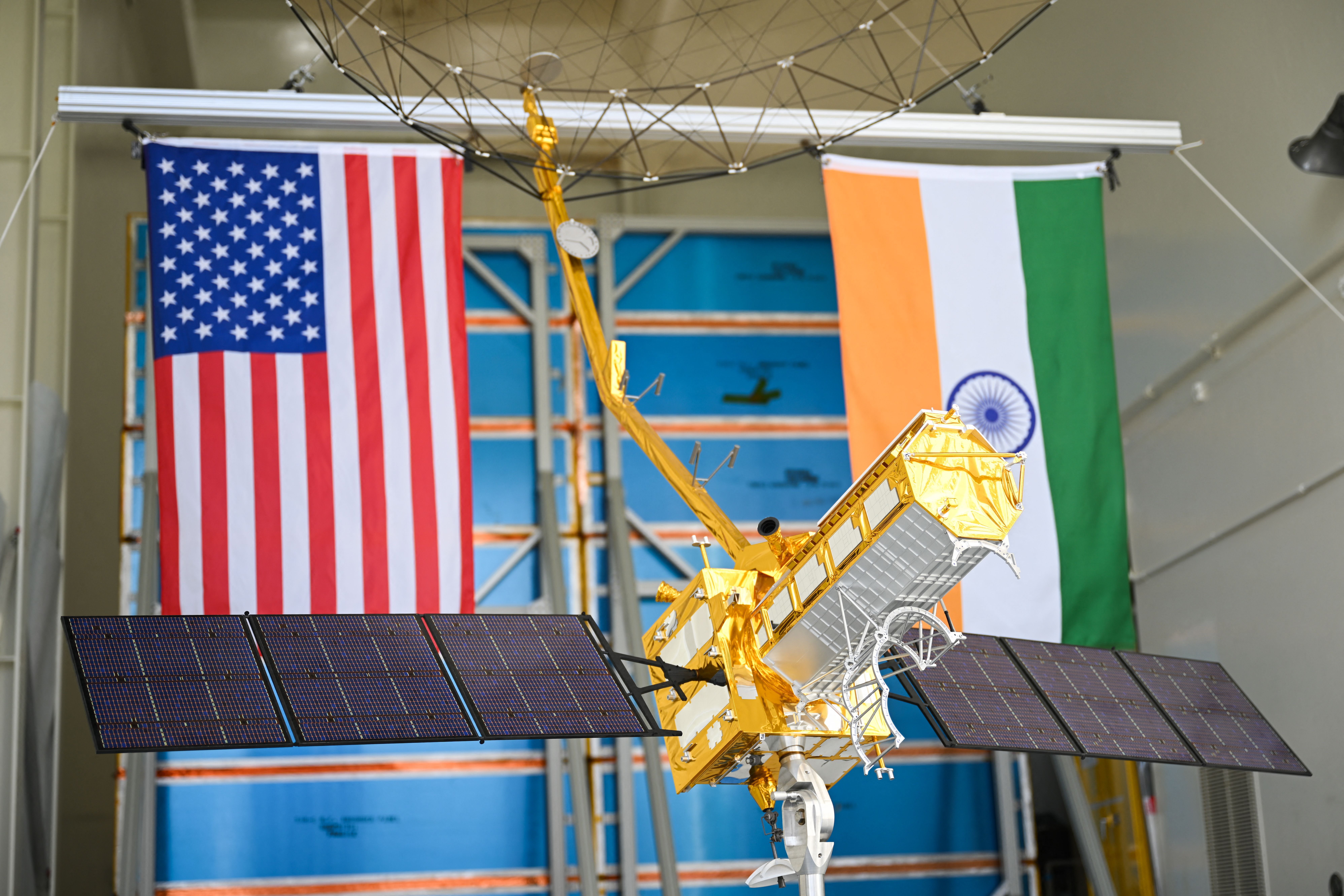
    On July 30, 2025, the United States announced 25 percent tariffs on Indian goods. While diplomatic tensions simmered on the trade front, a cosmic calm prevailed at the Sriharikota launch range. Officials from NASA and ISRO were preparing to launch an engineering marvel into space—the NASA-ISRO Synthetic Aperture Radar (NISAR), marking a significant milestone in the India-U.S. bilateral partnership.

      Tejas Bharadwaj

Get more news and analysis from
Carnegie India
Carnegie India logo, white
Unit C-4, 5, 6, EdenparkShaheed Jeet Singh MargNew Delhi – 110016, IndiaPhone: 011-40078687
  • Research
  • About
  • Experts
  • Projects
  • Events
  • Contact
  • Careers
  • Privacy
  • For Media
Get more news and analysis from
Carnegie India
© 2026 Carnegie Endowment for International Peace. All rights reserved.