Source: South China Morning Post
China’s Belt and Road Initiative has been described by President Xi Jinping as the “project of the century.” But with resistance growing, the vulnerabilities of China’s ascent are beginning to reveal opportunities for the United States to offer desirable alternatives.
As belt and road investments have rolled out across the world, they have been dogged by allegations of corruption and enabled by China’s willingness to seemingly ignore poor governance in its partners.
This dynamic is unsustainable. Malaysia and Pakistan, two of the largest beneficiaries of Chinese investment in recent years, are the latest to demonstrate concerns with Chinese belt and road initiatives in their nations. How Beijing responds, and whether it learns from its early mistakes, will determine the fate of Xi’s ambition and the type of power China becomes.
The new leaders of Malaysia and Pakistan are very different men. Malaysia’s Mahathir Mohamed is a nonagenarian second-time leader, with a decades-long career at the apex of Asian politics. Pakistan’s Imran Khan is a cricket legend turned rookie prime minister after two decades in the political wilderness.
But both won elections over the summer by challenging incumbents on the backs of populist, anti-corruption campaigns, centred in part on the surge in Chinese investment in the last five years. Just after his first visit to China as prime minister this week, Khan will travel to Kuala Lumpur to meet Mahathir next week.
Malaysia and Pakistan are distinctive economies, highlighting the broad and diffuse nature of China’s outreach and the varied risks associated with its belt and road investments. Malaysia is a wayfaring nation, sitting astride the busiest shipping lane in the world. It runs a huge trade surplus, built from its participation in global supply chains and its large oil and gas reserves.
Pakistan runs a massive and persistent trade deficit, is heavily dependent on imported fuel and sits in the least economically connected region in the world.
Unless China takes steps to address governance and regulatory deficiencies in their client states, many could be at risk of becoming white elephants
It is facing an urgent balance of payments crisis, and recently requested an IMF bailout. Pakistan is particularly vulnerable, from a debt sustainability perspective, to a surge in Chinese lending, while Malaysia is at lower risk. Despite the differences between these nations and their leaders, both are now pushing back against Chinese belt and road investment.
Mahathir’s assertion of independence from Beijing began in his campaign, when he broke with his predecessor, Najib Razak, over corruption allegations involving state-owned companies and Chinese investments.
Soon after his election, Mahathir announced his intention to delay or cancel US$23 billion in Chinese projects, including the East Coast Rail Link, which was to connect the east coast of Peninsular Malaysia with shipping routes in the west, and three pipelines.
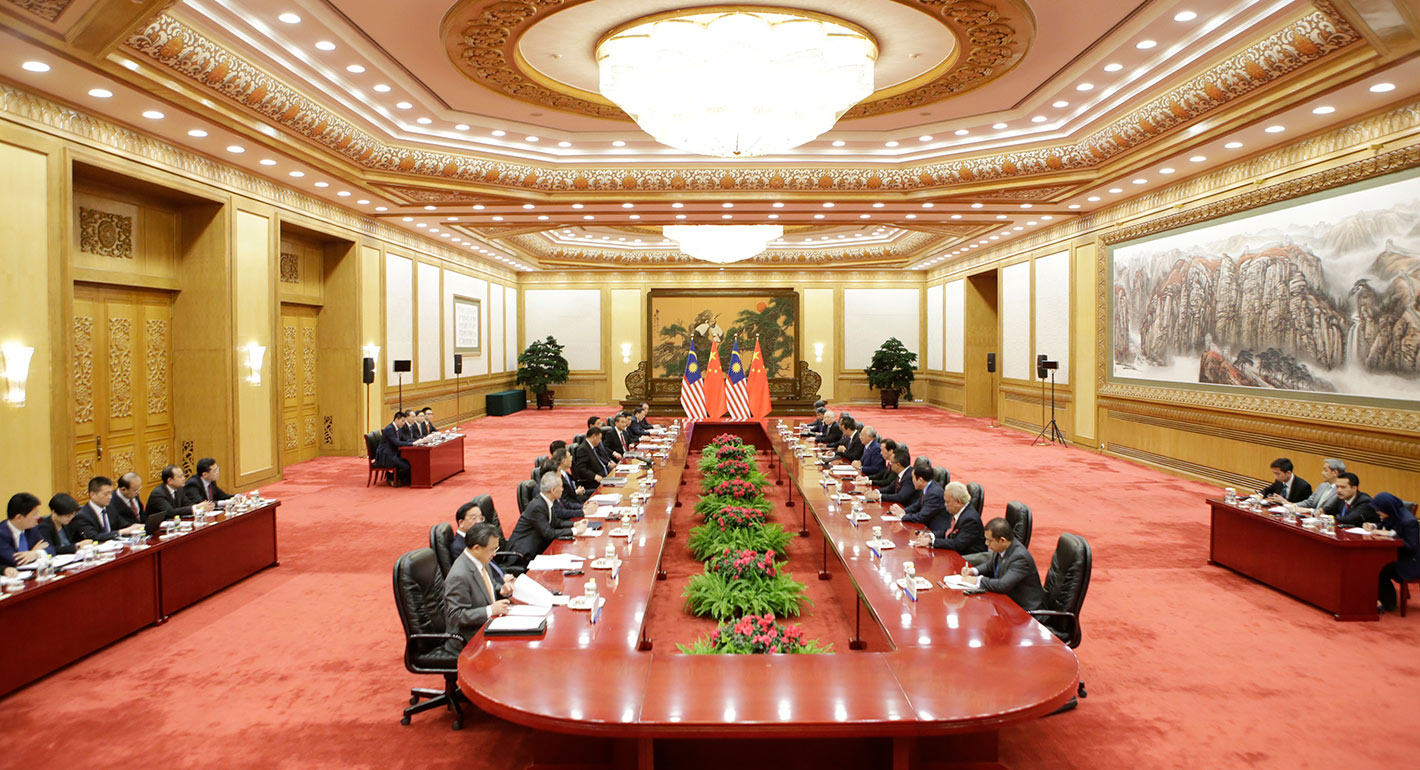
Then, during a five-day trip to China in August, Mahathir delivered what some read as a direct public rebuke of China during a joint press conference with Chinese Premier Li Keqiang in Beijing by expressing his concern over “a new version of colonialism”. Even though Mahathir was careful to say that his grievance was not with Beijing but corrupt Malaysian leaders, the rebuke drew headlines.
Khan’s decision to visit Mahathir early in his tenure, and alongside his first official visit to China, is surprising in the context of Mahathir’s recent controversial visit.
Nevertheless, the two leaders inherited analogous challenges to manage with China. Just like Mahathir who railed against the government of his predecessor, Khan strongly criticised the government of former prime minister Nawaz Sharif, who was disqualified from office in September 2017 for alleged corruption related to foreign contracts. Anti-corruption investigations continue against both Sharif and his brother, the former chief minister of Punjab.
But unlike Malaysia, Pakistan is increasingly isolated and relying on China for both investment and political support. The China-Pakistan Economic Corridor (CPEC) is an economic bright spot for a crisis economy.
On October 8, Pakistan announced that it would request emergency IMF support to ease a balance of payments crisis, and soon after Khan’s return from Beijing, an IMF delegation will arrive in Islamabad to begin programme negotiations. Khan’s hope is that China, and perhaps also Malaysia, will join Saudi Arabia in extending support to Pakistan in order to reduce its reliance on the IMF.
A cascade of deeper concerns about China’s investment programme emerged during Khan’s first two months in office. After Khan’s de facto commerce minister told the Financial Times in September that “the previous government did a bad job negotiating with China”, his government announced that a prospective loan to Pakistan’s decrepit railway parastatal would be scaled back. Khan’s visit to China will focus on securing more opportunities within CPEC for local businesses and access to Chinese technology.
Beijing should see the reactions of new governments in Malaysia and Pakistan as a warning that the belt and road projects could be at risk without a course correction. First, China must improve transparency and accountability standards, which should be consistent with Xi’s anti-corruption drive.
Second, Beijing must recognise that to the extent that its investments are conditioned on the use of Chinese workers or firms and crowd out local inputs, they will be difficult to sustain, particularly in democracies. Opening up space within belt and road investments for local and international private sector participation will improve their prospects for success.
Third, unless China takes steps to address governance and regulatory deficiencies in their client states, many could be at risk of becoming white elephants. The challenges will not stop at Malaysia and Pakistan – similar reviews are likely to take place in Indonesia, if presidential hopeful Prabowo Subianto is elected, the Maldives, and other states in the coming months.
These examples highlight vulnerabilities in China’s economic rise, and present opportunities for the United States. First, ostracising states that accept Chinese investment or support is a mistake. Rather, the US should offer serious alternatives.
That does not mean offering to replicate China’s plans – because as Mahathir and Khan point out, not every infrastructure project makes sense. Rather, the US should meet partners at their priorities.
Second, local interests still trump geopolitics. It is a mistake to confuse indications of local resistance to Chinese investments as strategic rebuke against China’s rise. Malaysia and Pakistan may choose to curtail Chinese investment plans, but China remains a large player in both markets. As Japanese Prime Minister Shinzo Abe’s recent visit to Beijing exhibits, even long-time US allies see benefit from improving ties with rising China.
Third, the US needs to remain active and opportunistic across Asia. A successful competitive strategy requires vigilance, diligence and persistence. That the challenges are occurring in complicated democracies is a reminder of the underlying resilience of liberal institutions, even amid America’s crisis of confidence.
This article was originally published in the South China Morning Post.