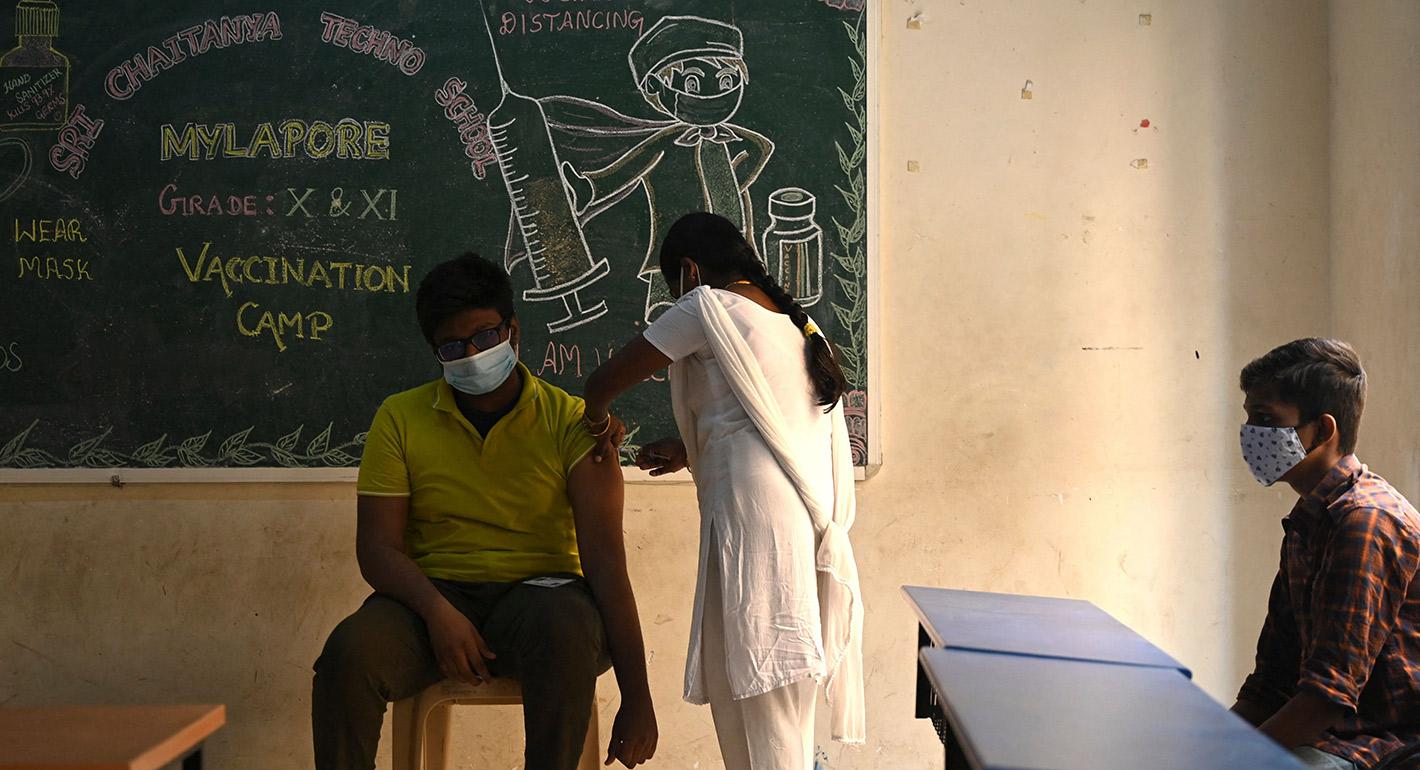
Vaccine hesitancy is not a new challenge in India. According to a survey released by the social network LocalCircles in October 2021, approximately 7.5 percent of adults in India were hesitant to take COVID-19 vaccines. Just one month later, the figure had grown to 12.3 percent.
According to some researchers and industry experts, vaccine hesitancy is likely to prolong the pandemic, leading to greater damage to the economy and threatening countries’ abilities to recover from the current shocks. Although the size of such anti-vax groups is still small worldwide, their online communication strategy is effective, in contrast to groups that explain the benefits of vaccines.
In India, there is a variety of possible reasons for growing vaccine hesitancy, which has become one of the contributing factors in India’s delayed target to fully vaccinate its entire adult population. For one, the Indian population may have developed a fear of side effects due to the limited availability of clinical trial data to prove the vaccines’ safety and efficacy.
For another, the concept of vaccination in India is limited to infants and children, unlike in Western countries. Since the COVID-19 immunization program is the first-ever adult vaccination program in the country, there weren’t many dedicated adult vaccination centers. And the awareness regarding adult vaccination was poor, especially in rural India.
Moreover, India’s voluntary immunization program allowed people to opt out of getting the shot. While citizens residing in urban areas had better access to information explaining the benefits of vaccines, myths started circulating in rural areas that vaccines could lead to death and illnesses in adults, contributing to vaccine hesitancy.
Other obstacles include linguistic barriers to access appropriate information, religious and ideological beliefs, difficulty reaching the vaccination centers, inequitable access to the health system, and mistrust in the system.
To instill vaccine confidence and build trust in the health system, the Indian government is expanding its communication strategies, especially through social media, to curb the spread of misinformation. It is also leveraging some of its existing initiatives, such as the Aspirational Districts Collaborative, to engage with local leaders to dispel misinformation around COVID-19 vaccines. Moreover, some district-level administrations are urging people to take vaccines through awareness sessions or using regional folk songs to convey the benefits of vaccines. While these are baby steps in the right direction, it is important for India to develop a sustained campaign to tackle hesitancy.
The state governments in India should invest in evidence-based research to identify sections of the population with lower trust in vaccines and recognize causes of their hesitancy to expand immunization coverage. A team of multidisciplinary experts from behavioral science, biology, sociology, and other related fields should be formed at the state level to conduct rigorous research surrounding the psychological, social, religious, and political beliefs of a population regarding the administration of vaccines. Changes in the education curriculum to spread awareness about the benefits of vaccines could also help to build confidence.
Communicating the benefits of vaccines in local languages—corroborated with strong scientific evidence of vaccine safety and efficacy—is perhaps the most important for enhancing people’s trust and confidence in vaccines. In addition to leveraging social media platforms and public posters to dispel myths and promote vaccines, door-to-door campaigns in vaccine-hesitant areas might be crucial to address people’s concerns and instill or restore confidence in vaccines or their government before more hesitancy spreads to other regions.
In addition to effective vaccination campaigns, interventions are needed to increase COVID-19 vaccination uptake among those who wish to take the vaccine but have difficulty accessing the vaccination centers. For example, the government could introduce financial remuneration or encourage private health insurance companies to include vaccines in a person’s coverage. Nonfinancial incentives, such as free food or a free health check-up, can also serve this end. While this strategy is already being used in a few countries like Israel, Serbia, and the United States, India can also experiment with this approach.
Such sustained public engagement that anticipates people’s questions and addresses their concerns, combined with financial or nonfinancial incentives for vaccination, will be pivotal to address the reasons for vaccine hesitancy and strengthen India’s fight against this pandemic.