

Q&A
Deepti Choubey
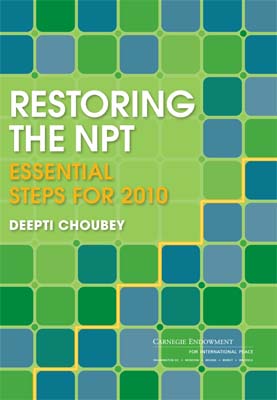
The upcoming 2010 Non-Proliferation Treaty Review Conference is an opportunity to strengthen the struggling nonproliferation regime, but achieving even modest success will require the political cooperation of nuclear and non-nuclear-weapon states.
With growing fears about Iran and North Korea’s nuclear programs, conventional wisdom holds that the nonproliferation regime is on the verge of collapse. The upcoming 2010 Non-Proliferation Treaty (NPT) Review Conference is an opportunity to strengthen the regime, but it is in danger of being overloaded by expectations.
Deepti Choubey identifies achievable goals for the Review Conference and outlines steps that nuclear-weapon states—including recommendations tailored for the United States—and non–nuclear-weapon states should take to avert failure.
Recommendations:
“Averting failure and achieving some modest success at the 2010 NPT Review Conference will require action by all states—nuclear-weapon states and non-nuclear-weapon states alike,” says Choubey. “Although ambitious steps are welcome, small steps will do.”

Former Deputy Director, Nuclear Policy Program
Choubey was previously the director of the Peace and Security Initiative for the Ploughshares Fund. She also worked for Ambassador Nancy Soderberg in the New York office of the International Crisis Group.
Recent Work
Deepti Choubey
Deepti Choubey
Carnegie India does not take institutional positions on public policy issues; the views represented herein are those of the author(s) and do not necessarily reflect the views of Carnegie, its staff, or its trustees.

On the last day of the India AI Impact Summit, India signed Pax Silica, a U.S.-led declaration seemingly focused on semiconductors. While India’s accession to the same was not entirely unforeseen, becoming a signatory nation this quickly was not on the cards either.

Konark Bhandari

This piece examines India’s response to U.S. sanctions and tariffs, specifically assessing the immediate market consequences, such as alterations in import costs, and the broader strategic implications for India’s energy security and foreign policy orientation.

Vrinda Sahai
This paper examines the evolution of India-China economic ties from 2005 to 2025. It explores the impact of global events, bilateral political ties, and domestic policies on distinct spheres of the economic relationship.

Santosh Pai
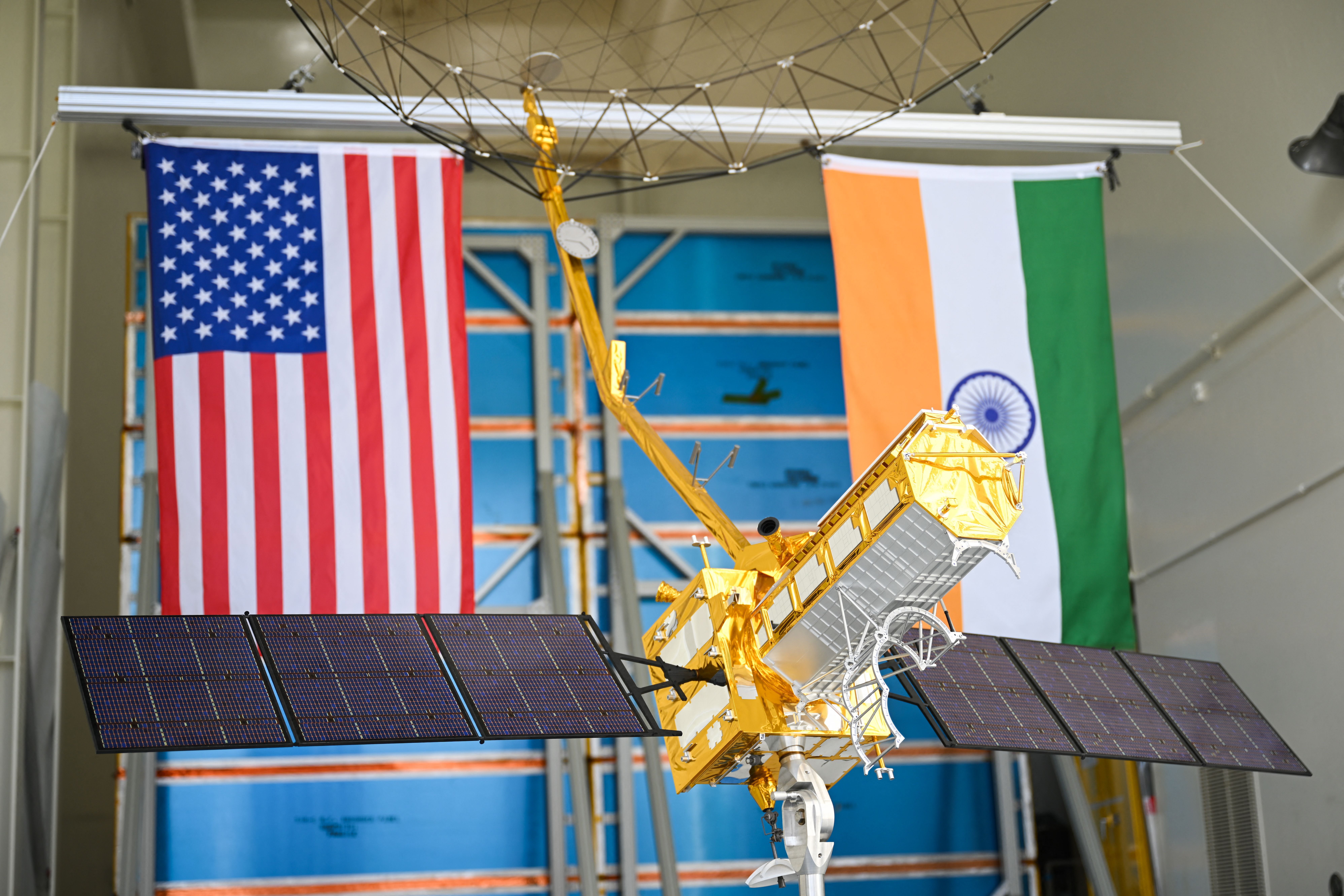
On July 30, 2025, the United States announced 25 percent tariffs on Indian goods. While diplomatic tensions simmered on the trade front, a cosmic calm prevailed at the Sriharikota launch range. Officials from NASA and ISRO were preparing to launch an engineering marvel into space—the NASA-ISRO Synthetic Aperture Radar (NISAR), marking a significant milestone in the India-U.S. bilateral partnership.

Tejas Bharadwaj

This article examines the scale and impact of Chinese IUU fishing operations globally and identifies the nature of the challenge posed by IUU fishing in the Indian Ocean Region (IOR). It also investigates why existing maritime law and international frameworks have struggled to address this growing threat.


Ajay Kumar, Charukeshi Bhatt