• Research
  • About
  • Experts
Carnegie India logoCarnegie lettermark logo
Technology
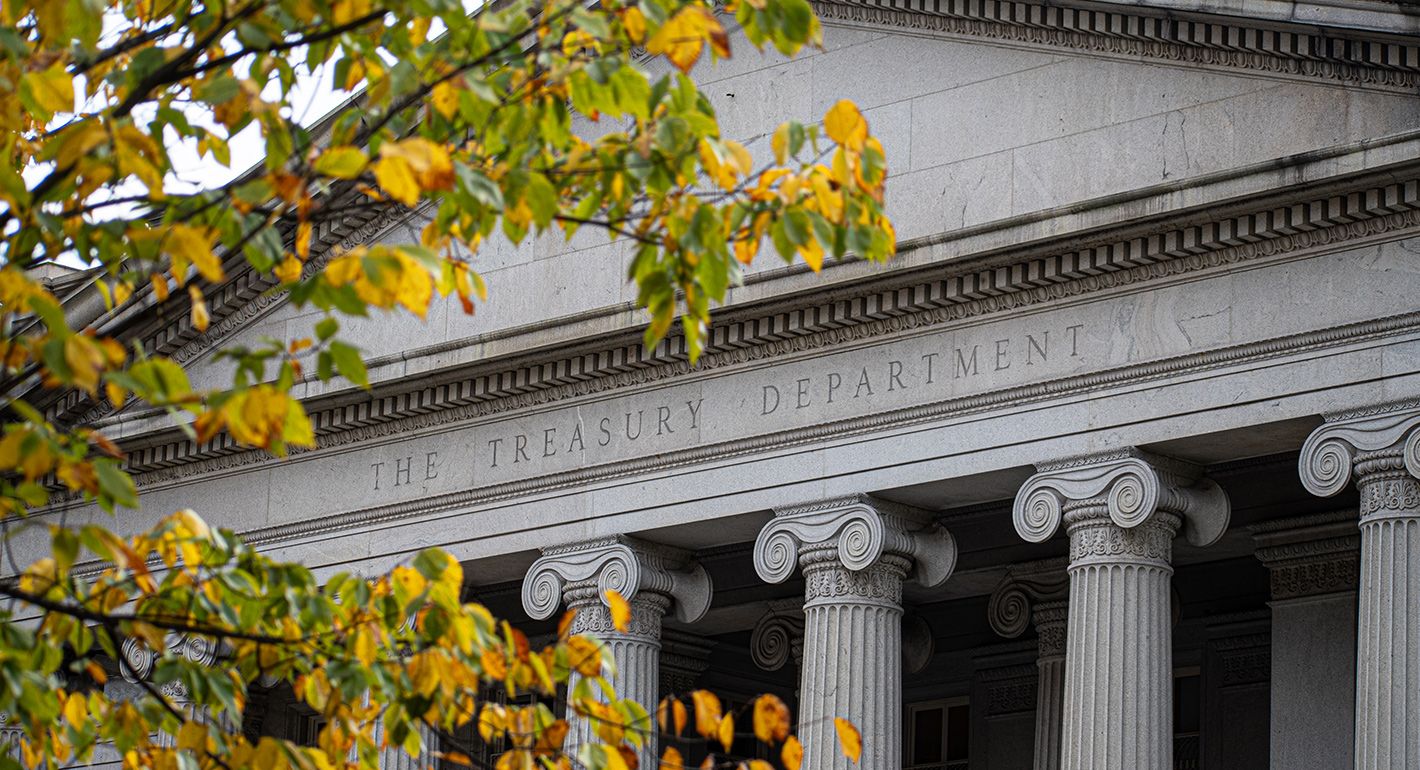
U.S. Treasury Department
Research

How the Federal Financing Bank Could Strengthen Clean Energy Supply Chains

The need to deploy public funds for clean energy is clear. But how could the government do it? The Federal Financing Bank could be the answer.

Link Copied
By Sarah Bloom Raskin
Published on Feb 26, 2025
factory

Project

The U.S. Foreign Policy for Clean Energy Taskforce

Clean energy and associated products are increasingly essential for the security and prosperity of the United States. But if the United States is to decarbonize its own economy and do its part to cut global emissions to net zero, it will have to effect change beyond its borders.

Learn More
Project hero Image

Project

Political Economy Initiative

Carnegie’s Political Economy Initiative features ongoing efforts to help policymakers better understand these dynamics, as well as the ways in which foreign policy tools, economic statecraft, and governance reform can foster greater economic security and mitigate global tensions.

Learn More

Since my time at the Treasury Department, I have been intrigued by the possibility of repurposing and reimagining various financing mechanisms that currently live at the department in service to the need to finance clean energy supply chains.

I wouldn’t characterize these mechanisms as ready to be deployed by any stretch, but I think they are worth uncovering and then understanding.

One such mechanism is the Federal Financing Bank (FFB), which was created by Congress in 1973. This so-called bank sits inside the Treasury Department and is administered by Treasury career staff—there are maybe four full time people at most running this bank. They have a management structure like any bank, but with a governance structure that consists of the undersecretary for domestic affairs, the assistant secretary for financial markets, and the deputy assistant secretary for public finance. It’s not a bank as we think of banks, but rather a financing vehicle that facilitates borrowing by the various federal agencies so as to limit the stress that federal borrowings might otherwise press on private financial markets.

The Federal Financing Bank borrows from the Treasury and uses these funds to make loans to federal agencies that are tasked by Congress to executing program. Because the FFB can borrow cheaply, it can pass this low-cost funding onto federal agencies that are implementing particular programs. In other words, the federal programs that the FFB are funding are getting funds from the Treasury rather than from private markets; and because this funding is cheaper, there are savings to taxpayers. 

The portfolio of the FFB for fiscal year 2024 is currently sized at approximately $185 billion. The breakdown of the loans spans entities like the Rural Utilities Service, HUD’s Risk Share Program, and the DOE Loan Programs Office. The details of these loan facilities need examination, but the point is that there is an entity already stood up by Congress inside the Treasury that can potentially serve as an adjunct credit facilitator to clean energy supply chain federal projects. The funding is internal, and so the FFB mechanism has the potential to bring down the cost of financing these projects. 

More exploration has to be considered here—for example, what federal programs exist whose cost could be reduced by virtue of this mechanism? And what federal programs could be created that relate to clean supply chains that could use a financing facilitator? Is the mandate for the Federal Financial Bank broad enough to contemplate its use in other ways, while staying consistent with the Congressional intent that created it? What other financial plumbing mechanisms exist at the Treasury and even elsewhere—like the Department of Agriculture—that can be deployed to bring down the cost of creating clean supply channels? Does the Exchange Stabilization Fund have relevance to the financing of clean supply channels? 

In working on this Carnegie taskforce, we’ve reminded each other of why the United States should strengthen clean energy supply chains, both at home and abroad, and explored the best measures for doing so. But we can’t forget the how: when the political will is there, policymakers will need to know how to best provide the finance to the clean energy projects that will secure U.S. prosperity and security in the future.

Sarah Bloom Raskin

Sarah Bloom Raskin is the Colin W. Brown Distinguished Professor of the Practice of Law at Duke University and was previously the deputy secretary of the U.S. Department of the Treasury from 2014 to 2017. Prior to her role at the Department of the Treasury, Raskin was a governor of the Federal Reserve Board and a member of the Federal Open Market Committee. 

Sarah Bloom Raskin
United StatesClimate ChangeEnergyEconomy

Carnegie India does not take institutional positions on public policy issues; the views represented herein are those of the author(s) and do not necessarily reflect the views of Carnegie, its staff, or its trustees.

More Work from Carnegie India

  • Commentary
    The Impact of U.S. Sanctions and Tariffs on India’s Russian Oil Imports

    This piece examines India’s response to U.S. sanctions and tariffs, specifically assessing the immediate market consequences, such as alterations in import costs, and the broader strategic implications for India’s energy security and foreign policy orientation.

      Vrinda Sahai

  • Paper
    India-China Economic Ties: Determinants and Possibilities

    This paper examines the evolution of India-China economic ties from 2005 to 2025. It explores the impact of global events, bilateral political ties, and domestic policies on distinct spheres of the economic relationship.

      Santosh Pai

  • Commentary
    NISAR Soars While India-U.S. Tariff Tensions Simmer

    On July 30, 2025, the United States announced 25 percent tariffs on Indian goods. While diplomatic tensions simmered on the trade front, a cosmic calm prevailed at the Sriharikota launch range. Officials from NASA and ISRO were preparing to launch an engineering marvel into space—the NASA-ISRO Synthetic Aperture Radar (NISAR), marking a significant milestone in the India-U.S. bilateral partnership.

      Tejas Bharadwaj

  • Commentary
    TRUST and Tariffs

    The India-U.S. relationship currently appears buffeted between three “Ts”—TRUST, Tariffs, and Trump.

      Arun K. Singh

  • Commentary
    The India-U.S. TRUST Initiative: Advancing Semiconductor Supply Chain Cooperation

    As part of the TRUST initiative, leaders of the two countries committed to building trusted and resilient supply chains, including for semiconductors and critical minerals. India and the United States have made steady progress in this area over the years. This essay explores the takeaways from discussions on semiconductor supply chains that took place at Carnegie India’s 9th Global Technology Summit.

      Konark Bhandari

Get more news and analysis from
Carnegie India
Carnegie India logo, white
Unit C-4, 5, 6, EdenparkShaheed Jeet Singh MargNew Delhi – 110016, IndiaPhone: 011-40078687
  • Research
  • About
  • Experts
  • Projects
  • Events
  • Contact
  • Careers
  • Privacy
  • For Media
Get more news and analysis from
Carnegie India
© 2026 Carnegie Endowment for International Peace. All rights reserved.