

Commentary
Implementing Phase 2 of Trump’s plan for the territory only makes sense if all in Phase 1 is implemented.
Yezid Sayigh
{
  "authors": [
    "David Burwell"
  ],
  "type": "legacyinthemedia",
  "centerAffiliationAll": "",
  "centers": [
    "Carnegie Endowment for International Peace"
  ],
  "collections": [],
  "englishNewsletterAll": "",
  "nonEnglishNewsletterAll": "",
  "primaryCenter": "Carnegie Endowment for International Peace",
  "programAffiliation": "",
  "programs": [
    "Sustainability, Climate, and Geopolitics"
  ],
  "projects": [],
  "regions": [
    "North America",
    "United States"
  ],
  "topics": [
    "Climate Change"
  ]
}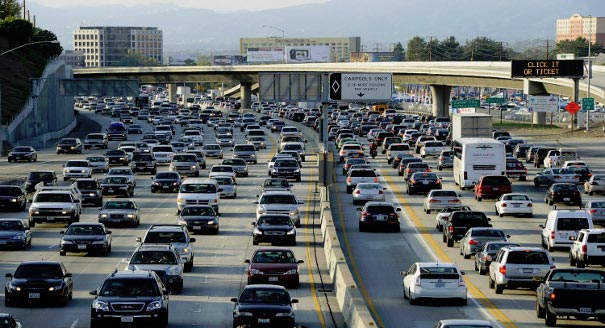
The U.S. highway funding bill traded the right to guaranteed funding for the opportunity to demand better outcomes from the overall program.
Source: Streetsblog

On defense, the TIFIA loan program lost a lot of its performance screens. We lost big chunks of the review process conducted under the National Environment Policy Act, which guards against ill-advised highway projects. Plus we saw the diminishment of separate funding for bike/ped programs, Safe Routes to Schools, and the Recreational Trails Program, which collectively lost about 34 percent of their set-aside funding — cut from about $1.2 billion to about $800 million annually. The Congestion Mitigation and Air Quality Program is also more porous — but at least we still have the rule that CMAQ can’t be used to build new highways for single occupancy vehicle use.
Many of these reforms were lost despite the fact that the House didn’t offer a bill with conflicting language — the conferees just rewrote the Senate language to serve their own objectives. If reports are true, many of these losses were in return for dropping Keystone XL from the bill — a rider that was both non-germane and basically a “House hold.” It will be back on any other Senate bill the House leadership wants to hold up until its terms are met, whether or not it has an opposing bill to offer. This is not negotiation, it is extortion.Our best response? We need to get over it. This is hardball politics over a bill that distributes over $50 billion annually to all the state DOTs and regional transit agencies, backed by major construction industries. Federal transportation bills have historically been a fight over money, not policy, and members of Congress are naturally going to look to their own state officials for guidance on how to allocate program funds, and for what purposes. State DOTs want maximum flexibility to use the funds as they see fit, with the fewest possible federal conditions on their use. We are fighting to bend the arc of transportation history away from a food fight over money to focus on policy — meaning outcomes. It is a worthy and essential goal for a program that determines the physical fabric of our country and our communities.
Based on what we are up against, we did okay. Transportation Enhancements survived — and 50 percent of the money, about $400 million, is directly delegated to metropolitan planning organizations in urbanized areas with populations over 200,000 for project selection and oversight. The rest is still controlled by state DOTs but is up for grabs — if we can convince governors not to opt out of the program.
We also have to fight hard to make NEPA work since new categories of projects are exempt and states will be delegated more responsibility to monitor themselves for NEPA compliance. Citizen oversight is needed.
The Projects of National and Regional Significance (PNRS) — formerly a grab-bag of big earmarks — is now a discretionary grant program run by U.S. DOT — much like the TIGER program, but only state DOTs can apply, not MPOs or cities. We must find a way to screen DOT applications for community outcomes. Also, it will be funded out of annual appropriations, not the Highway Trust Fund.
Transit New Starts survived at presently funded levels. We have a new FTA program to provide planning grants to cities and communities for transit oriented development, and new planning requirements linking transportation investment plans to performance metrics and accountability requirements at the MPO and statewide levels.
Here is the bottom line — what we lost was the right to guaranteed funding. What we won was the right to demand more transparency, accountability and performance out of all transportation investments. In short, we have traded guaranteed access to small pots of set-aside funds for the opportunity to demand better outcomes from the overall program. While this is going to be hand-to-hand combat, we now have the “boots on the ground” to prevail. That’s our new campaign.
Finally, while being clear-eyed about the challenges ahead, take a bow for your hard work and taking the fight to the end. The transportation reform coalition and its 400+ partners were a real force to be reckoned with in this debate. This coalition now has both inside access to policy leaders and outside grassroots support throughout America to provide leverage to our positions. Absent your commitment, many good programs would have been lost completely — including Transportation Enhancements, Safe Routes to School, NEPA, CMAQ, regional planning, performance-based project assessment and the direct allocation of some surface transportation funding to regional agencies.
This was all achieved without a strong leader in our corner in Congress. In 1991, when the Intermodal Surface Transportation Efficiency Act — the first major transportation reform bill — was enacted, we had a huge advantage — the full support of two Senate champions: Daniel Patrick Moynihan (D-NY) and John Chaffee (R-RI). We lacked such leadership this time around. Still, we both defended the ISTEA reforms and made inroads on even broader program reform. What we achieved was because we had the muscle to do it and we all stuck together. Take a bow.
What was lost in the last days can be won back in the next bill — and we have only 27 months to do so. That is not a long time. If we count June 2008, the date major funder support was secured, as the start of the present campaign, it’s already 48 months long. Let’s use the time we have to further bend that arc of transportation history towards support for what America really stands for: vibrant, healthy, equitable communities supporting a strong, green and efficient economy.
Time to get our boots back on.
Carnegie does not take institutional positions on public policy issues; the views represented herein are those of the author(s) and do not necessarily reflect the views of Carnegie, its staff, or its trustees.
Implementing Phase 2 of Trump’s plan for the territory only makes sense if all in Phase 1 is implemented.
Yezid Sayigh
Israeli-Lebanese talks have stalled, and the reason is that the United States and Israel want to impose normalization.
Michael Young

The country’s leadership is increasingly uneasy about multiple challenges from the Levant to the South Caucasus.

Armenak Tokmajyan
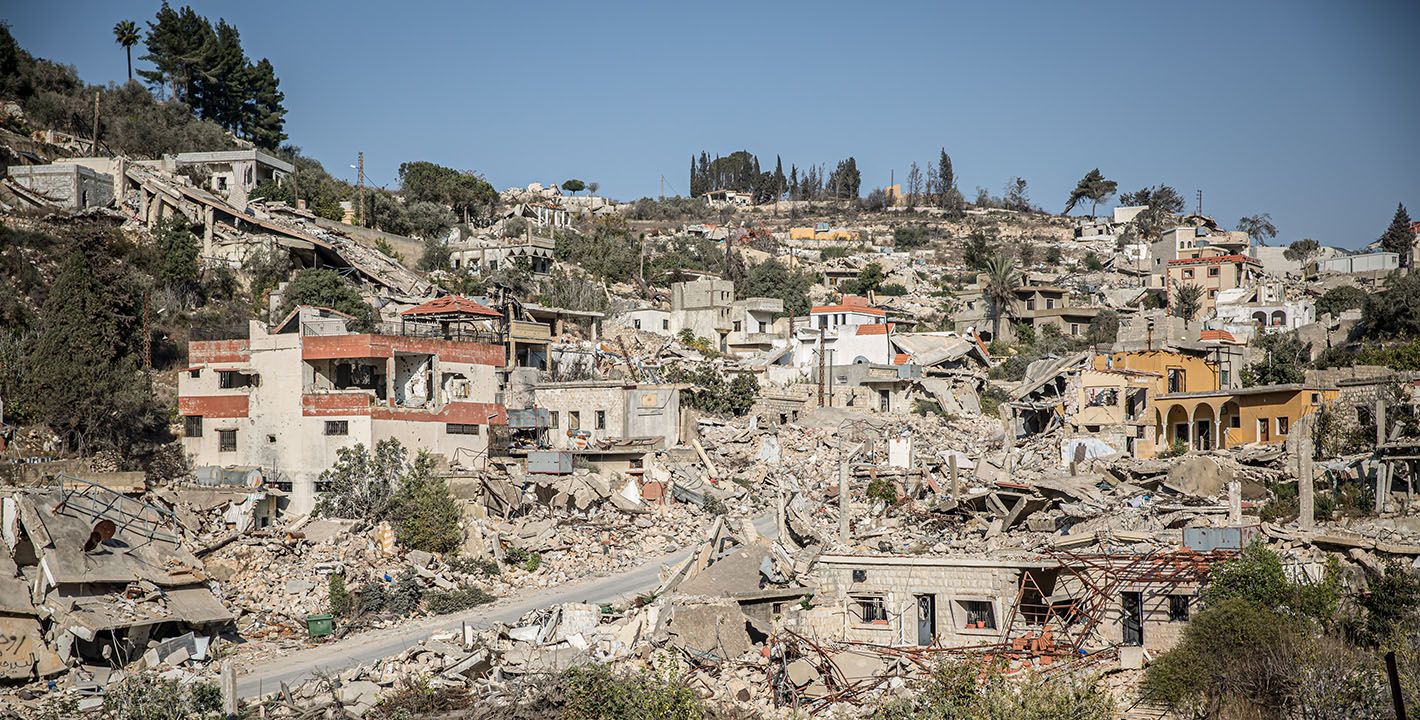
The U.S. is trying to force Lebanon and Syria to normalize with Israel, but neither country sees an advantage in this.
Michael Young
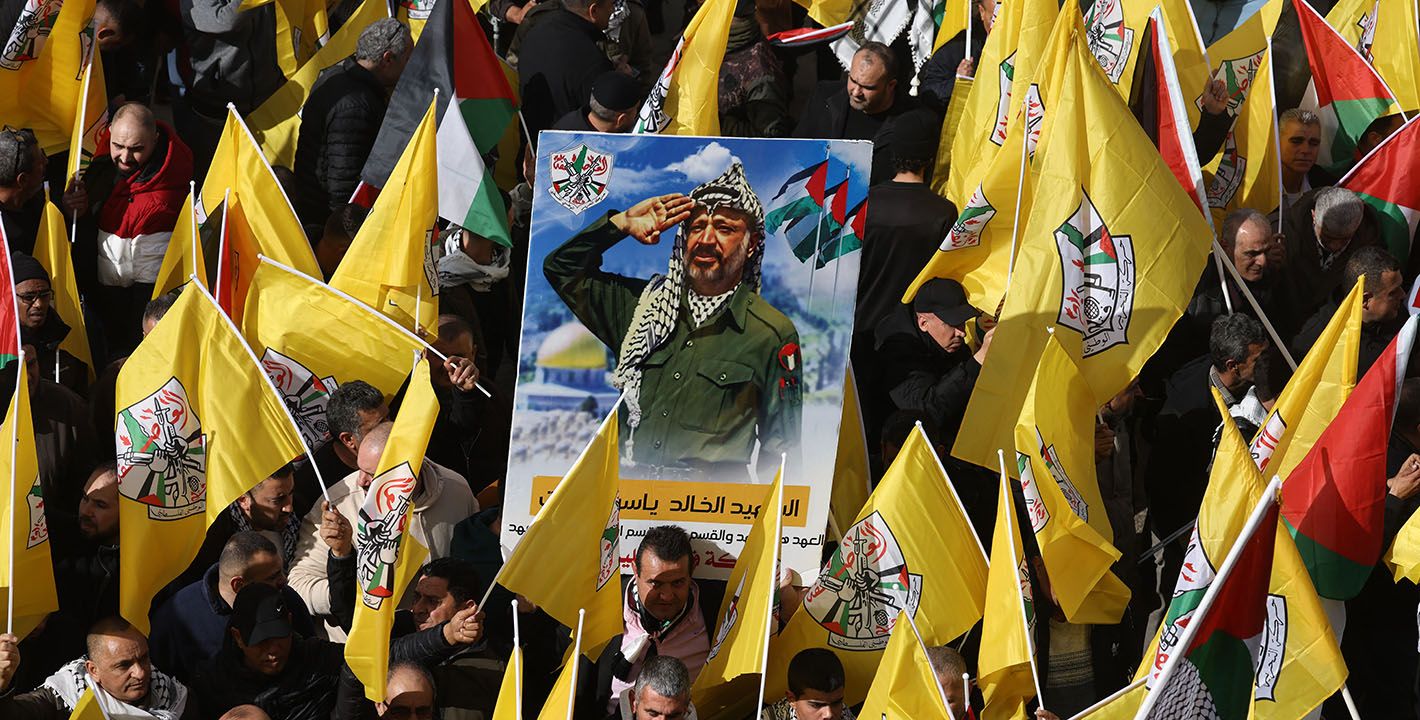
The objective is to lock Hamas out of political life, but the net effect may be negative indeed.

Nathan J. Brown