

Commentary
In an interview, Ishac Diwan looks at the merits and flaws in the draft legislation distributing losses from the financial collapse.
Michael Young
{
  "authors": [
    "Tang Xiaoyang"
  ],
  "type": "legacyinthemedia",
  "centerAffiliationAll": "",
  "centers": [
    "Carnegie Endowment for International Peace",
    "Carnegie China"
  ],
  "collections": [
    "China and the Developing World"
  ],
  "englishNewsletterAll": "",
  "nonEnglishNewsletterAll": "",
  "primaryCenter": "Carnegie China",
  "programAffiliation": "",
  "programs": [],
  "projects": [],
  "regions": [
    "Southern, Eastern, and Western Africa",
    "East Asia",
    "China"
  ],
  "topics": [
    "Economy"
  ]
}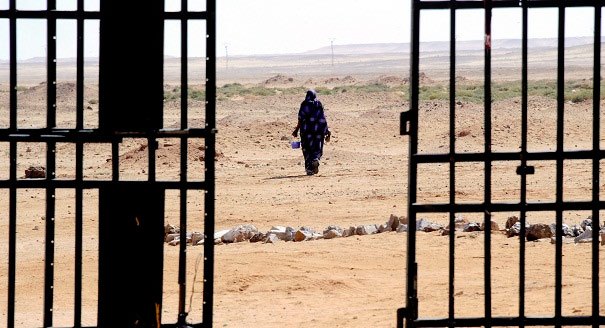
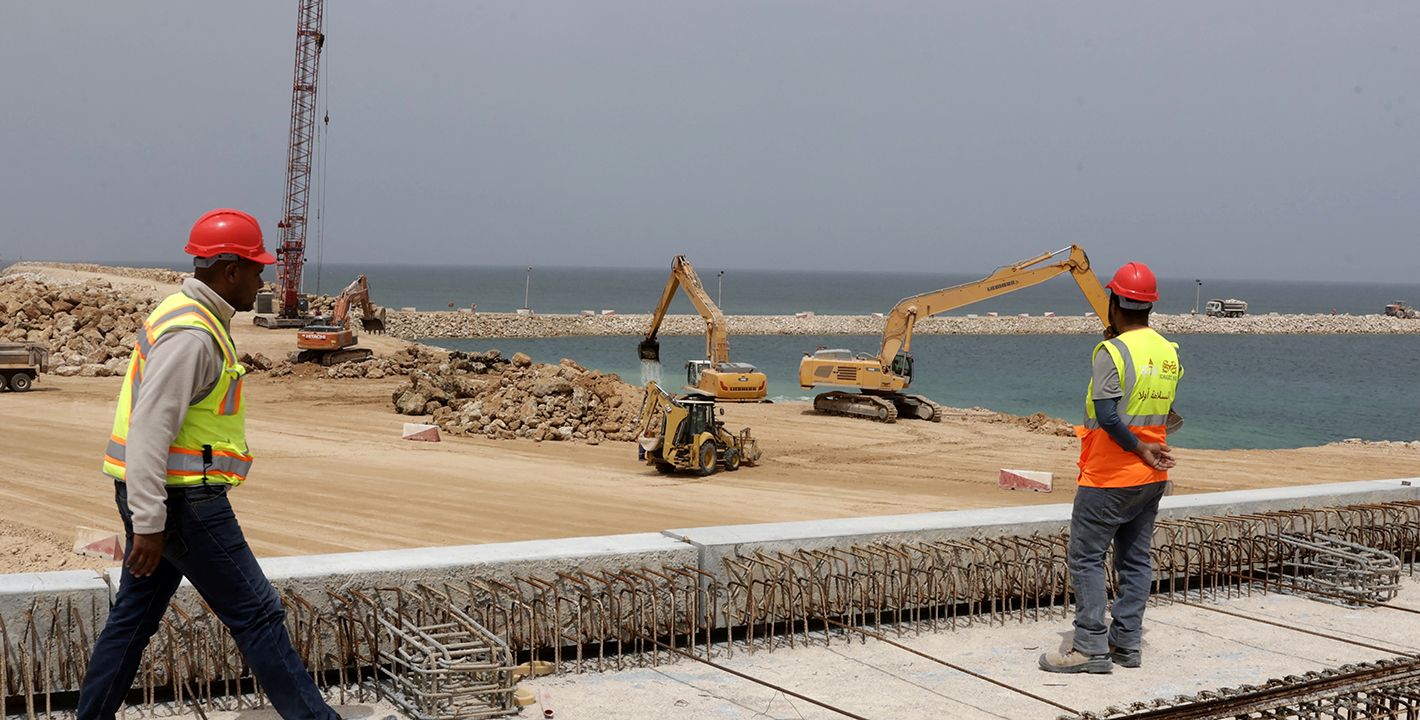
Although its initial focus will be Asia, the Asian Infrastructure Investment Bank may eventually broaden its scope to provide development assistance to countries in Africa as well.
Source: China Africa Project
Fifty-seven countries, including two from Africa, are among the founding members of China’s new development bank, the Asian Infrastructure Investment Bank (AIIB). While the new bank’s primary objective will be developing infrastructure projects in Asia, as its name suggests, there is widespread anticipation (mixed with some hope) that the bank will expand the scope of its work to eventually include Africa and other developing regions.
Carnegie–Tsinghua’s Tang Xiaoyang joined Eric Olander and Cobus van Staden to discuss the AIIB and what implications it could have for development finance in Africa.
This podcast was originally broadcasted by the China Africa Project.
Carnegie does not take institutional positions on public policy issues; the views represented herein are those of the author(s) and do not necessarily reflect the views of Carnegie, its staff, or its trustees.
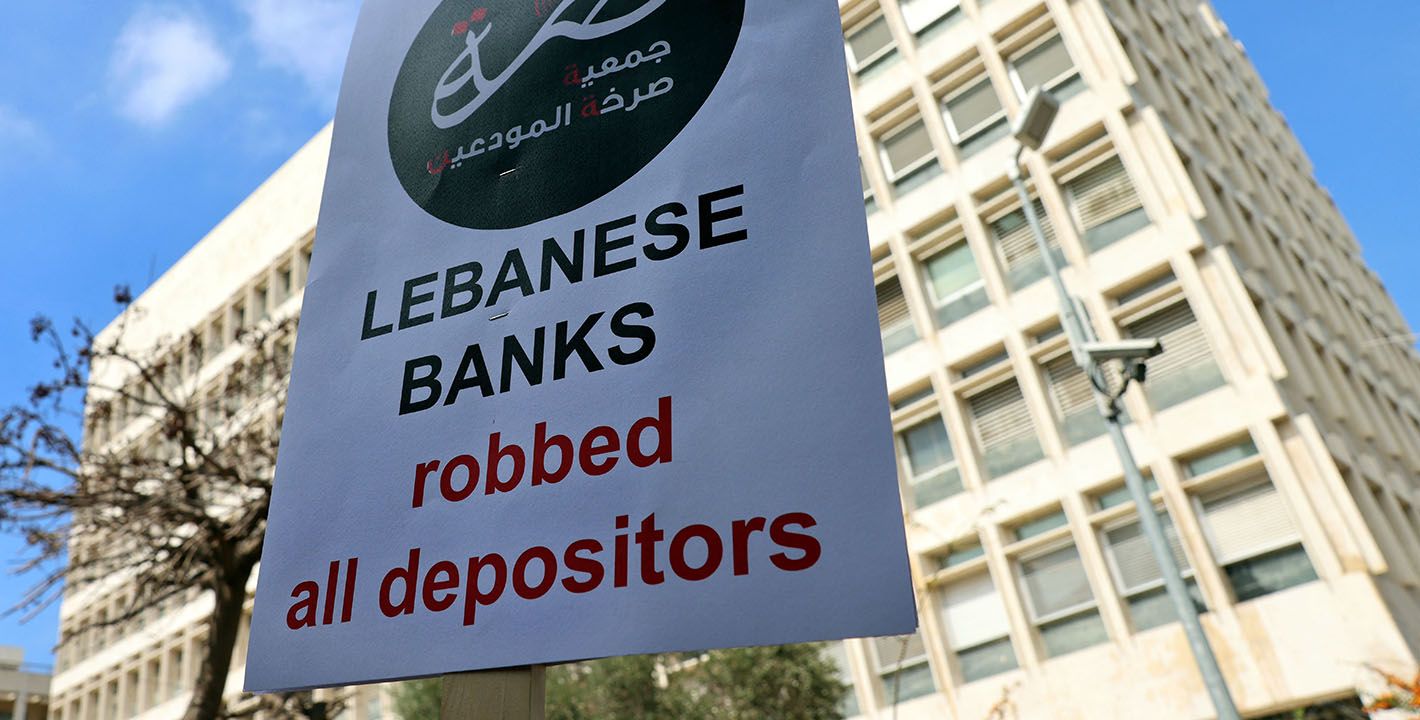
In an interview, Ishac Diwan looks at the merits and flaws in the draft legislation distributing losses from the financial collapse.
Michael Young
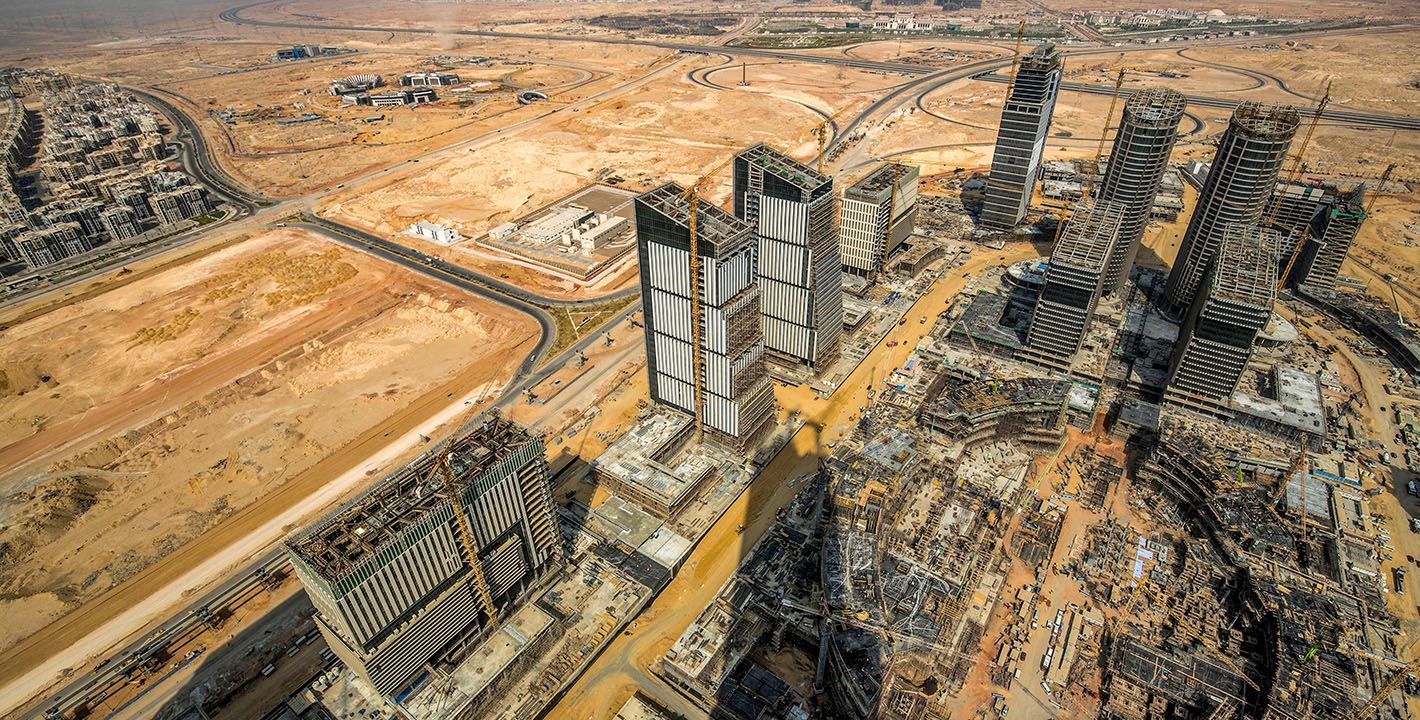
Mustaqbal Misr has expanded its portfolio with remarkable speed, but a lack of transparency remains.
Yezid Sayigh
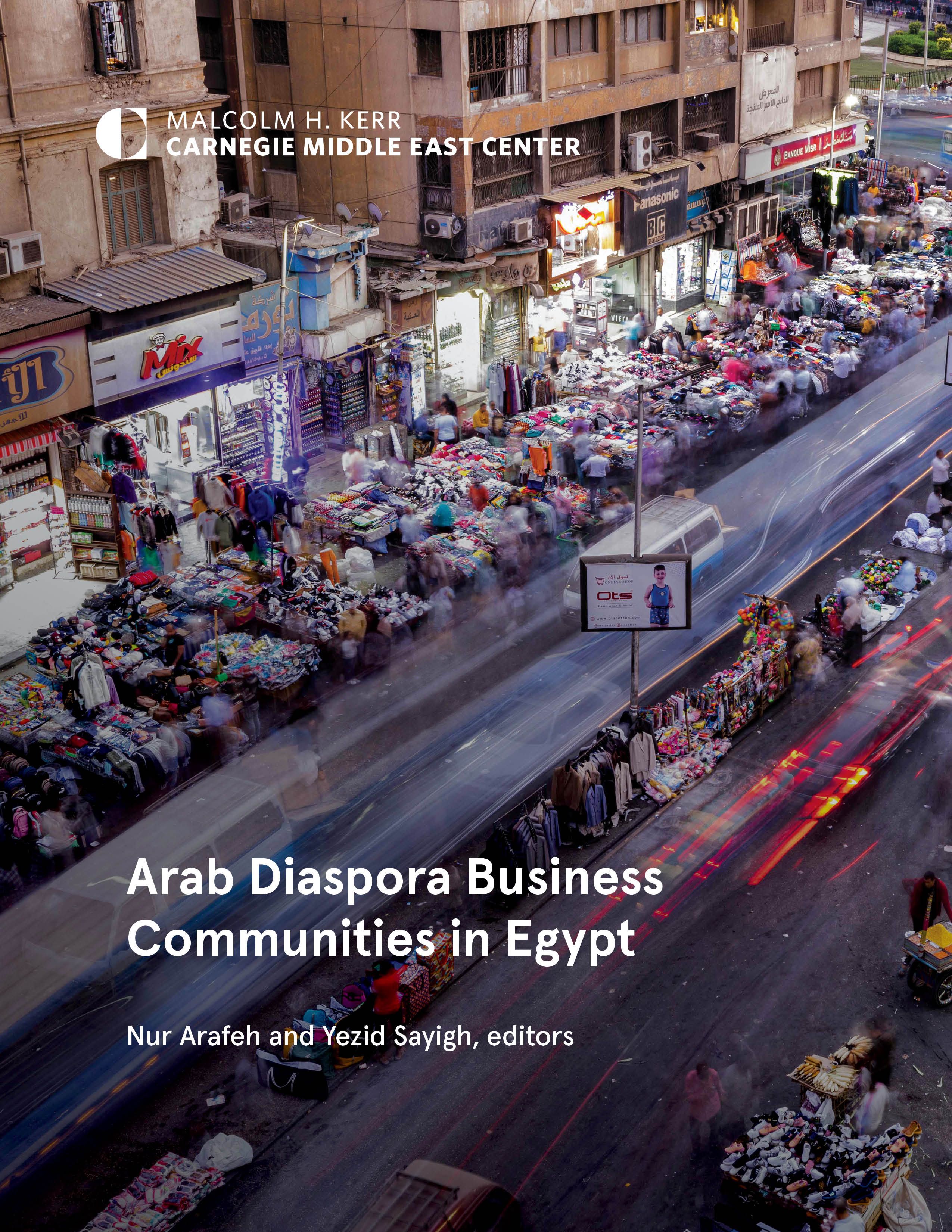
Arab diaspora business communities in Egypt often mirror the same systemic challenges facing Egyptian businesses.
Nur Arafeh, Yezid Sayigh, Qaboul al-Absi, …

Largely characterized thus far by a single-minded focus on extractivism, Riyadh must commit to greater equitability in its approach to investment and development deals with Sudan, Ethiopia, and Eritrea.
Hesham Alghannam
The Moroccan-Algerian rivalry is playing itself out in ties with Burkina Faso, Niger, and Mali.

Yasmine Zarhloule