• Research
  • Diwan
  • About
  • Experts
Carnegie Middle East logoCarnegie lettermark logo
PalestineSyria
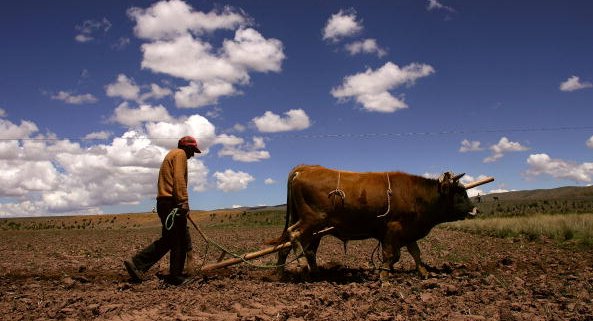
Challenges to Democracy Promotion: The Case of Bolivia

Source: Getty

Paper

Challenges to Democracy Promotion: The Case of Bolivia

Bolivia has embarked on a democratic experiment which differs in significant ways from Western liberal models. While this poses a challenge to traditional democracy promotion efforts, external actors still have the potential to play a constructive role in the country.

Link Copied
By Jonas Wolff
Published on Mar 30, 2011

Additional Links

Full Text

Bolivia offers a critical, but atypical, case for international democracy promotion. The ongoing political transformation initiated by President Evo Morales constitutes one of the few experiences in the world of a serious effort to build a democracy different from the existing Western liberal models. And this presents a significant challenge to democracy promotion efforts. 

The United States and Germany—two main external actors in Bolivia—have been compelled to react to this challenge. In the case of the United States, an initial phase of wait-and-see escalated in 2008 into an open crisis in bilateral relations. Attempts to adjust U.S. democracy assistance to the evolving political situation in Bolivia failed and by the end of 2009 USAID’s democracy program was closed on demand of the Bolivian government. The German government, on the other hand, explicitly supported the political changes initiated by Morales. Bilateral relations between Bolivia and Germany are characterized by general continuity and in terms of democracy assistance Germany largely adjusted its programs to the preferences of the new Bolivian government.

International democracy promoters often argue that they are not trying to impose a specific form of democracy from the outside and Bolivia has tested the U.S. and German commitments to this ideal. In fact, both governments have not stuck dogmatically to their particular models or concepts of democracy, but have shown some surprising flexibility. Negative reactions to Morales, especially in the case of the United States, were actually triggered by disagreements on specific policy issues.
Bolivia’s ongoing democratic transformation suggests that the best external democracy promoters can do under such circumstances is to support processes of inclusive dialogue and constructive conflict resolution. Instead of focusing on a specific political end point—a given model of democracy—support should push for a peaceful and inclusive political process of constructing a model appropriate for Bolivia. This, however, requires external actors to unequivocally respect Bolivia’s claim to democratic self-determination that encompasses not just the shape of its political system but also its foreign, economic, and narcotics policies.
Jonas Wolff

Wolff is an executive board member and the head of the Intrastate Conflict research department at the Peace Research Institute Frankfurt.

Jonas Wolff
North AmericaSouth AmericaPolitical ReformDemocracy

Carnegie does not take institutional positions on public policy issues; the views represented herein are those of the author(s) and do not necessarily reflect the views of Carnegie, its staff, or its trustees.

More Work from Malcolm H. Kerr Carnegie Middle East Center

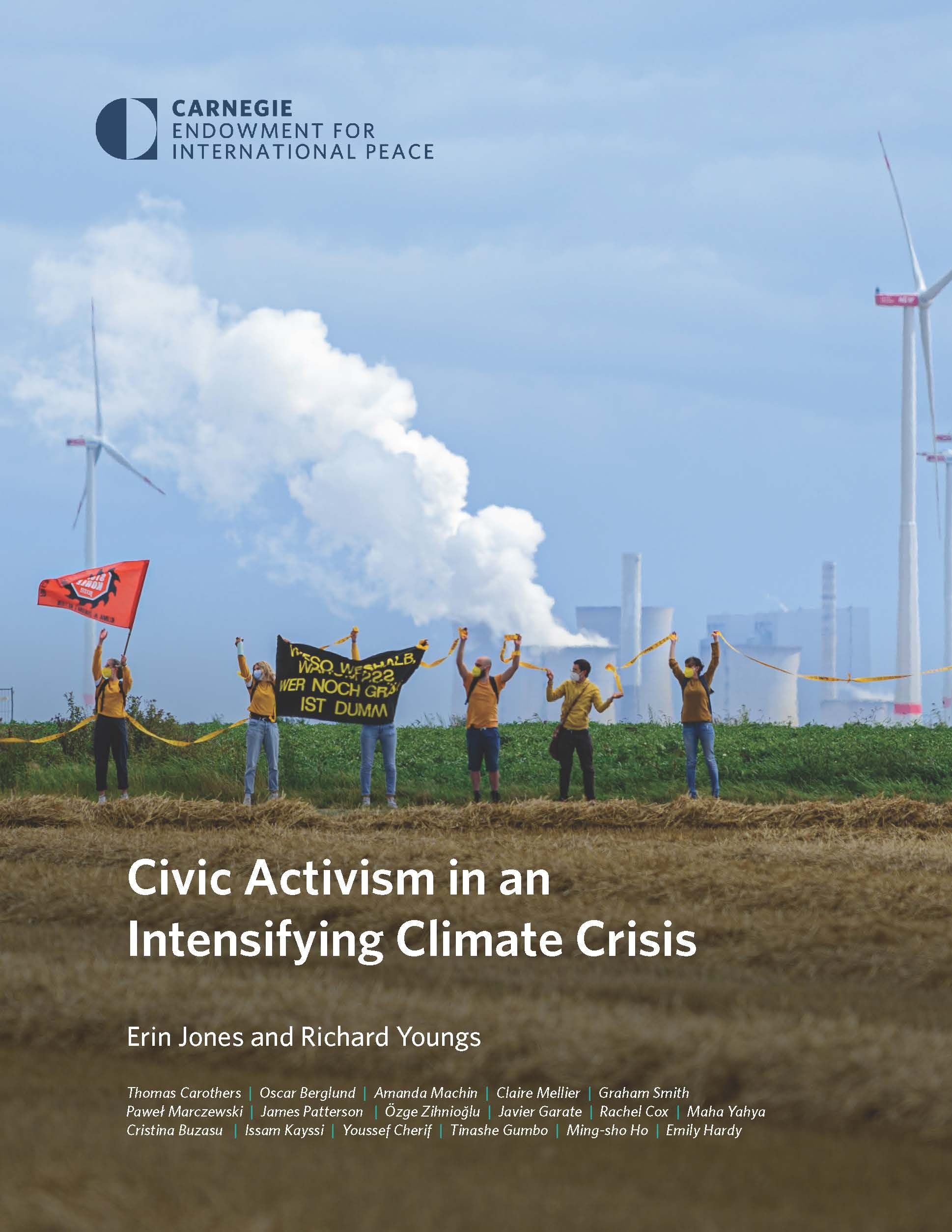
  • Civic Activisim in an Intensifying Climate Crisis
    Research
    Civic Activism in an Intensifying Climate Crisis

    To address the deepening climate crisis, climate activism is employing a wider variety of tactics and aiming at a broader set of goals. In response, the movement faces stronger repression and civic backlash against climate action.

      Erin Jones, Richard Youngs
  • Commentary
    Sada
    Navigating Danger: Syrian Refugees in Lebanon Risk Returning

    A humanitarian crisis in Lebanon deepens, and Syrian refugees face a perilous choice: remain in a war-torn environment or return to Syria where they risk encountering significant dangers and discrimination. There are significant challenges and risks to their search for safety in Syria.

      Haid Haid

  • Paper
    Borders Without a Nation: Syria, Outside Powers, and Open-Ended Instability

    In Syria’s border regions, changes in demographics, economics, and security mean that an inter-Syrian peace process will require consensus among main regional powers that Syria must remain united, that no one side can be victorious, and that perennial instability threatens the region.

      Kheder Khaddour, Armenak Tokmajyan

  • Research
    The Military and Private Business Actors in the Global South: The Politics of Market Access

    The interaction of national armed forces and private business sectors offers a useful lens for viewing the politics of numerous countries of the so-called Global South. A rising trend of military political activism—often accompanied by military commercial activity—underlines the importance of drivers and outcomes in these relationships.

      Yezid Sayigh, Hamza Meddeb

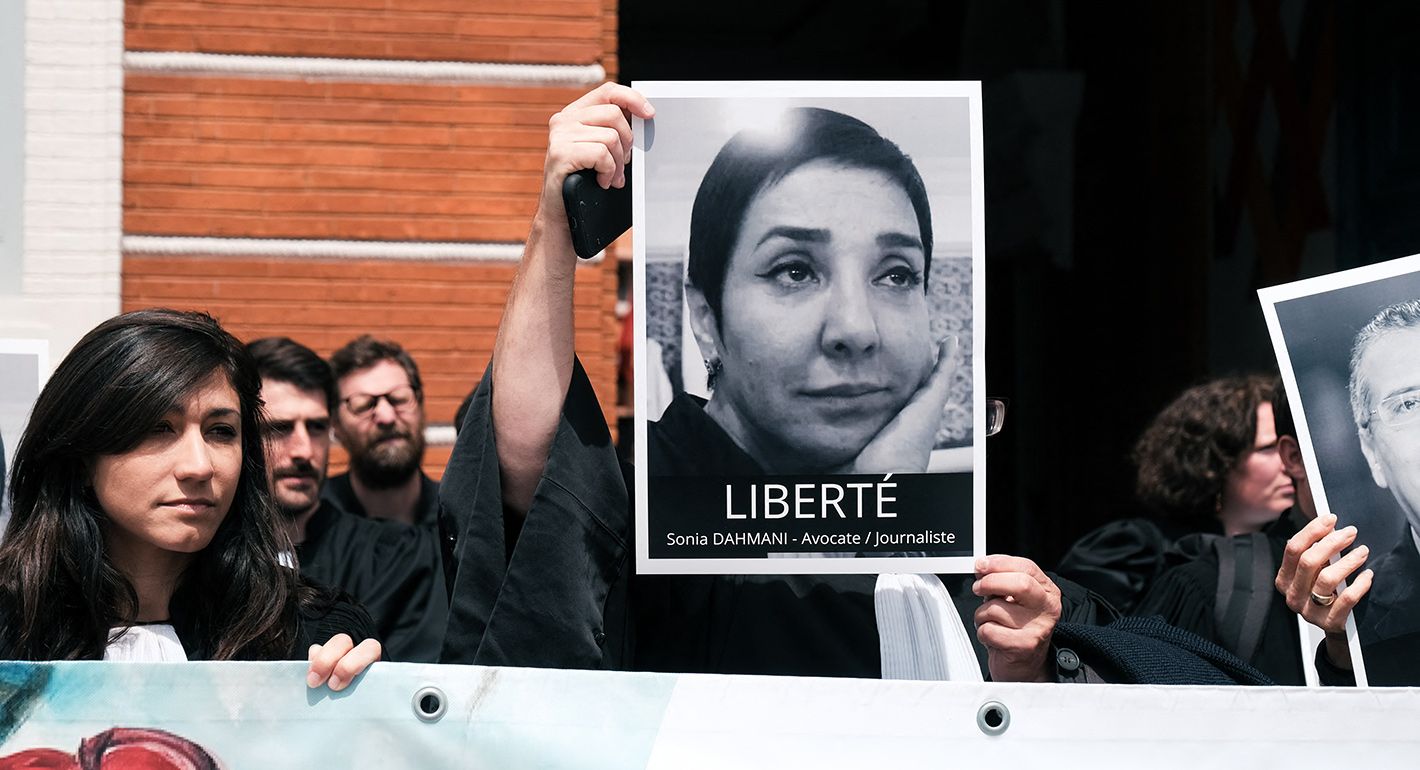
  • Rally organized by lawyers from the Toulouse Bar to protest against the arrest of their Tunisian colleague Sonia Dahmani and journalists, in front of the consulate in Toulouse, southwest of France, on May 16, 2024
    Commentary
    Diwan
    Why Tunisia Lost Faith in Democracy

    For many in the society, the post-Ben Ali years were mainly about successive economic crises and political instability.

      Jasmine Khelil

Get more news and analysis from
Malcolm H. Kerr Carnegie Middle East Center
Carnegie Middle East logo, white
  • Research
  • Diwan
  • About
  • Experts
  • Projects
  • Events
  • Contact
  • Careers
  • Privacy
  • For Media
Get more news and analysis from
Malcolm H. Kerr Carnegie Middle East Center
© 2026 Carnegie Endowment for International Peace. All rights reserved.