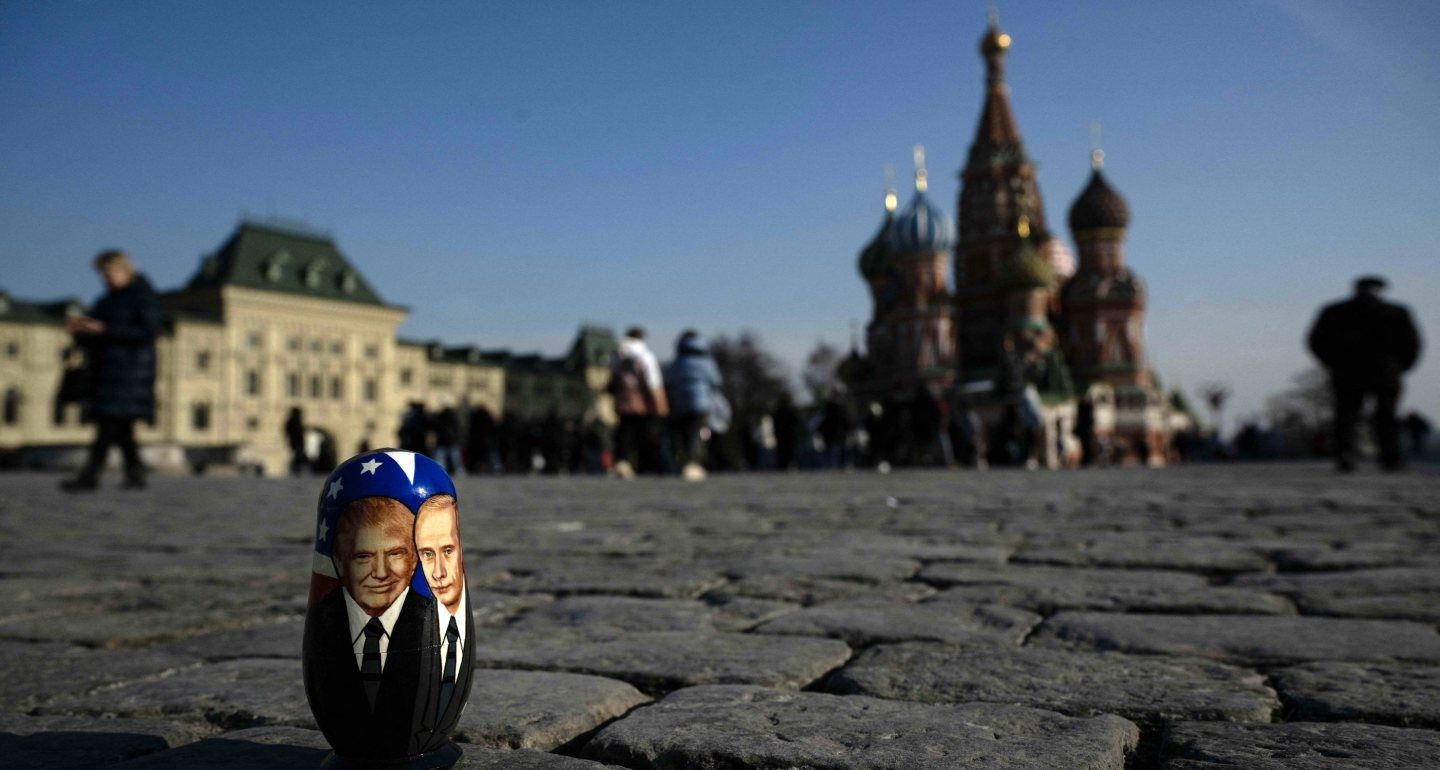
On March 18, Russian President Vladimir Putin and his U.S. counterpart Donald Trump held their second official phone call in the space of a few weeks. The second call cemented a major shift in bilateral relations between Russia and the United States—and not only on Ukraine.
The conversation between the two presidents accelerated the normalization of bilateral relations, further reduced Russia’s international toxicity, and ruled out the idea of a full-fledged ceasefire, which would be a dangerous scenario for Moscow.
In the current talks with Washington, Putin’s main task is to maintain the positive dynamics—without ceding any significant ground on Ukraine. The Russian leader is hardly likely to agree to a comprehensive ceasefire right now, when Ukraine is still determined to keep fighting and is refusing to enter into any serious discussion of the Kremlin’s demands with regard to a scenario dubbed “Istanbul Plus,” which de facto amounts to capitulation.
Russia had effectively rejected Trump’s proposal for a comprehensive ceasefire in the days preceding the latest call. Senior Russian officials made the Kremlin’s position clear both publicly and at a closed meeting in Moscow with U.S. special envoy Steve Witkoff.
During the March 18 phone call, Putin was able to convey the same message to Trump in person, reiterating Moscow’s conditions for a full-fledged ceasefire: a complete end to Western aid to Kyiv, and a commitment from Ukraine not to mobilize and rearm.
A ceasefire on these terms would effectively mean the beginning of Ukraine’s capitulation, which currently looks unlikely, not least because Europe is only increasing its military support for Kyiv and shows no sign of changing tack. Putin also suggested that Trump should consider removing Zelensky, saying that the “Kyiv regime” is incapable of negotiation under his leadership.
Such demands from Russia make the prospects of a peace agreement with Ukraine extremely remote, but Putin understands how important it is for Trump to be able to boast of tangible successes and agreements, and so he prepared a selection of easy wins for Trump ahead of the conversation.
Moscow agreed to cease its attacks on Ukrainian energy infrastructure for thirty days, as well as to a prisoner exchange and to spare the lives of Ukrainian soldiers still located in Russia’s Kursk region. To increase the value of this gesture and demonstrate his mercy, Putin invented a story about thousands of encircled Ukrainian fighters and called them “terrorists,” accusing them of committing crimes against the civilian population.
These real and imagined concessions do not mean, however, that the Kremlin is ready to engage in a serious discussion over the technical parameters of a peace agreement. Putin needs the West to end all support for Ukraine and persuade it to capitulate. Accordingly, Russia’s conditions for a ceasefire are not so much conditions as goals that the Kremlin intends to achieve in any case.
If Trump agrees to them immediately, then there will be no need for the Russian army to advance any further, because Ukraine will no longer be able to sustain its resistance. If he does not, then the Kremlin will keep trying to implement them by ramping up its military campaign. A pause in strikes on infrastructure is not incompatible with that aim, and will merely slow down the process a little.
For evidence that this is the Kremlin’s thinking, it’s enough to recall how readily Russia agreed to the establishment of a working group devoted to shipping safety in the Black Sea. Moscow has very concrete interests in this regard, and is therefore prepared to compromise. But there is no talk yet of creating a similar working group to discuss a ceasefire along the front line.
While Trump is trying to achieve some fast results in Ukraine, Moscow sees what is happening as a far more protracted process in which a lot—though far from everything—depends on Washington. In any case, Putin will eventually have to deal with an unwavering Kyiv and an increasingly radical Europe. That means that the war may well continue even without the United States.
This is what lies behind Russia’s tactical maneuvering. Moscow is trying to neutralize the United States in geopolitical terms by normalizing bilateral relations with it.
Moscow is signaling to Washington that it is ready to help resolve the Iranian nuclear issue; rapprochement has begun on Syria; the two countries are voting in solidarity at the UN; and Russia has drastically toned down its rhetoric in support of Palestine. But the main focus of normalization is economic cooperation. Full-fledged embassy operations have yet to be resumed, but work in the economic sphere is already in full swing.
All of this can be considered a major success for the Kremlin, which is gradually reducing the dependence of Russia’s relations with the United States on a resolution to the war in Ukraine. At the same time, Russia’s international toxicity is decreasing to the point that Putin and Trump have apparently agreed to organize hockey matches between Russian and American players playing in the NHL and KHL.
The Kremlin is willing to throw Trump a few insignificant or even fictitious bones to prevent fundamental disagreements over Ukraine from disrupting the trend toward the normalization of bilateral relations. That suits Trump just fine, which makes Ukraine’s situation even worse.
In these circumstances, the Kremlin does not even have to directly demand Kyiv’s capitulation and the fulfillment of the Istanbul Plus conditions. Ukraine is already gradually being deprived of the military support it needs, and Trump’s policies are exacerbating the differences between the United States and Europe.
Nevertheless, the hypothetical normalization of U.S.-Russian relations is still in its infancy, and the high-profile economic projects that both sides are so keen to boast about have every chance of collapsing due to the poor investment climate in Russia and the glaring contradictions between the positions of Moscow and Washington. There is every chance that this rapprochement will eventually hit a dead end, with nothing to show but a couple of local projects and close to zero progress in Ukraine. Even that outcome, however, will be considered a good result for the Kremlin.