

Commentary
Unexpectedly, Trump’s America appears to have replaced Putin’s Russia’s as the world’s biggest disruptor.
Alexander Baunov
{
  "authors": [
    "Sergei Aleksashenko",
    "Mikhail Krutikhin",
    "Yuval Weber"
  ],
  "type": "commentary",
  "centerAffiliationAll": "",
  "centers": [
    "Carnegie Endowment for International Peace",
    "Carnegie Russia Eurasia Center"
  ],
  "collections": [],
  "englishNewsletterAll": "",
  "nonEnglishNewsletterAll": "",
  "primaryCenter": "Carnegie Endowment for International Peace",
  "programAffiliation": "",
  "programs": [],
  "projects": [],
  "regions": [
    "Russia"
  ],
  "topics": [
    "Political Reform",
    "Economy"
  ]
}
Eurasia Outlook asked several experts what, if anything, can be done by Russian policymakers in order to weather the perfect storm descending on the country’s economy.
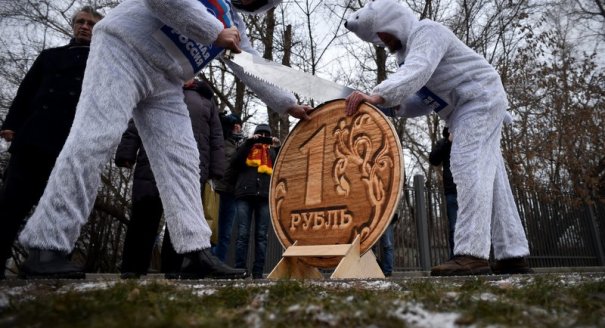
The ruble’s precipitous decline last week created a widespread sense that Russia was entering a new period of economic crisis. While the accompanying sag in oil prices justified the weakening of the ruble to some extent, it also presaged further troubles for economic growth and the country’s budget in 2015. Adding fuel to the fire were yet another round of sanctions announced by the United States, the EU, and Canada, which will target businesses and individuals tied to Crimea.
Eurasia Outlook asked several experts what, if anything, can be done by Russian policymakers in order to weather the perfect storm descending on the country’s economy.
The sharp weakening of the ruble resulted from three factors: a general economic slowdown caused by deep institutional crisis (over time, the regime has consistently destroyed major state institutions); sanctions that the West imposed on Russia in response to its Ukrainian adventure, which closed off access to capital markets for Russia; and the decline in world oil prices. There are no miracles in life. Thus, the country will either have to eliminate these factors or learn to live with the cheap ruble.
Since the Russian regime is unable (in the case of oil prices) or unwilling (in the cases of the institutional crisis and Western sanctions) to address the problem’s causes, we can hardly expect the situation to improve. Therefore, we really need to tighten our belts. The cheap ruble comes with inflation and expensive imports, which lower consumption, obliterate savings and lead to a reduction in living standards and investments, further slowing the economy.
At the same time, we ought to realize that neither sanctions nor cheap oil can destroy the Russian economy completely, just as these factors failed to destroy the Iranian economy. However, they might well make our lives more impoverished and less joyful.
Low oil prices will accelerate the decline of oil production in Russia, badly affecting the national economy. There is only one method for the salvation of the vital petroleum sector: a radical structural reform. The government will have to stop discriminating against private and foreign business, dismantle inefficient and greedy monsters like Rosneft and Gazprom, and change the fiscal regime by taxing financial results instead of overall production.
Unfortunately, the current tendency remains to adopt the opposite policies. The petroleum industry is managed in a clumsy manual mode; incentives are granted to the least efficient players. Huge politicized and non-economical projects are initiated and paid for with taxpayers’ money. Instead of developing a liberal, market-based investment climate, Russia is becoming a minefield for domestic and international investors and gradually acquiring a wartime mobilization economy with dire prospects.
Unless the attitude of the decision makers changes dramatically, any sensible analyst or consultant would recommend that clients choose to invest somewhere safer.
In a currency crisis such as the one that has been occurring in slow motion for the past several months, and which dramatically accelerated on “Black Tuesday,” it is just as important for Russian policy makers to figure out what not to do as it is for them to figure out what to do.
A key concept in international trade economics is the Mundell-Fleming model, otherwise known as the “Unholy Trinity.” The model shows that it is impossible for a central bank to simultaneously maintain a fixed exchange rate, monetary policy autonomy, and capital mobility. It is simply too expensive to have all three at once.
We have seen that the Central Bank’s efforts to protect the exchange rate through intervention after the shocking devaluation on Tuesday have run up against its other monetary policy efforts: raising interest rates to induce increased domestic savings and maintaining a strong commitment to capital openness.
In trying to reduce the currency volatility that has shaken public confidence through direct intervention, the Central Bank is thus defending a quasi-fixed band exchange rate while offering greater returns to depositors and allowing market participants to continue taking foreign exchange out of the country. That means it is spending its currency reserves to allow market participants the option of keeping money in the country or taking it out.
The eventual consequences are for one or more of the currency reserves to run out, for interest rates to rise to unsustainable levels, or for capital controls to be imposed. Absent policy change regarding Ukraine that would see sanctions eased, it is up to the Central Bank to decide which one of these outcomes is least painful and move to limit the damage, while pursuing stimulus in a recessionary environment.
Carnegie does not take institutional positions on public policy issues; the views represented herein are those of the author(s) and do not necessarily reflect the views of Carnegie, its staff, or its trustees.
Unexpectedly, Trump’s America appears to have replaced Putin’s Russia’s as the world’s biggest disruptor.
Alexander Baunov
The Kremlin will only be prepared to negotiate strategic arms limitations if it is confident it can secure significant concessions from the United States. Otherwise, meaningful dialogue is unlikely, and the international system of strategic stability will continue to teeter on the brink of total collapse.
Maxim Starchak
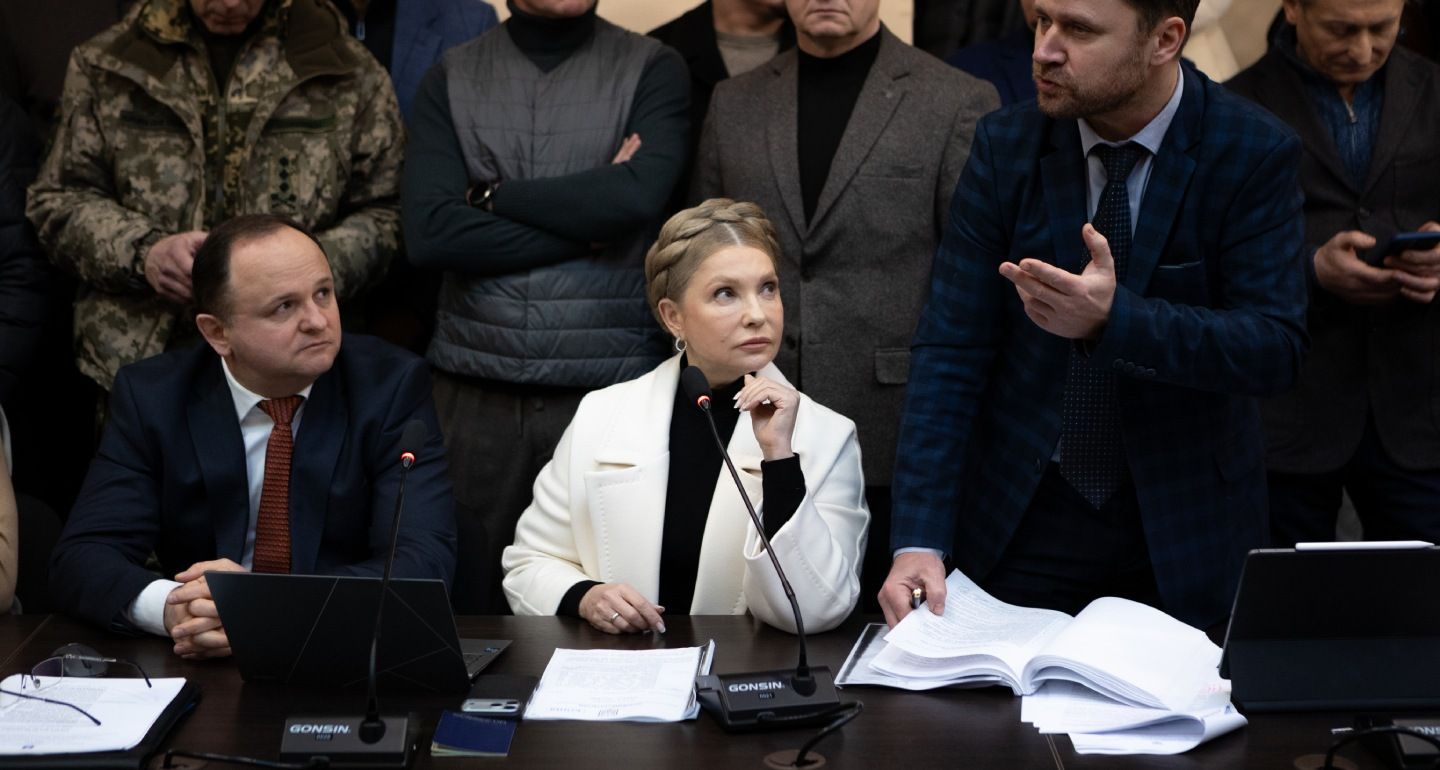
The story of a has-been politician apparently caught red-handed is intersecting with the larger forces at work in the Ukrainian parliament.
Konstantin Skorkin
For years, the Russian government has promoted “sovereign” digital services as an alternative to Western ones and introduced more and more online restrictions “for security purposes.” In practice, these homegrown solutions leave people vulnerable to data leaks and fraud.

Maria Kolomychenko
Geological complexity and years of mismanagement mean the Venezuelan oil industry is not the big prize officials in Moscow and Washington appear to believe.
Sergey Vakulenko