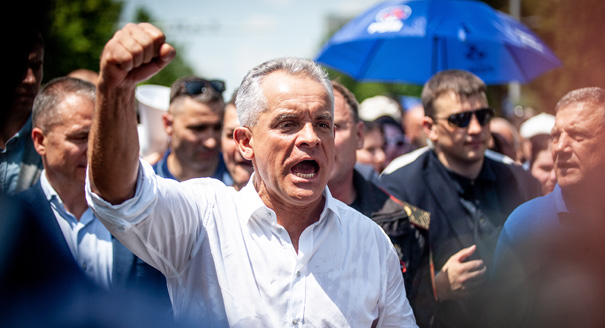
In recent weeks, Moldova has unexpectedly found itself at the center of attention in Russia and Europe, as the country’s ruling regime crumbled. That simulacrum of a regime was the Democratic Party headed by the oligarch Vladimir Plahotniuc, which had preserved itself by imitating European integration, a fight against the “Russian threat,” reform, and democracy. Thanks to the standoff between East and West, which extended as far as Moldova, it had seemed to be unshakeable.
The revolution could well have occurred earlier, except that the West for a long time believed that only Plahotniuc was capable of stopping pro-Russian forces from coming to power in Moldova. The oligarch had spent considerable effort and money, including on hiring lobbyists, to convince Washington of just that.
According to Plahotniuc, only he and his party could hold back the popular pro-Russian Party of Socialists led by the Kremlin-controlled Igor Dodon. So when Dodon was elected president in December 2016, it was in fact a key victory for Plahotniuc: it strengthened his tactic of using the Kremlin as a bogeyman seeking to subjugate his country.
Dodon did indeed often meet with Russian President Vladimir Putin, and talked a lot about Eurasian integration. But he couldn’t have turned Moldova toward the East, nor could he pose a threat to Plahotniuc’s regime, because of limitations to his presidential powers.
While the Democrats waged war against the specter of Putin, the situation in Moldova deteriorated dramatically. Businesses were burdened with taxes or appropriated by people close to Plahotniuc. The opposition was persecuted, and criminal cases fabricated against figures inconvenient to the regime. The phones of journalists and politicians were tapped, and hidden cameras installed in their homes. All the state structures, from the security services to the constitutional court, were unquestioningly subservient to the oligarch, who also owns the country’s biggest media holding.
In the summer of 2018, when his opponent Andrei Năstase won the mayoral election in Chişinău, Plahotniuc simply had the vote annulled by a compliant court, prompting the EU, which was already concerned by the human rights situation in Moldova, to freeze financing to the country.
The results of the February 2019 parliamentary elections were not at all bad for the unpopular Democrats: they got thirty seats of their own, plus seven for another party under their control, and three more for deputies who had run as independents but are loyal to the Democratic Party—a total of forty out of 101 seats. The pro-Russian Socialists got thirty-five, while the pro-European ACUM bloc got twenty-six. Talks began on forming a coalition, and it seemed that what would follow would be either an agreement between the Socialists and Democrats, or new elections that could have boosted the position of the Democrats.
But then events began that were entirely uncharacteristic for a region that is the backdrop to fierce competition between Russia and the West for influence. On June 3, Chişinău saw the arrival of Russian Deputy Prime Minister and Special Representative for Trade with Moldova Dmitry Kozak, EU Commissioner for European Neighborhood Policy Johannes Khan, and Director of the U.S. State Department’s Office of Eastern European Affairs Brad Freden.
All three met with the leaders of the political parties, including Plahotniuc, as well as with President Dodon, and discussed the need for stability and the importance of forming a government.
Then Kozak stepped into an unusual role for a Russian official: at a press conference following the meeting with Dodon, he announced that the socialists in parliament would be better off forming an alliance with the pro-European ACUM, rather than with the Democrats, in order to restore the country from its current state to one of democratic normality.
On June 8, just such a coalition was formed. The Democrats, who had clearly not expected the two sides to reach an agreement, refused to recognize the legality of the alliance, and swung into action. The oligarch’s TV channels accused everyone involved in the alliance of treason and of teaming up at Kozak’s command with the intention of making Moldova a federation and returning the breakaway region of Transnistria to that federation.
The constitutional court ruled that the coalition and government were illegal, and suspended President Dodon, while the Democratic Party brought in people from the regions to set up camp outside the doors of state institutions, thereby preventing the new government from accessing them. Plahotniuc swore publicly that he would save the country from the “traitor Dodon,” who had sold out the country to Russia.
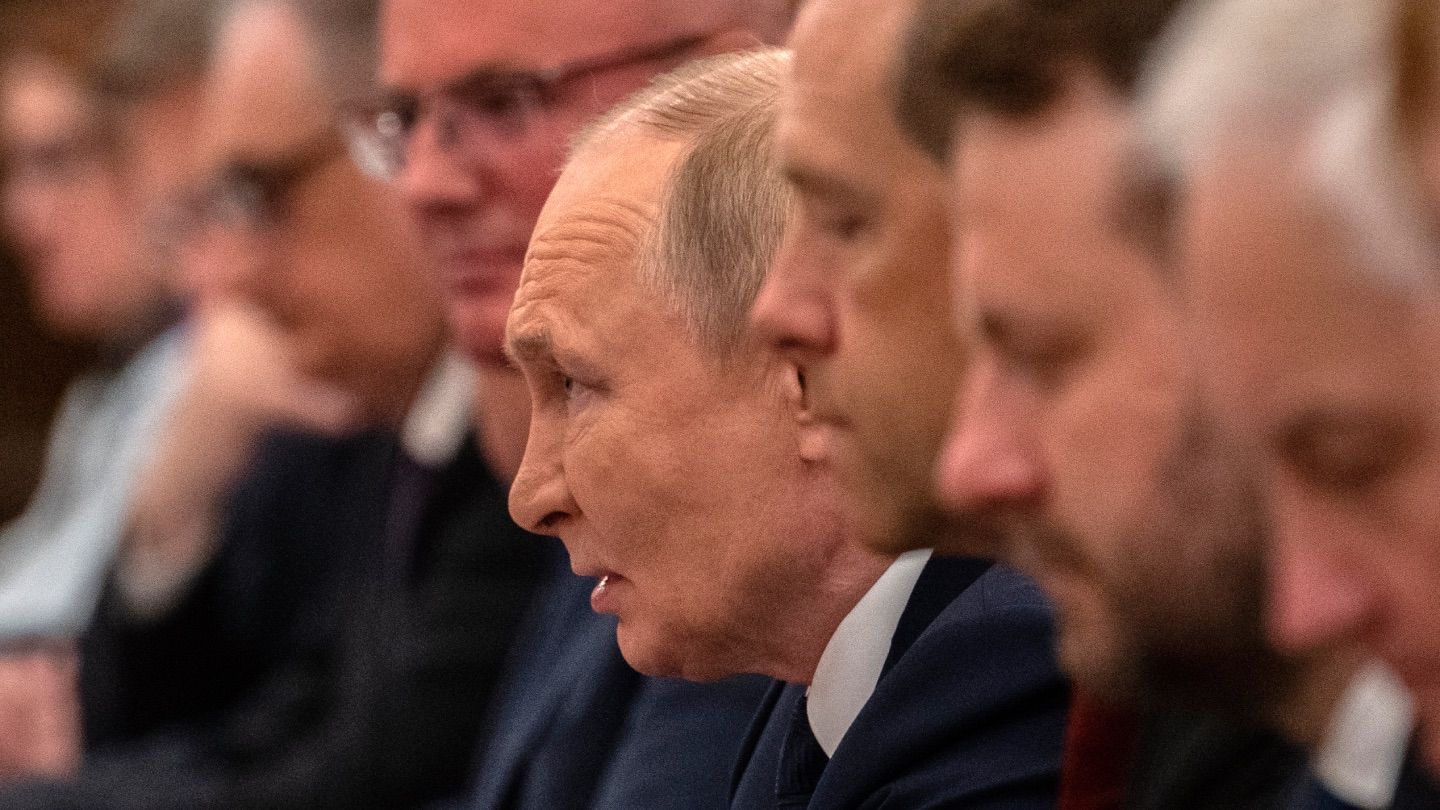
Then bad news started coming in for the Democrats. In a joint statement, Khan and the EU’s foreign policy chief Federica Mogherini recognized the legitimacy of the new government. Russia’s Foreign Ministry followed suit. Then Germany, the UK, France, Sweden, and Poland issued a joint statement in support of the new government. Kozak announced that the federation idea that Plahotniuc was now using as a scare tactic had in fact been proposed to Moscow by the oligarch himself. Putin subsequently said that power in Moldova had been usurped by oligarchs, and promised support to the socialists and their partners from ACUM.
Finally, the United States overcame its concern over how ACUM would stand up to Moscow in the future, compared to the experienced Plahotniuc, and on June 14, U.S. Ambassador to Moldova Dereck Hogan spent 15 minutes alone with Plahotniuc at the Democratic Party’s offices. Several hours later, the oligarch disappeared. Some reports say he flew to the United States, having already sent his family there.
Moldova’s oligarchic regime, which had seemed to be indestructible, fell as soon as Russia, the EU, and the United States joined forces against it. It’s clear that when the interests of the three parties are aligned, a change in government is perfectly possible without bloodshed or burning tires, and without resulting in armed conflicts.
For Moscow, the Moldovan crisis resolved with its involvement has helped if not to mend its image there, then to significantly improve it. Many Moldovans are hostile or at least wary where Russia is concerned, but in the fight to bring down Plahotniuc, whom many there perceived as evil incarnate, Russia came down on the side of the good guys.
Russia’s unexpected readiness to support a government that includes pro-European parties stems primarily from the fact that Plahotniuc had long become intolerable to Moscow. In 2014, when the Ukraine crisis broke out, the oligarch and numerous media outlets owned by him put considerable effort into demonizing Russia and its leadership. The idea that the same unidentified soldiers who seized control of Crimea ahead of its annexation by Russia that spring could appear in Moldova at any minute has not left the front pages of the country’s newspapers since then, and was one of the central topics during the recent Moldovan crisis.
Once Ukraine started limited entry to its territory for Russian men aged sixteen to sixty, making Chişinău airport the only point of entry for Russian peacekeepers stationed in breakaway Transnistria, the Moldovan authorities began detaining soldiers and sending them home. Then the same thing started happening to journalists entering the country from Russia.
In the summer of 2017, the Moldovan government declared Russia’s then curator for relations with Chişinău, Deputy Prime Minister Dmitry Rogozin, persona non grata. Russia responded in December of that year, when a Moscow court ordered the arrest of Plahotniuc in absentia on suspicion of ordering contract killings. At the start of this year, the oligarch was also accused of involvement in an illegal scheme to move 37 billion rubles ($578 million) out of Russia.
Plahotniuc’s ouster from Moldovan politics means Russia can count on new authorities there who will not create as many problems for Moscow as the oligarch did. Following the routing of the Democratic Party, the pro-Russian Socialists could certainly aspire to a leading role in Moldovan politics, unlike ACUM, which has not yet gained momentum. That means the game is not over and there is more to come—except, it seems, for Plahotniuc.