Source: China Daily
Trade and investment between China and Pakistan have intensified in recent years. China has become Pakistan’s largest trading partner, largest country of origin for imports, largest foreign direct investor, and its third-largest export destination, while Pakistan has become China’s largest investment destination in South Asia due to the construction of the China-Pakistan Economic Corridor (CPEC). The monetary cooperation between Pakistan and China has entered a crucial stage and, in the foreseeable future, it is destined to play a significant role in financing CPEC projects.
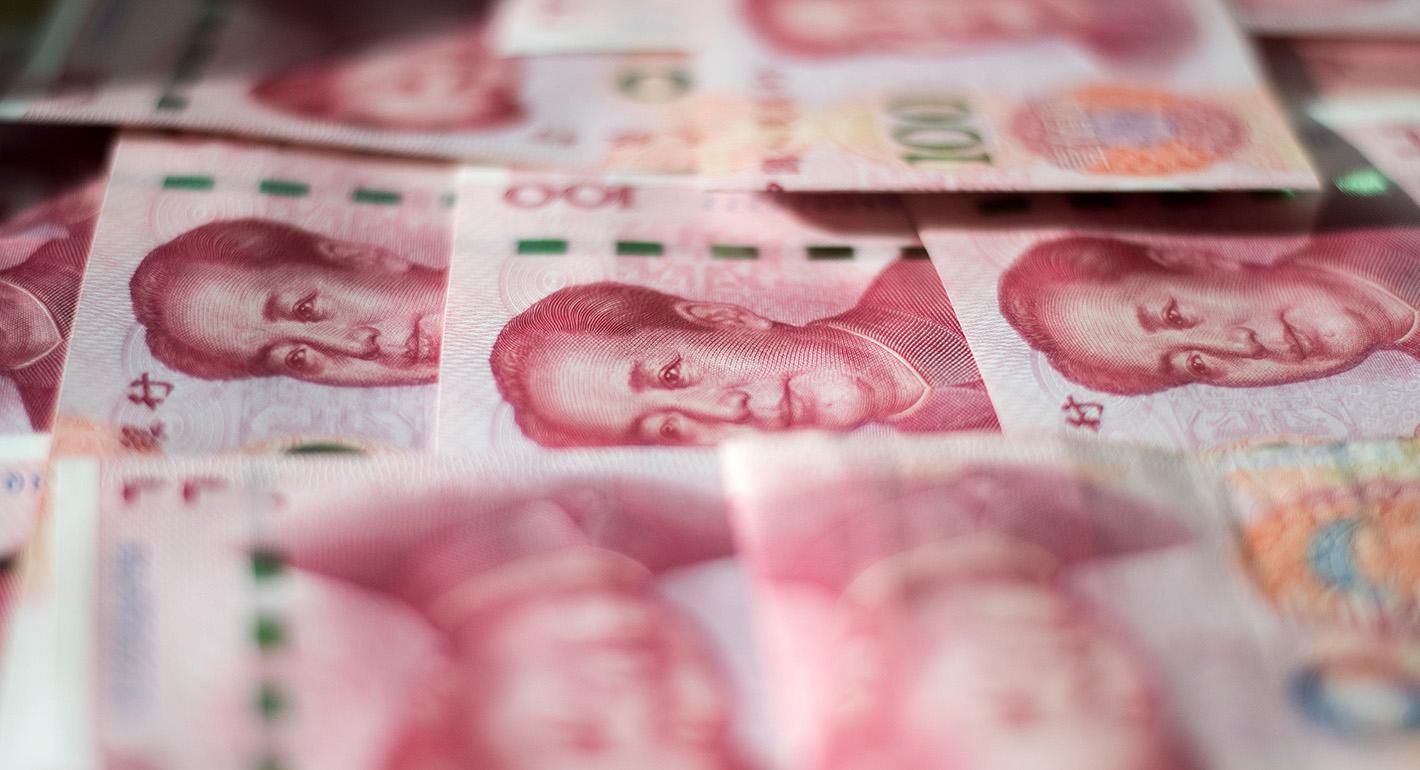
The increasing trade and clearing in RMB will benefit both Pakistan and China, as a result reducing their dependence on the USD in bilateral economic relations. For Pakistan, the government’s limited currency reserves, rising debt, widening trade deficit, and the depreciation of the Pakistani rupee against the USD have led to a current account deficit. For projects between China and Pakistan, if clearing can be settled in RMB, Pakistan would be better able to cope with the sharp decline in its foreign reserves. For Chinese firms that export goods, services, or projects to Pakistan, using the renminbi could reduce the financial risks of their operations and save costs.
In 2011, a currency swap agreement was signed between the People’s Bank of China and the State Bank of Pakistan (SBP). Since then, the SBP has taken a series of steps to promote the use of the renminbi in Pakistan for bilateral trade and investment with China. It has allowed banks to accept deposits and give trade loans in RMB. The Industrial and Commercial Bank of China and Bank of China have been allowed to establish local operations in Pakistan. In early 2018, the SBP announced that the required regulatory framework which facilitates the use of the RMB in trade and investment transactions had been put in place.
However, there are still operational difficulties to solve as the use of the renminbi in Pakistan is more difficult compared to that of the USD. There are a number of restrictions in place. First, there is low awareness of cross-border RMB operations; second, local RMB liquidity is very low and a pool of RMB funds has not been formed; third, financial services such as export and import credit, project financing and short-term loans are still absent. Chinese firms trying to use the RMB in Pakistan are also facing the obstacles of the relatively complex process of clearing, which to a large extent hinders their motivation to use the Chinese currency.
Owing to its trade deficit with China, Pakistan has difficulty getting large amounts of RMB from its trade with China. Therefore, how to inject more RMB liquidity into Pakistan's financial system is a matter for both countries to consider. In April 2019, Pakistan and China agreed on the second phase of their free trade agreement to reduce Pakistan’s trade deficit, and data from Pakistan’s Ministry of Commerce shows that Pakistan’s trade deficit had shrunk to $10.8 billion during the 2018-19 fiscal year compared to $14 billion in the previous fiscal year.
Trade alone is not enough. Better leverage could be obtained on the investment front. RMB financing of key CPEC projects could make a significant breakthrough to encourage the use of the RMB by creating funds and by buying Chinese equipment and services. More Chinese banks and financial institutions should come to Pakistan to provide more financing services such as short-term loans or micro-credit in Pakistan’s market. The aim is to construct a RMB ecosystem, which means a RMB closed-chain cycle based on “capital export and trade return,” promoting the use of the RMB in Pakistan through investment and financing, and returning RMB through trade surpluses.
However, the long-standing war on terror and separatist activities in Pakistan have concerned Chinese financial institutions; some institutions are conservative in expanding their business in Pakistan, with many Chinese banks and enterprises taking the position of “wait and see.” So far, most CPEC projects are infrastructure projects involving state-owned enterprises. Therefore, how to attract more Chinese investment, especially from the private sector which is currently a very dynamic one, is a challenge that needs to be addressed.
This article was originally published by China Daily.