

Commentary
Russia has been newly assertive on the world stage, but confronting its many challenges at home and abroad may require a new foreign policy equilibrium.
Dmitri Trenin
{
  "authors": [
    "Tong Zhao"
  ],
  "type": "commentary",
  "centerAffiliationAll": "",
  "centers": [
    "Carnegie Endowment for International Peace",
    "Carnegie China"
  ],
  "collections": [
    "The Day After: Navigating a Post-Pandemic World",
    "Carnegie China Commentaries"
  ],
  "englishNewsletterAll": "",
  "nonEnglishNewsletterAll": "",
  "primaryCenter": "Carnegie China",
  "programAffiliation": "",
  "programs": [
    "Nuclear Policy"
  ],
  "projects": [],
  "regions": [],
  "topics": []
}
Effective nuclear arms control engagement with China will likely require confidence-building measures by the United States and greater support from the international community.
All major powers must recognize that, despite their strategic competition, they have a common interest in pursuing arms control to manage that competition and minimize the risk of military conflicts. Thus, the United States should be able to engage China on arms control if it sets the right goals. But if Washington continues to present arms control as a tool to compete with Beijing, why would Beijing help?
If Washington continues to present arms control as a tool to compete with Beijing, why would Beijing help?
Washington cannot coerce Beijing by threatening to start an arms race and spend China “into oblivion,” especially because Beijing is confident it can outcompete Washington in the long run. Such a threat also reinforces China’s long-standing suspicion that arms control is a concession imposed by the strong and accepted by the weak.
The United States will have to keep its public voice down while offering China concrete proposals to address the two countries’ asymmetric capabilities. If they’re to be taken seriously, these proposals should show a willingness by the United States to limit its own capabilities, particularly in areas of U.S. superiority such as air- and sea-launched missile systems and space-based capabilities.
Appeals to the United States and China by the international community for responsible behavior would also have an impact. As U.S.-China competition intensifies, both countries understand the need to win support from third parties.
Given China’s deep skepticism and outsider status in the arms control arena, engagement will require transparency and time to build confidence. One valuable starting point could be a reset of fundamental terms: China may be more eager to discuss “strategic ability” than “arms control.” Identifying cooperative measures for nuclear risk reduction would be a useful topic for initial discussions.
To proceed with substantive talks, Beijing would need reassurance that Washington accepts a relationship of mutual vulnerability and does not seek to challenge its strategic nuclear deterrence. China’s concern over U.S. missile defense, if left unaddressed, would remain the strongest external driver of its comprehensive nuclear modernization. Perhaps the two parties could agree to a joint study on the technical feasibility of making the U.S. system capable only of defending against North Korean strategic missiles without undermining China’s nuclear retaliation capacity.
In China’s highly centralized political system . . . the blessing of top political leadership is key.
In China’s highly centralized political system, in which arms control experts are scattered and do not have a strong voice, the blessing of top political leadership is key to generating momentum for arms control talks. World leaders should engage with President Xi Jinping directly: his support, even a merely symbolic endorsement of the concept of arms control, would help start a much-needed domestic discussion.
Carnegie does not take institutional positions on public policy issues; the views represented herein are those of the author(s) and do not necessarily reflect the views of Carnegie, its staff, or its trustees.

Russia has been newly assertive on the world stage, but confronting its many challenges at home and abroad may require a new foreign policy equilibrium.
Dmitri Trenin
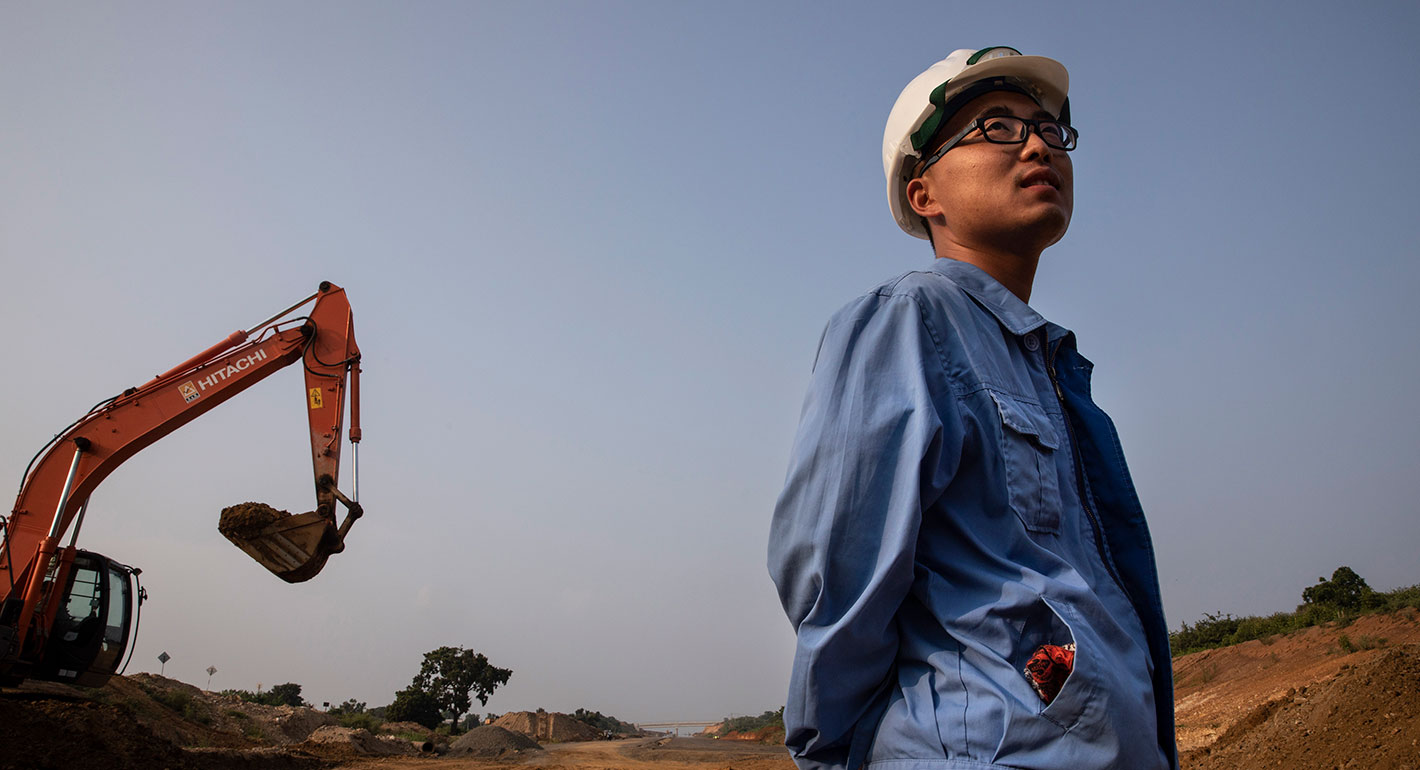
Pitched as a new Silk Road sweeping from Asia to Europe, China’s enormous Belt and Road Initiative is an ambitious, multinational infrastructure project. Experts from four Carnegie global centers explain other countries’ perspectives.


Paul Haenle, Dmitri Trenin, Alexander Gabuev, …
The upcoming 19th Party Congress and top political appointments will determine what course China will take in the future under President Xi Jinping’s leadership.

Yukon Huang, Paul Haenle, James M. Acton, …