

Commentary
Unexpectedly, Trump’s America appears to have replaced Putin’s Russia’s as the world’s biggest disruptor.
Alexander Baunov
{
  "authors": [
    "Yanliang Pan"
  ],
  "type": "commentary",
  "centerAffiliationAll": "",
  "centers": [
    "Carnegie Endowment for International Peace",
    "Carnegie Russia Eurasia Center"
  ],
  "collections": [
    "Pax Sinica"
  ],
  "englishNewsletterAll": "",
  "nonEnglishNewsletterAll": "",
  "primaryCenter": "Carnegie Endowment for International Peace",
  "programAffiliation": "",
  "programs": [],
  "projects": [],
  "regions": [
    "East Asia",
    "China",
    "Russia"
  ],
  "topics": [
    "Economy"
  ]
}
If the pandemic has highlighted one source of friction in Russia-China relations, it is inadequate governance.
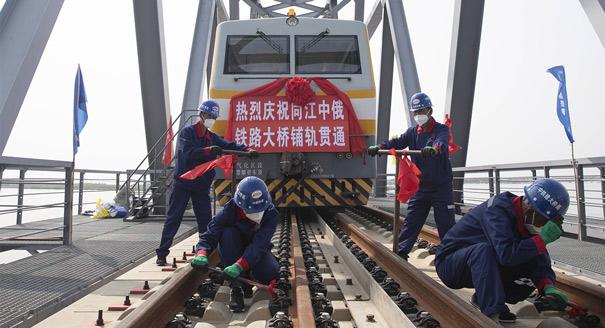
At the outbreak of the coronavirus pandemic early last year, there were predictions it would put pressure on bilateral ties between Russia and China. Nearly two years later, relations have actually become better, not worse. True, bilateral trade declined slightly at the beginning of 2020, and stringent COVID inspections at the border still lead to bottlenecks when it comes to Russian exports into China by rail. Yet the two countries have worked out ways of coping with logistical challenges.
Of course, arrivals of new COVID strains like Delta and Omicron create new disruptions and border closures, but the Chinese authorities continue to adapt procedures to limit the damage, while maintaining a zero tolerance policy to fight COVID. Bilateral trade overall is booming due to high prices for energy resources and increased exports of Russian coal to China through Far Eastern ports, as well as increased volumes of gas flowing through the Power of Siberia pipeline. As a result, after an insignificant decline of less than 3 percent in 2020, trade between Russia and China went on to grow by almost 30 percent in the first eleven months of 2021 compared with the same period last year. Unsurprisingly, Russia and China will set a new trade volume record this year of more than $130 billion.
Politically, high-level contact has remained a firm anchor for the relationship. In the first few months of the pandemic, presidents Vladimir Putin and Xi Jinping spoke by telephone every month, and expressions of solidarity poured in from official outlets on both sides. In 2021, the leaders held a video conference in June to celebrate the twentieth anniversary of the Treaty of Good Neighborliness and Friendly Cooperation, followed by a long phone call to discuss Afghanistan in August.
These high-level exchanges were followed by virtual meetings of five intergovernmental commissions and talks between Prime Minister Mikhail Mishustin and State Council Premier Li Keqiang, and culminated in a virtual summit between Putin and Xi on December 15. It was announced that the Russian leader will travel to Beijing in February to have the first in-person summit with his Chinese counterpart since the start of the pandemic, and then attend the opening of the Olympic Games. Given the diplomatic boycott of the Games led by the United States, Putin’s attendance of the ceremony will be a very powerful symbol of the deepening partnership.
Judging by opinion polls, these positive dynamics are visible to the public in both countries, too. Among ordinary Russians, favorable attitudes toward China have not suffered much due to the pandemic. This is especially remarkable when contrasted with the rise in Sinophobia in a number of Western countries. People-to-people exchanges have been significantly limited, but the disruptions have not been debilitating. Chinese students attending Russian universities transitioned to online learning along with their Russian classmates. With travel restrictions in place, Chinese businesses in Russia have experienced difficulties rotating their personnel, and major joint projects have reportedly suffered delays as Chinese managers and technicians struggled to enter the country, but existing projects are moving forward, and new projects are still being launched.
While these positive developments testify to the resilience of Russia-China relations, the pandemic has also revealed a significant source of friction in the relationship: quality of migration governance. Back in February last year, when the coronavirus began to spread, Russian authorities were quick to ban Chinese nationals from entering the country. This was an understandable measure that elicited no negative reaction from the Chinese side.
What caused greater irritation were measures introduced by Moscow Mayor Sergei Sobyanin, which included random document inspections targeted specifically at Chinese nationals, as well as police raids at the residences of Chinese students and migrants, sometimes in the middle of the night. Checkpoints were set up all over the streets of Moscow, and Chinese passengers were singled out on public transport. The uproar on social media in China forced the Chinese embassy to dispatch an official diplomatic note with unusually stern wording to the Moscow city authorities demanding that they stop the mistreatment of Chinese nationals.
Sobyanin’s measures were for show, rather than being born out of genuine Sinophobia. The mayor was trying to build up his image as a resolute guardian of public health, which would explain why he enthusiastically blogged about the toughness of his policy. The fundamental issue was not so much racism as arbitrary governance.
It is true that a significant number of Chinese migrants in Russia live in closed communities with inadequate access to vital social services. For example, Chinese traders in Moscow did suffer exceptionally high rates of infection early on during the pandemic, in no small part due to crowded living conditions and lack of access to healthcare. The solution, though, is clearly not to deport the community altogether, thereby causing another diplomatic crisis and further setting back bilateral people-to-people exchange. Rather, the Russian and Chinese authorities must collaborate to more effectively regulate the cross-border flow of people and make the lives of migrants less precarious.
Migrant governance has always been a key issue in Russia-China relations. The pandemic has simply brought the issue to the fore, and it is more urgent now than ever. The Chinese government and public have become more sensitive to the mistreatment of Chinese nationals abroad. If such incidents as those described above continue to occur, then Chinese people will continue to harbor mistrust toward the Russian authorities, which will in turn amplify Sinophobia in Russia. Worse still, if mistreated Chinese nationals have no recourse but to complain loudly on social media, then scandals will continue to jeopardize the public opinion base that sustains the Russia-China relationship. Official friction will be that much harder to avoid.
For the Russia-China partnership to be truly comprehensive, people-to-people exchange needs to become a more significant component. Improving the governance of that process should become the post-pandemic priority for Beijing and Moscow. First basic steps should include safeguards against the abuse of foreign nationals and migrants. It also means maintaining close contact with foreign embassies regarding the state of their nationals, and actively addressing their concerns. The problem is, however, that these changes would require a fundamental revision of migrant treatment by the Russian authorities: singling out Chinese nationals for fair treatment will be hard if the whole system remains intact.
This publication is part of a project carried out with the support of the Swedish Foreign Ministry.
Unexpectedly, Trump’s America appears to have replaced Putin’s Russia’s as the world’s biggest disruptor.

Alexander Baunov

The Kremlin will only be prepared to negotiate strategic arms limitations if it is confident it can secure significant concessions from the United States. Otherwise, meaningful dialogue is unlikely, and the international system of strategic stability will continue to teeter on the brink of total collapse.

Maxim Starchak
For years, the Russian government has promoted “sovereign” digital services as an alternative to Western ones and introduced more and more online restrictions “for security purposes.” In practice, these homegrown solutions leave people vulnerable to data leaks and fraud.

Maria Kolomychenko
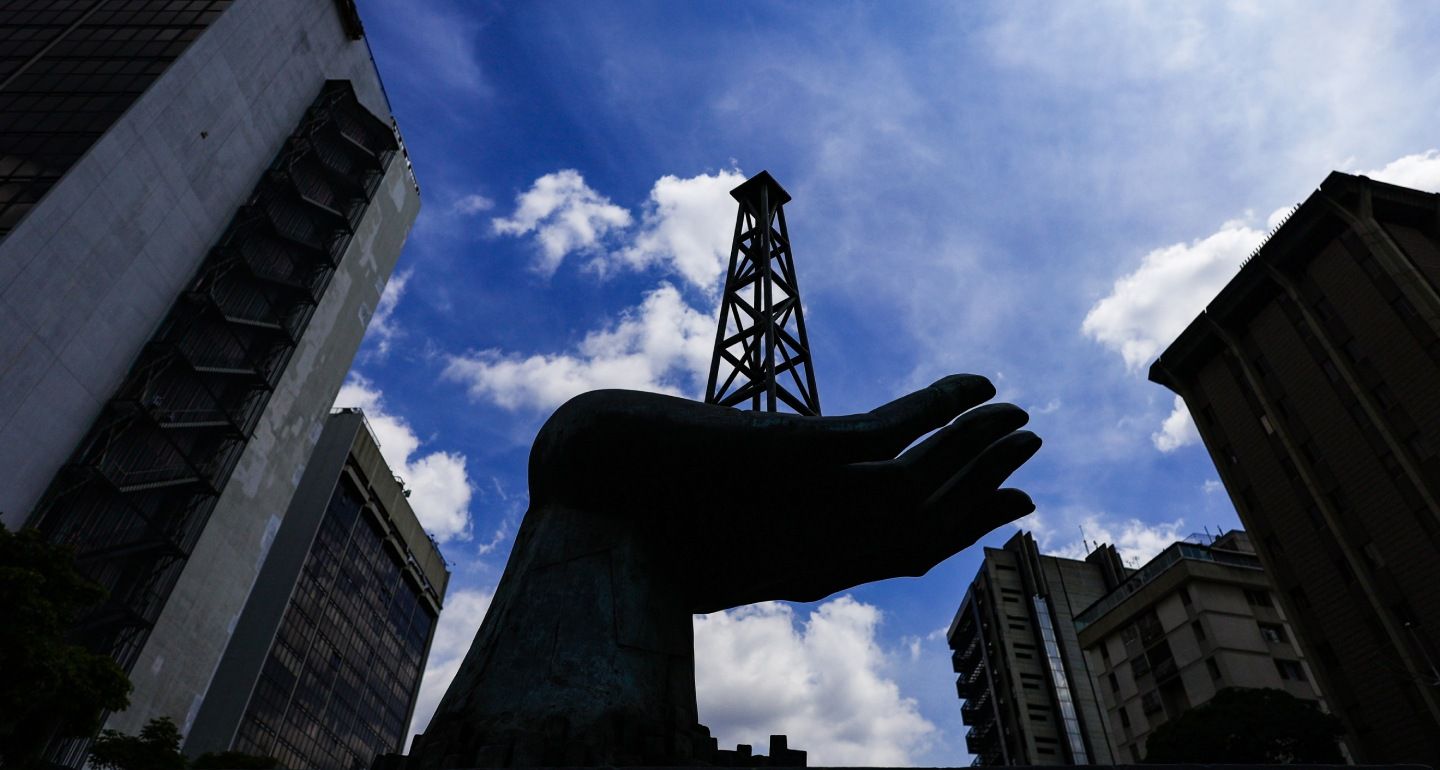
Geological complexity and years of mismanagement mean the Venezuelan oil industry is not the big prize officials in Moscow and Washington appear to believe.

Sergey Vakulenko
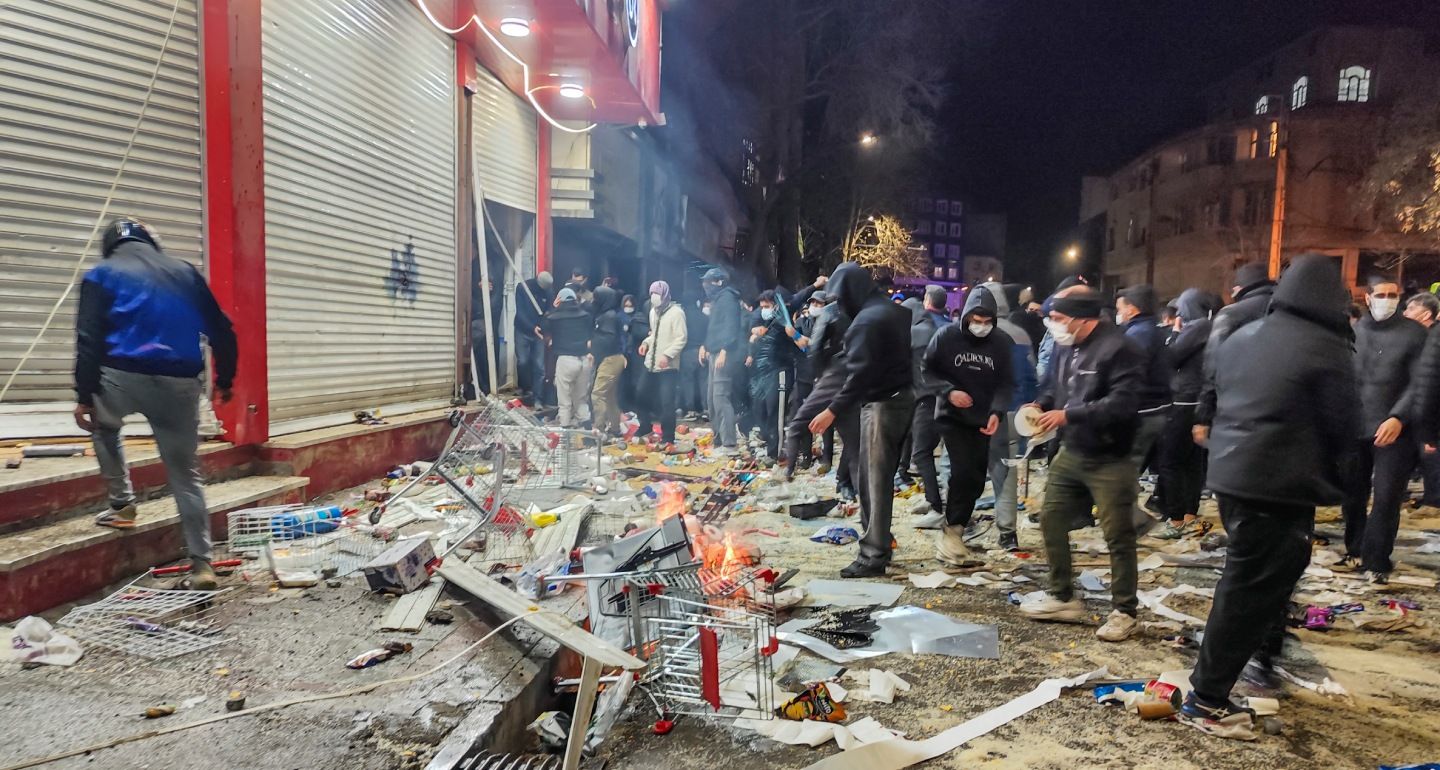
It’s one thing to export Russian helicopters to Iran to fight the insurgency, and it’s easy to imagine Moscow becoming a haven for fleeing Iranian leaders. But it’s very difficult to imagine Russian troops defending the Iranian regime on the ground.

Nikita Smagin