Those who fail to learn from history are condemned to repeat it. And Indonesia is in danger of repeating history. It is going down a road that it had gone down before—and reached a dead end.
Until the mid-1980s, the country adopted protectionist trade and industrial licensing policies in a misguided effort to promote industrialization. Instead, these policies stifled manufacturing and smothered non-oil export growth.
Then, in 1985, there was a bold bid to break from the past. Indonesia significantly lowered its trade barriers and consequently enjoyed a manufacturing boom that lasted well over a decade. Thanks to this growth in manufacturing, Indonesia joined the ranks of the Southeast Asian tiger economies. Its exports expanded rapidly and the economy reduced its dependence on oil and commodities.
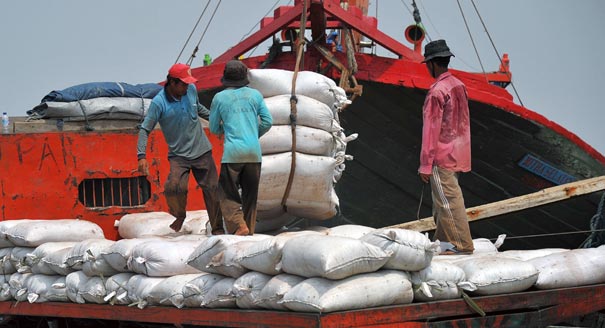
Progress made at that time is now threatened. Over the last few months, the Indonesian authorities have begun to reintroduce barriers to foreign trade and investment—ironically, with the same intention of promoting industrialization, domestic investment, and employment. The interventions range from limits on ownership of banks and mines to export taxes and bans on raw materials to food import restrictions. One can’t help but think its déjà vu all over again.
In May 2012, the government slapped a 20 percent tax on metal ore exports and a complete ban on mineral exports is now scheduled to take effect in 2014. The official justification is to encourage downstream metal refining and production. This fails to recognize that such industries usually require large amounts of capital and energy, both of which are in short supply, and employ small numbers of workers when employment should be a top priority.
Downstream refining in Indonesia is likely to be internationally uncompetitive and it will only be a question of time before metal ore refining firms seek protection against international competition. This, in turn, will burden downstream industries that use metal as an input. Moreover, metal refining industries are likely to be located in Indonesia’s outer islands where the ores are located, when the biggest employment challenge is in Java—Indonesia’s most populous island and home to 60 percent of the country’s population.
A second justification that is used is to help preserve Indonesia’s natural resources. But slapping an export tariff—or worse, an export ban—on metal ores will lower the domestic price relative to the international price and only encourage, rather than discourage, further exploitation of these resources. A better measure for preserving natural resources and using them to support sustainable development would be to raise mineral royalties on all mines, whether domestic or foreign-owned, and place these revenues in a commodity fund. The fund could then be invested, and the returns applied through the budget to support social and environmental projects.
The logic being applied to metal ores is also being considered by policymakers to encourage firms in other sectors to move up the value chain. The export ban on rattan (material used for traditional furniture), for example, was designed to encourage rattan furniture production, but the result has only been to push rattan prices down to the point that the small farmers who collect the rattan are hurting. Indeed, Indonesia tried and abandoned this policy before in the 1980s—in rattan as well as in plywood—and one would have hoped that this particular lesson from history would have been learned.
To be sure, Indonesian manufacturing needs a shot in the arm. But introducing explicit or implicit trade or investment barriers, easy and populist as they may be, is not the way to provide it. Instead, Indonesia needs more infrastructure, streamlined investment regulations, a better education system, and a more competitive exchange rate. These are more difficult to provide, certainly less glamorous, and require a focused and determined government to push them through. The easier and more tempting route of introducing stroke-of-the-pen barriers to foreign trade and investment may give the government satisfaction that it is actively supporting domestic investors, but such measures could actually damage the economy’s long-term growth prospects.
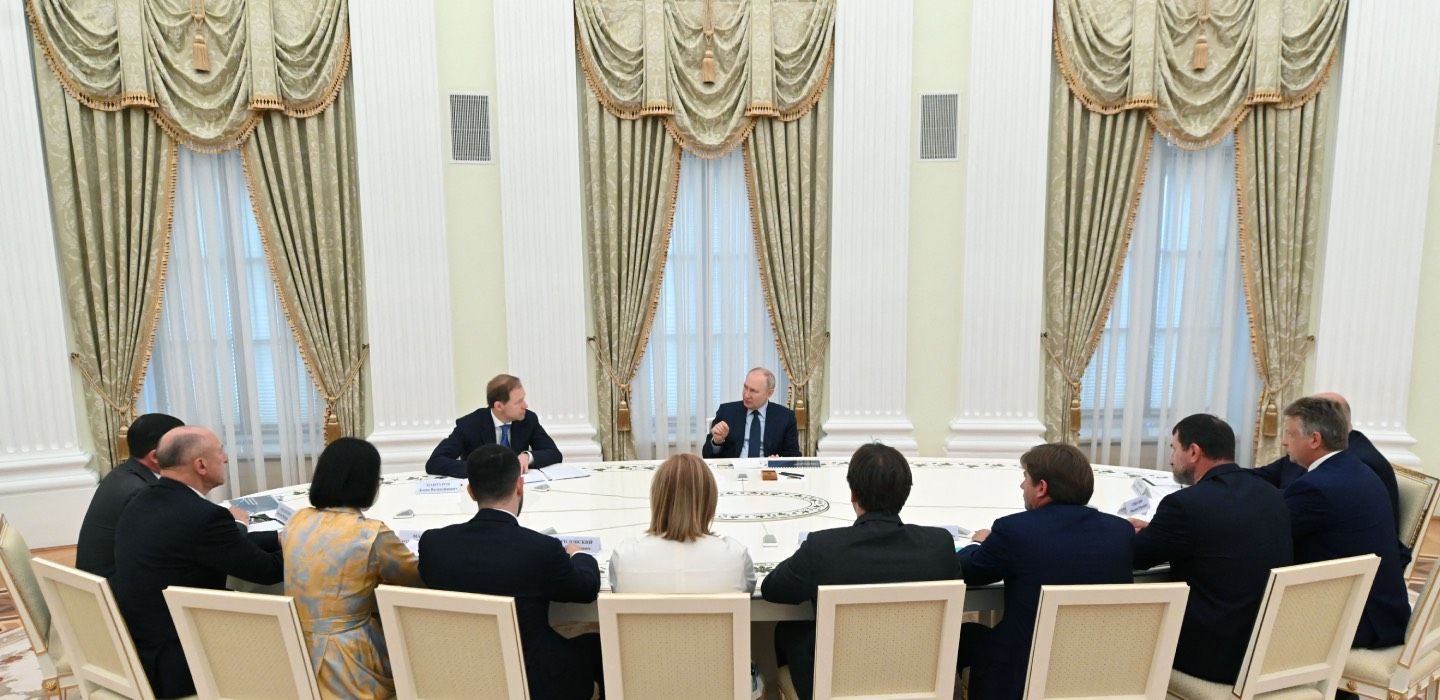
Indonesian policymakers could draw a lesson or two from Malaysia’s economic transformation program. This program is the product of years of deliberation and discussion led by Prime Minister Najib Razak himself and tackles the hardest and seemingly most intractable challenges confronting the Malaysian economy. It covers such areas as education, competition, standards, human capital development, public finance reform, and public service delivery. The program is monitored using concrete, measurable, and transparent performance indicators in each of these areas and is subject to peer review by a panel of international experts.
The results are published and attract considerable attention. Although in its early stages, the program is showing impressive results already. Malaysia’s ranking has moved up in the World Bank’s Doing Business indicators (18 out of 183 countries compared to Indonesia’s 129), private investment has climbed, and investor confidence in the economy has improved. Interestingly, Malaysia has also opted to participate in the Trans-Pacific Partnership, a free trade agreement that tackles at-the-border and behind-the-border barriers to trade and investment, possibly as a way to drive domestic reforms.
Malaysia’s example suggests that Indonesia needs to craft a long-term strategy in support of manufacturing that is well understood by all branches of government and the private sector. Quick fixes are not the answer. What is more, they detract from structural reforms that are critically needed. Given the difficult global economic environment, this is not the time to repeat the mistakes of history. On the contrary, it is the time to learn from them.