

{
  "authors": [
    "Rajendra Abhyankar",
    "George Perkovich",
    "Bernd von Muenchow-Pohl",
    "François Rivasseau"
  ],
  "type": "event",
  "centerAffiliationAll": "dc",
  "centers": [
    "Carnegie Endowment for International Peace"
  ],
  "collections": [],
  "englishNewsletterAll": "ctw",
  "nonEnglishNewsletterAll": "",
  "primaryCenter": "Carnegie Endowment for International Peace",
  "programAffiliation": "SAP",
  "programs": [
    "South Asia"
  ],
  "projects": [],
  "regions": [
    "South Asia",
    "India",
    "Western Europe"
  ],
  "topics": [
    "Economy"
  ]
}
India and the European Union
Thu, May 10th, 2012
Washington, D.C.
IMGXYZ3739IMGZYXPopular perceptions aside, both India and the European Union can be seen as emerging powers with shared features, interests, and challenges. Their “strategic partnership” holds significant potential, yet continues to underperform.
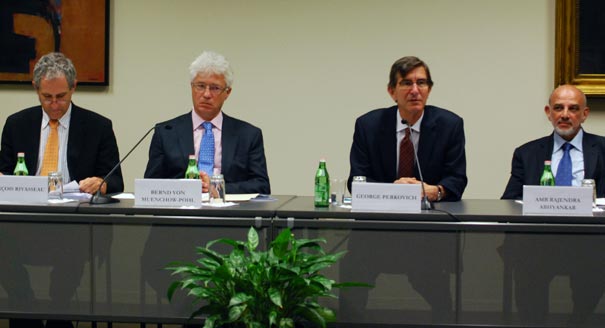
Rajendra Abhyankar, former Indian Ambassador to the EU, Belgium, and Luxembourg, François Rivasseau, Deputy Head of the Delegation of the EU to the United States, and Carnegie’s Bernd von Muenchow-Pohl discussed the future of EU-India Relations. Carnegie’s George Perkovich moderated.
Unity in Diversity
Conventional wisdom holds that “great economic power begets great political power,” von Muenchow-Pohl said. This statement provides an interesting intellectual lens through which to view India, the EU, and their common difficulties:
- India, an Emerging Power. India’s economic scale is promising in terms of its future political power, von Muenchow-Pohl said. But much of India’s population is desperately poor and economic growth has not been inclusive. There are growing divides between classes, religions, and the urban and rural populations. India may be hindered in its reach for political power by its internal instability and political fragmentation, he warned.
- The European Union, an Emerging Power. Despite having the world’s largest economy, the EU is politically paralyzed in a way very similar to India, von Muenchow-Pohl said. Additionally, he noted that the EU faces growing regional imbalances and demographic decline.
- Similar Situations. Von Muenchow-Pohl argued that India and the EU share the common challenge of how to manage economic power amid political instability. Furthermore, India and the EU are both multicultural and multilingual democracies with similar values and aspirations, but they both have only a limited capacity or willingness to shape the external world in accordance with their interests.
An Underperforming Relationship
- Strong Beginning. The EU is India’s largest trading partner and donor. After the 2004 India-EU summit, a comprehensive Joint Action Plan was drafted. On both sides, there was considerable optimism about the budding relationship, Abhyankar and von Muenchow-Pohl said.
- Disappointing Results. Von Muenchow-Pohl claimed that the relationship has underperformed because both sides had different expectations of what the strategic partnership meant. Abhyankar agreed, calling the India-EU strategic partnership “aspirational.” He argued that a strategic partnership must be “above” normal diplomacy and immune to its normal ups and downs. Rivasseau added that neither side is adequately managing expectations, which leads to greater disappointment than may perhaps be warranted.
- Shared Values, Divergent Interests. Von Muenchow-Pohl identified the root cause of the problem in the fact that shared values do not necessarily make for converged interests. He noted that the EU has little presence in the Indian neighborhood, and that India—like the United States—dismisses the European Union as a serious political player.
- Top-Down Model. The EU-Indian relationship is further limited by its top-down nature, von Muenchow-Pohl added. In the absence of bottom-up dynamics, the relationship will continue to flounder. Abhyankar added that contrary to the EU, the United States is the home of a large and politically influential Indian diaspora, which may account for a stronger India-U.S. relationship.
The Way Forward
Von Muenchow-Pohl laid out several steps that both India and the EU needed to take in order to invigorate the relationship:
- Conclude Free Trade Agreement. Both sides need to realize that economics are the backbone of their relationship, von Muenchow-Pohl said. In order to strengthen that backbone, India and the EU need to conclude a Free Trade Agreement (FTA). Rivasseau argued that it would be difficult to sell a FTA to Europe in the midst of its economic crisis, an opinion further colored by Europeans’ perceptions that India is competing against the EU on unfair grounds. He suggested that any FTA could only remain aspirational for the foreseeable future.
- Execute Joint Action. Von Muenchow-Pohl stated that the relationship needs “joint action” and not just political dialogue. He suggested that India and the EU should commit to joint action in combatting privacy and safeguarding cyber security. Abhyankar agreed, noting that the whole relationship is currently about process rather than outcomes. Rivasseau suggested that the India and EU should work closer together on a variety of projects, including Somalia, Afghanistan, and the International Space Code of Conduct.
- Recruit New Stakeholders. Von Muenchow-Pohl argued that both sides needed to recruit new stakeholders for the relationship, particularly from the bottom-up.
Carnegie does not take institutional positions on public policy issues; the views represented herein are those of the author(s) and do not necessarily reflect the views of Carnegie, its staff, or its trustees.
Event Speakers
Rajendra Abhyankar
Japan Chair for a World Without Nuclear Weapons, Senior Fellow

George Perkovich is the Japan Chair for a World Without Nuclear Weapons and a senior fellow in the Carnegie Endowment for International Peace’s Nuclear Policy Program. He works primarily on nuclear deterrence, nonproliferation, and disarmament issues.
Former Nonresident Scholar, South Asia Program
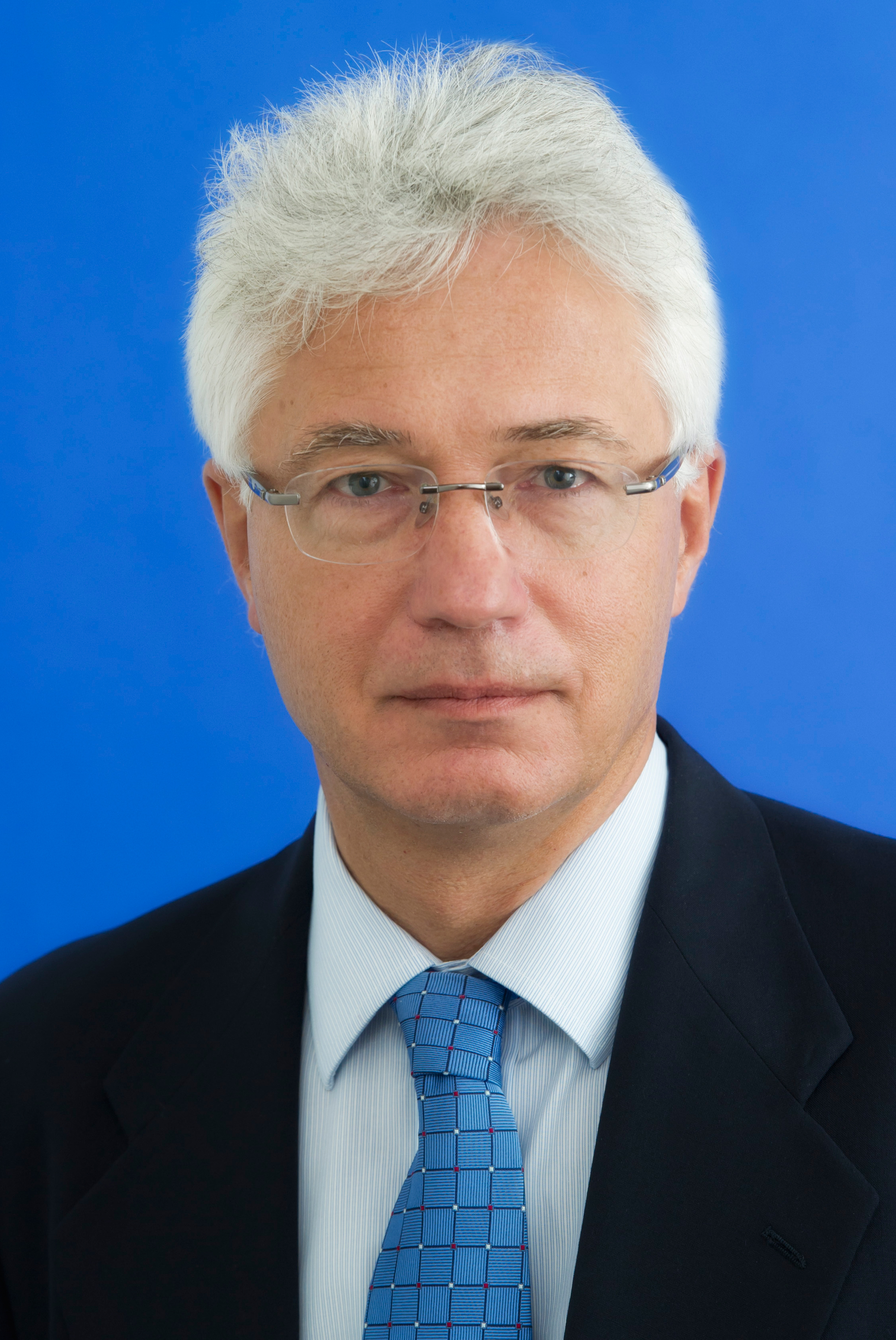
Von Muenchow-Pohl was a nonresident scholar in Carnegie’s South Asia Program, where his work focuses on Indian domestic, foreign, and economic policy.
François Rivasseau