

{
  "authors": [
    "Nikolay Petrov",
    "Henry Hale",
    "James F. Collins"
  ],
  "type": "event",
  "centerAffiliationAll": "dc",
  "centers": [
    "Carnegie Endowment for International Peace",
    "Carnegie Russia Eurasia Center"
  ],
  "collections": [],
  "englishNewsletterAll": "ctw",
  "nonEnglishNewsletterAll": "",
  "primaryCenter": "Carnegie Endowment for International Peace",
  "programAffiliation": "russia",
  "programs": [
    "Russia and Eurasia"
  ],
  "projects": [],
  "regions": [
    "Caucasus",
    "Russia"
  ],
  "topics": [
    "Political Reform",
    "Democracy"
  ]
}
Overmanaged Democracy in Russia: The Ruling Tandem and the Economic Crisis
Wed, September 30th, 2009
Washington, D.C.
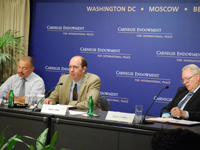
The current political system that has emerged in Russia under Putin is best characterized by the political model of “overmanaged democracy,” a hybrid of democracy and authoritarianism. Nikolai Petrov from the Carnegie Moscow Center and Henry Hale from the George Washington University spoke about the sustainability of overmanaged democracy as a form of governance in Russia. Petrov explained that, although this method of governance provides stability in the short- and medium-term, given the major challenges looming in the economic, social, and regional spheres, overmanaged democracy cannot provide long-term stability for Russia. Its dependence on the charismatic authority of a single popular leader and its vulnerability to shocks and succession crises could lead to a regime breakdown.
Russia is not a democratic nation, Petrov and Hale asserted, yet ruling authorities still cling to the trappings of democracy. The appearance of democracy provides benefits for authoritarian leaders, such as:
- Generation of information helps the state identify society’s preferences and potential upcoming problems.
- A system that allows citizens to provide feedback to their government, which makes the government more efficient.
- Institutional mechanisms for reconciling various and conflicting opinions and interests.
- Elections that enable a regime appear legitimate, help identify promising new leaders and assist the state in becoming more effective.
- Truly independent media, which exist but are marginalized in a way that manipulates media market forces and takes advantage of inertia in media consumers’ habits. The fact that such media operate relatively independently lessens the feeling in society that freedom of expression is actually being repressed, thereby reducing incentives for those who value such freedom to rebel.
Carnegie India does not take institutional positions on public policy issues; the views represented herein are those of the author(s) and do not necessarily reflect the views of Carnegie, its staff, or its trustees.
Event Speakers
Former Scholar-in-Residence, Society and Regions Program, Moscow Center
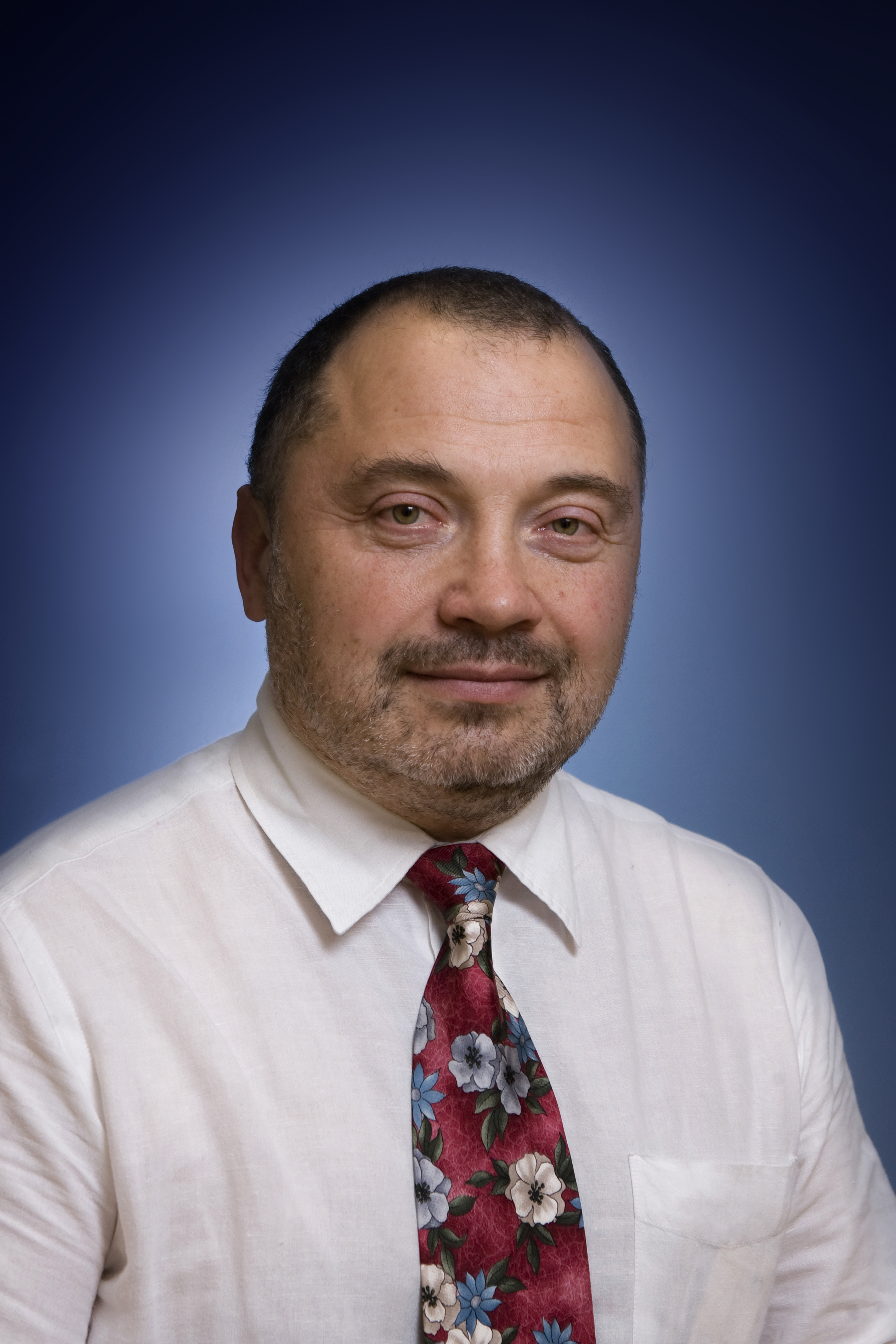
Nikolay Petrov was the chair of the Carnegie Moscow Center’s Society and Regions Program. Until 2006, he also worked at the Institute of Geography at the Russian Academy of Sciences, where he started to work in 1982.
Henry Hale
Nonresident Senior Fellow, Russia and Eurasia Program; Diplomat in Residence
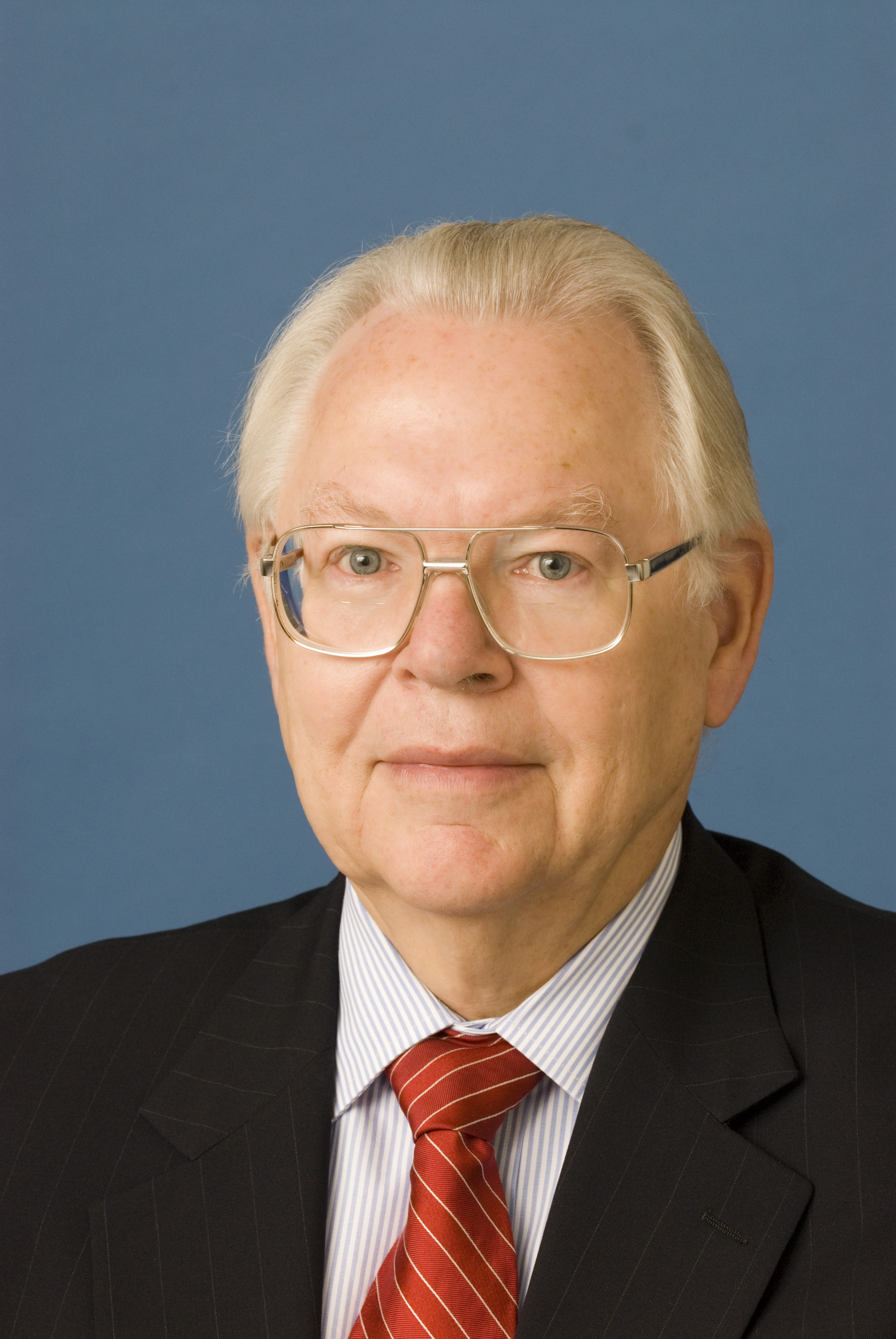
Ambassador Collins was the U.S. ambassador to the Russian Federation from 1997 to 2001 and is an expert on the former Soviet Union, its successor states, and the Middle East.