• Research
  • About
  • Experts
Carnegie India logoCarnegie lettermark logo
AI
Podcast Episode
Carnegie India

India’s Air Defense After Operation Sindoor: Lessons and the Road Ahead

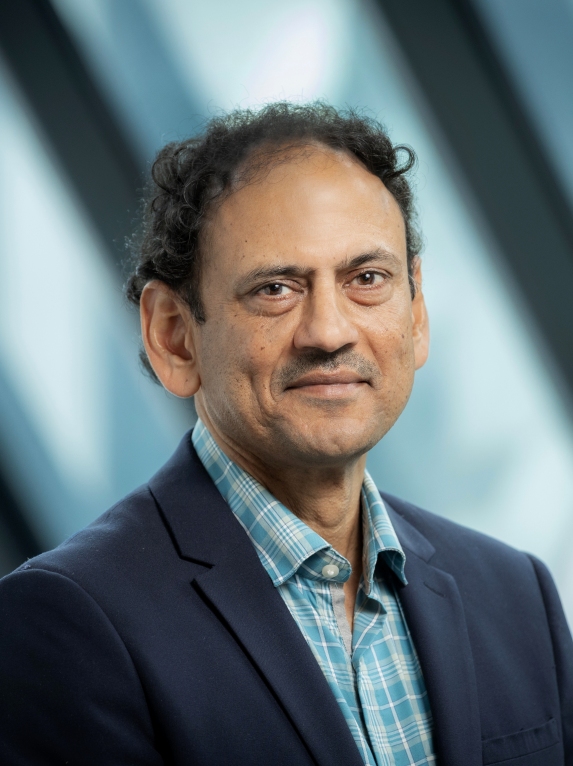
In this episode of Interpreting India, host Dinakar Peri is joined by Air Marshal Diptendu Choudhury, former Commandant of the National Defence College. Together, they unpack the evolution of India’s multilayered air defense network, tracing their journey from limited radar coverage in the 1960s to today’s multilayered, integrated network capable of projecting power into adversarial airspace.

Link Copied
By Dinakar Peri and Diptendu Choudhury
Published on Sep 18, 2025

Subscribe on

SpotifyApple PodcastsAmazon MusicYoutube

Additional Links

https://youtu.be/WjCWrs06oMI?si=6e-naEsaFlWysMHA
Project hero Image

Project

Security Studies

India’s evolving role in regional and global security is shaped by complex dynamics. Experts in the Security Studies Program examine India’s position in this world order through informed analyses of its foreign and security policies, focusing on the relationship with China, the securitization of borders, and the geopolitics of the Indo-Pacific. 

Learn More

In this episode of Interpreting India, host Dinakar Peri is joined by Air Marshal (Retd.) Diptendu Choudhury, former Commandant of the National Defence College. Together, they unpack the evolution of India’s multilayered air defense network, tracing their journey from limited radar coverage in the 1960s to today’s multilayered, integrated network capable of projecting power into adversarial airspace.

The discussion highlights how offensive and defensive air power work in tandem, lessons from Operation Sindoor, the growing challenges posed by drones, missiles, and cost-effectiveness, and the future direction of India’s strategy in the face of China–Pakistan cooperation.

Episode Notes

India’s air defense has transformed from sparse radars in the 1960s to a multilayered network anchored by the Integrated Air Command and Control System (IACCS), linking radars, interceptors, and layered missile systems into a cohesive shield. Air Marshal Diptendu Choudhury underscores how decades of preparation, constant operational readiness, and the stress test of Operation Sindoor demonstrated the value of Army–Air Force integration and cost-effective counters to drones and missiles. He emphasizes that air defence is no longer just about protection—it is about extending reach into adversary airspace and enabling India’s offensive air power to operate with confidence.

Looking ahead, Choudhury warns that the deepening China–Pakistan partnership, the economics of interception, and production scalability will shape India’s strategic calculus. He calls for IACCS to evolve into an Integrated Aerospace Command and Control System, expanding beyond airspace into near-space and space-based surveillance to achieve full-spectrum aerospace domain awareness. Building resilient, cyber-secure, and future-ready defences, he argues, is essential to preserving India’s edge against threats ranging from drones to ballistic missiles.

How can India balance cost-effective counters against drones with the need for high-end missile defenses? What does China–Pakistan military cooperation mean for India’s future two-front strategy? How should India integrate space-based systems into its air defence to achieve true aerospace domain awareness?

Hosted by

Dinakar Peri
Fellow, Security Studies Program
Dinakar Peri

Featuring

Diptendu Choudhury

Carnegie India does not take institutional positions on public policy issues; the views represented herein are those of the author(s) and do not necessarily reflect the views of Carnegie, its staff, or its trustees.

More Work from Interpreting India

  • Podcast Episode
    India, Australia, and the Critical Minerals Opportunity

    In this episode of Interpreting India, Shruti Mittal, research analyst at Carnegie India, speaks with Professor Mohan Yellishetty of Monash University on the India-Australia critical minerals partnership, what it has delivered so far, and where the two countries can build the most meaningful cooperation over the next decade.

      Shruti Mittal, Mohan Yellishetty

  • Podcast Episode
    Chokepoints, Economic Warfare, and India's Strategic Options

    In this episode of Interpreting India, Konark Bhandari, speaks with Edward Fishman, author of Chokepoints: American Power in the Age of Economic Warfare, on economic statecraft, how the U.S. built its playbook for economic warfare over time, and what the lessons are for India as it looks to build its own economic resilience. 

      Konark Bhandari, Edward Fishman

  • Podcast Episode
    India's AI Ambitions and the Road to Viksit Bharat | AI Summit Special

    In this episode of Interpreting India, Nidhi Singh, speaks with Debjani Ghosh, distinguished fellow at NITI Aayog and chief architect of the NITI Frontier Tech Hub. With nearly three decades across Intel, NASSCOM, and now NITI Aayog, Debjani brings a perspective that is both deeply practical and genuinely optimistic. She co-chaired the working group on AI for Economic Growth and Social Good at the India AI Impact Summit, and in this conversation she reflects on what the summit delivered, what India's AI journey needs to get right, and why the human being has to stay at the center of all of it.

      Nidhi Singh, Debjani Ghosh

  • Podcast Episode
    Did India's AI Summit Get Safety Right? AI Summit Special

    In this episode of Interpreting India, Nidhi Singh, speaks with Professor Balaraman Ravindran, Head of the Department of Data Science and AI at IIT Madras, and Co-Chair of the Safe and Trusted AI Working Group at the India AI Impact Summit. Since the summit, Professor Ravindran has also been appointed to the UN's Independent International Scientific Panel on AI. There is a narrative that has taken hold since the summit, that India moved away from safety and left frontier risks behind. This conversation sets the record straight.

      Nidhi Singh, Balaraman Ravindran

  • Podcast Episode
    Subsea Cables, Trusted Networks, and India's Strategic Opportunity

    In this episode of Interpreting India, Charukeshi Bhatt speaks with Pooja Bhatt, associate professor, Jindal School of International Affairs, O.P. Jindal University, on a piece of infrastructure that is easy to overlook and very difficult to protect: subsea cables. Stretching over 1.5 million kilometres across ocean floors and carrying nearly 99% of global data traffic, these cables underpin everything from financial systems and cloud infrastructure to the everyday digital services that billions of people rely on. For India, a fast-growing digital economy with expanding data center ambitions, getting this right is not optional.

      Charukeshi Bhatt, Pooja Bhatt

Get more news and analysis from
Carnegie India
Carnegie India logo, white
Unit C-4, 5, 6, EdenparkShaheed Jeet Singh MargNew Delhi – 110016, IndiaPhone: 011-40078687
  • Research
  • About
  • Experts
  • Projects
  • Events
  • Contact
  • Careers
  • Privacy
  • For Media
Get more news and analysis from
Carnegie India
© 2026 Carnegie Endowment for International Peace. All rights reserved.