• Research
  • About
  • Experts
Carnegie India logoCarnegie lettermark logo
AI
Podcast Episode
Carnegie India

Chokepoints, Economic Warfare and India's Strategic Options

In this episode of Interpreting India, Konark Bhandari, speaks with Edward Fishman, author of Chokepoints: American Power in the Age of Economic Warfare, on economic statecraft, how the U.S. built its playbook for economic warfare over time, and what the lessons are for India as it looks to build its own economic resilience. 

Link Copied
By Konark Bhandari and Edward Fishman
Published on Jul 10, 2026

Subscribe on

SpotifyApple PodcastsAmazon MusicYoutube
Project hero Image

Project

Technology and Society

This program focuses on five sets of imperatives: data, strategic technologies, emerging technologies, digital public infrastructure, and strategic partnerships.

Learn More

Invalid video URL

Episode Summary

In this episode of Interpreting India, Konark Bhandari, speaks with Edward Fishman, author of Chokepoints: American Power in the Age of Economic Warfare, on economic statecraft, how the U.S. built its playbook for economic warfare over time, and what the lessons are for India as it looks to build its own economic resilience.

This episode explores:

  • What makes something a genuine choke point, and is there a playbook that other countries can actually replicate?
  • Why were China's rare earth export controls and Iran's leverage over the Strait of Hormuz among the most consequential acts of economic warfare in recent months?
  • Why does the U.S. tend to ratchet up export controls and sanctions incrementally, and what are the consequences of that approach?
  • What options does India have in an era of geo-economic fragmentation, and where does it stand in the U.S.-China technology competition?

Episode Note

Edward lays out three criteria for what makes something a genuine choke point: dominant market share, difficulty to substitute, and the ability to weaponize it with asymmetric impact, hurting the adversary far more than yourself. All three are needed.

The U.S. dollar is involved in 90% of foreign exchange transactions. China refines 90% of the global supply of rare earths. Nvidia designs 85% of advanced AI chips. These are all choke points. Canada's dependence on the U.S. market, on the other hand, is not, because imposing embargo-level tariffs on Canada would be just as damaging to the U.S. as to Canada. The distinction, he notes, is not between weaponizing interdependence but weaponizing dependence.

On the question of incremental versus decisive action when it comes to what nations can do in response to chokepoints, Edward's view is clear: when you ratchet up sanctions or export controls gradually, the adversary adapts the whole time. The pressure goes up a little, they find workarounds; the impact goes down, and you end up with a zigzagging pattern that is not particularly effective. On semiconductors, he pushes back on the argument that restricting chip exports to China simply incentivizes them to build their own, pointing out that Huawei's chip subsidiary currently holds around 1% of the advanced AI chip market. If the AI race could be decided in the next few years, giving China access to Nvidia chips in the interim would, in his view, be giving ammunition to an adversary in the middle of the most important technology race of our lifetimes.

On India, Edward's view is that India has more optionality than almost any other country outside the U.S. and China. He sees deeper economic integration with like-minded partners as the most promising path forward, and thinks India is well positioned to benefit from the current transition in the global economic order. He is also candid that both the U.S. and China use economic coercion, and that it is reasonable for countries like India to factor that in. But when stacking the two up, his view is that the U.S. legal system, with its checks and balances, offers more predictability than the alternative.

Hosted by

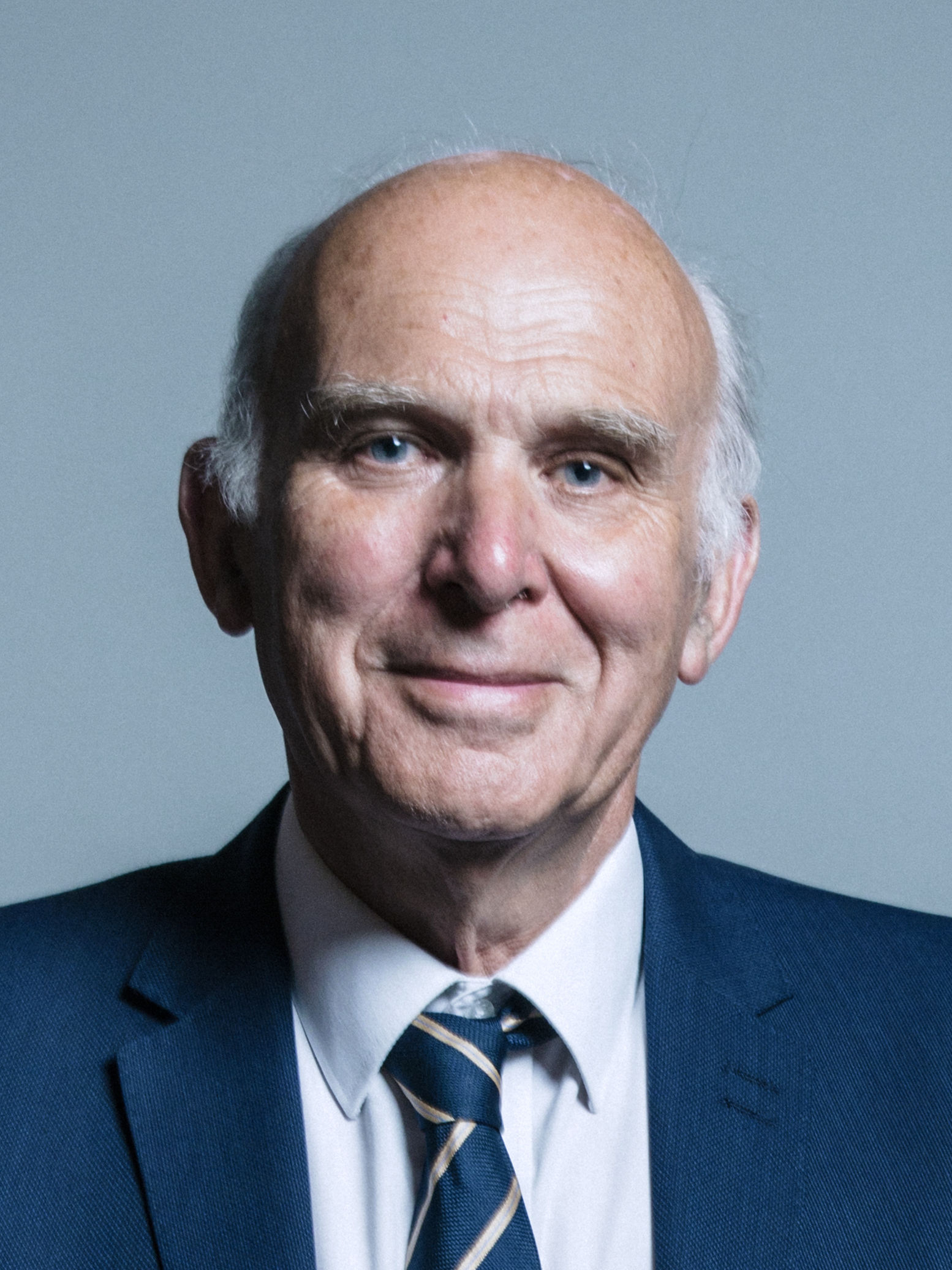
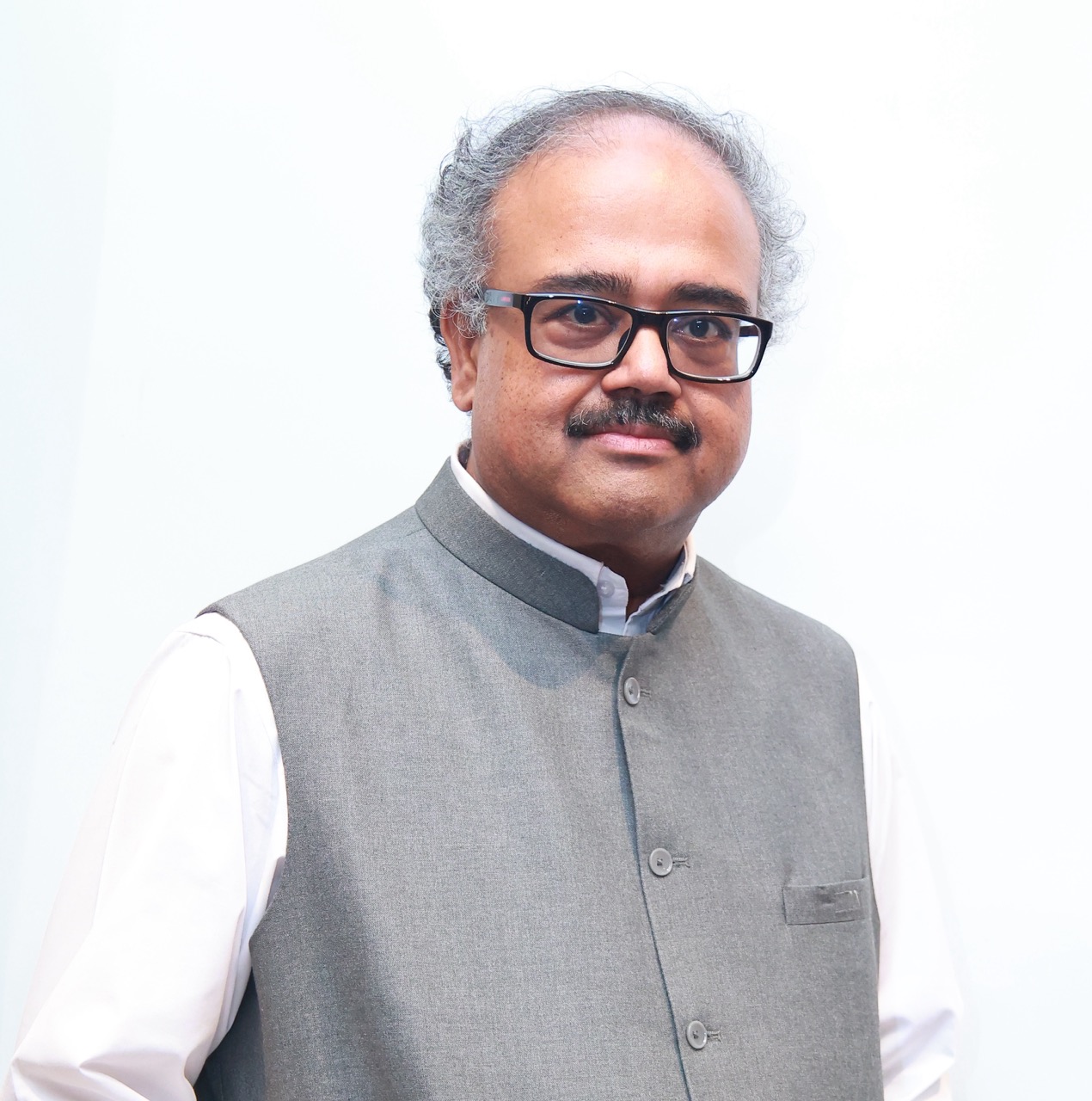
Konark Bhandari
Fellow, Technology and Society Program
Konark Bhandari

Featuring

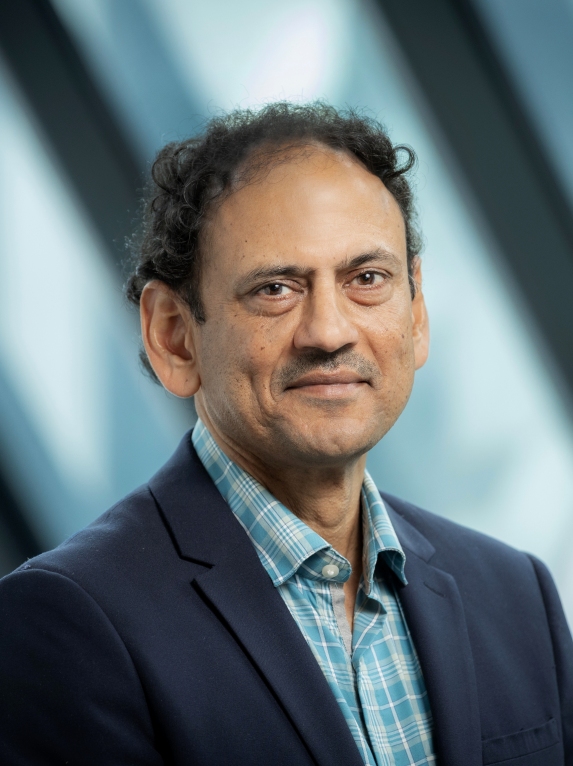
Edward Fishman

Senior fellow and director of the Maurice R. Greenberg Center for Geoeconomics at the Council on Foreign Relations (CFR). He is the New York Times–bestselling author of Chokepoints: American Power in the Age of Economic Warfare.

Edward Fishman

Carnegie India does not take institutional positions on public policy issues; the views represented herein are those of the author(s) and do not necessarily reflect the views of Carnegie, its staff, or its trustees.

More Work from Interpreting India

  • Podcast Episode
    India's AI Ambitions and the Road to Viksit Bharat | AI Summit Special

    In this episode of Interpreting India, Nidhi Singh, speaks with Debjani Ghosh, distinguished fellow at NITI Aayog and chief architect of the NITI Frontier Tech Hub. With nearly three decades across Intel, NASSCOM, and now NITI Aayog, Debjani brings a perspective that is both deeply practical and genuinely optimistic. She co-chaired the working group on AI for Economic Growth and Social Good at the India AI Impact Summit, and in this conversation she reflects on what the summit delivered, what India's AI journey needs to get right, and why the human being has to stay at the center of all of it.

      Nidhi Singh, Debjani Ghosh

  • Podcast Episode
    Did India's AI Summit Get Safety Right? AI Summit Special

    In this episode of Interpreting India, Nidhi Singh, speaks with Professor Balaraman Ravindran, Head of the Department of Data Science and AI at IIT Madras, and Co-Chair of the Safe and Trusted AI Working Group at the India AI Impact Summit. Since the summit, Professor Ravindran has also been appointed to the UN's Independent International Scientific Panel on AI. There is a narrative that has taken hold since the summit, that India moved away from safety and left frontier risks behind. This conversation sets the record straight.

      Nidhi Singh, Balaraman Ravindran

  • Podcast Episode
    Subsea Cables, Trusted Networks, and India's Strategic Opportunity

    In this episode of Interpreting India, Charukeshi Bhatt speaks with Pooja Bhatt, associate professor, Jindal School of International Affairs, O.P. Jindal University, on a piece of infrastructure that is easy to overlook and very difficult to protect: subsea cables. Stretching over 1.5 million kilometres across ocean floors and carrying nearly 99% of global data traffic, these cables underpin everything from financial systems and cloud infrastructure to the everyday digital services that billions of people rely on. For India, a fast-growing digital economy with expanding data center ambitions, getting this right is not optional.

      Charukeshi Bhatt, Pooja Bhatt

  • Podcast Episode
    AI Literacy and the Future of Work in India

    In this episode of Interpreting India, Adarsh Ranjan, research analyst at Carnegie India, speaks with Jaspreet Bindra, founder of AI&Beyond and Tech Whisperer Limited, UK, and author of 'Winning with AI: Your Guide to AI Literacy.' Jaspreet brings a practitioner's perspective to questions that often get lost in the noise around AI: not just what is changing, but whether people, organizations, and policymakers are actually prepared for it.

      Adarsh Ranjan, Jaspreet Bindra

  • Podcast Episode
    Can AI Resources Be Democratized? AI Summit Special

    In this episode of Interpreting India, Nidhi Singh, speaks with Saurabh Garg, secretary at the Ministry of Statistics and Programme Implementation, Government of India, who chaired the working group on democratizing AI resources at the India AI Impact Summit.

      Nidhi Singh, Saurabh Garg

Get more news and analysis from
Carnegie India
Carnegie India logo, white
Unit C-4, 5, 6, EdenparkShaheed Jeet Singh MargNew Delhi – 110016, IndiaPhone: 011-40078687
  • Research
  • About
  • Experts
  • Projects
  • Events
  • Contact
  • Careers
  • Privacy
  • For Media
Get more news and analysis from
Carnegie India
© 2026 Carnegie Endowment for International Peace. All rights reserved.