

In The Media
Michele Dunne, Robert Kagan
{
  "authors": [
    "Robert Kagan"
  ],
  "type": "legacyinthemedia",
  "centerAffiliationAll": "",
  "centers": [
    "Carnegie Endowment for International Peace"
  ],
  "collections": [],
  "englishNewsletterAll": "",
  "nonEnglishNewsletterAll": "",
  "primaryCenter": "Carnegie Endowment for International Peace",
  "programAffiliation": "",
  "programs": [],
  "projects": [],
  "regions": [],
  "topics": [
    "Political Reform",
    "Foreign Policy"
  ]
}
REQUIRED IMAGE
Source: Carnegie
Reprinted from the Weekly Standard, November 8, 1999
Republicans took a courageous and principled stand when they defeated the Comprehensive Test Ban Treaty three weeks ago. Now they need to show some political smarts, too. With the 2000 election campaign fast approaching, they should deprive the Clinton administration of one cheap, but sometimes effective, foreign policy debating point: the issue of U.S. dues to the United Nations.
In June the Senate passed legislation sponsored by Senate Foreign Relations Committee chairman Jesse Helms that would make funds available for paying U.S. arrears to the U.N. in exchange for implementation of stringent reforms in U.N. programs and management. The Helms legislation passed 97-2, and for good reason. For all the faults of the U.N., and for all the gamesmanship that has surrounded the issue of how to force reforms on it, Republicans and Democrats in fact agree that America should pay its bills. The U.N. was, after all, established under American leadership after World War II.
And Helms’s plan is clever as well as principled. Instead of letting Republicans get blamed for refusing to pay our bills, Helms’s strategy would shift the burden back to the Clinton administration. In order to get the funding, the administration will have to battle secretary general Kofi Annan and the rest of the U.N. bureaucracy to implement the required reforms. The U.S. ambassador to the U.N., Richard C. Holbrooke, is committed to Helms’s proposals, which include reducing the overall U.S. share in the U.N. budget. For House Republicans to reject the Helms plan now would be snatching defeat from the jaws of victory.
It’s up to the House Republican leadership to display some, well, leadership. Congressman Chris Smith, who has been a noble warrior for the cause of human rights around the world, is trying once again to condition U.N. funding on a restoration of the so-called Mexico City language concerning abortion. He should relent. We are a year away from a presidential election that may again put a Republican in the White House. That president will be able to restore the pro-life Mexico City policy with the stroke of a pen. Nothing Congress can do will bring that day any closer, for even if Smith succeeds in attaching his language to the Helms legislation, President Clinton will then veto it. We’ll still have to wait until January 2001 for a change in policy. Meanwhile, by seeming to be too cheap to pay our U.N. dues, Republicans will have needlessly handed the Democrats an issue for the 2000 campaign.
The entire foreign policy message of Bill Clinton and Al Gore is that Republicans are isolationists, pure and simple. The charge that Republicans refuse to pay American bills at the U.N.—unfair though it may be—gives superficial credibility to the charge. If House Republicans now throw their support to the Helms legislation, they can go a long way toward removing any taint of isolationism that would make Americans question the party’s fitness to govern. And congressional Republicans would be doing a big favor for their party’s nominee, whether it’s George W. Bush or John McCain, by lifting the U.N. dues albatross from his neck.
Republicans need to clarify the foreign policy debate for the 2000 election. The real choice is not between internationalism and isolationism, but between the Carteresque internationalism of the Clinton administration and the more robust internationalism of Ronald Reagan. By approving the Helms plan, House Republicans can make it clear that they are not the party of Pat Buchanan, now safely and appropriately relegated to the fringes of national politics, but the party of Teddy Roosevelt and Ronald Reagan, of real and principled global leadership.

Former Senior Associate
Kagan, author of the recent book, The Return of History and the End of Dreams (Knopf 2008), writes a monthly column on world affairs for the Washington Post and is a contributing editor at both the Weekly Standard and the New Republic.
Recent Work

Michele Dunne, Robert Kagan
Robert Kagan, Michele Dunne
Carnegie India does not take institutional positions on public policy issues; the views represented herein are those of the author(s) and do not necessarily reflect the views of Carnegie, its staff, or its trustees.

This piece examines India’s response to U.S. sanctions and tariffs, specifically assessing the immediate market consequences, such as alterations in import costs, and the broader strategic implications for India’s energy security and foreign policy orientation.

Vrinda Sahai
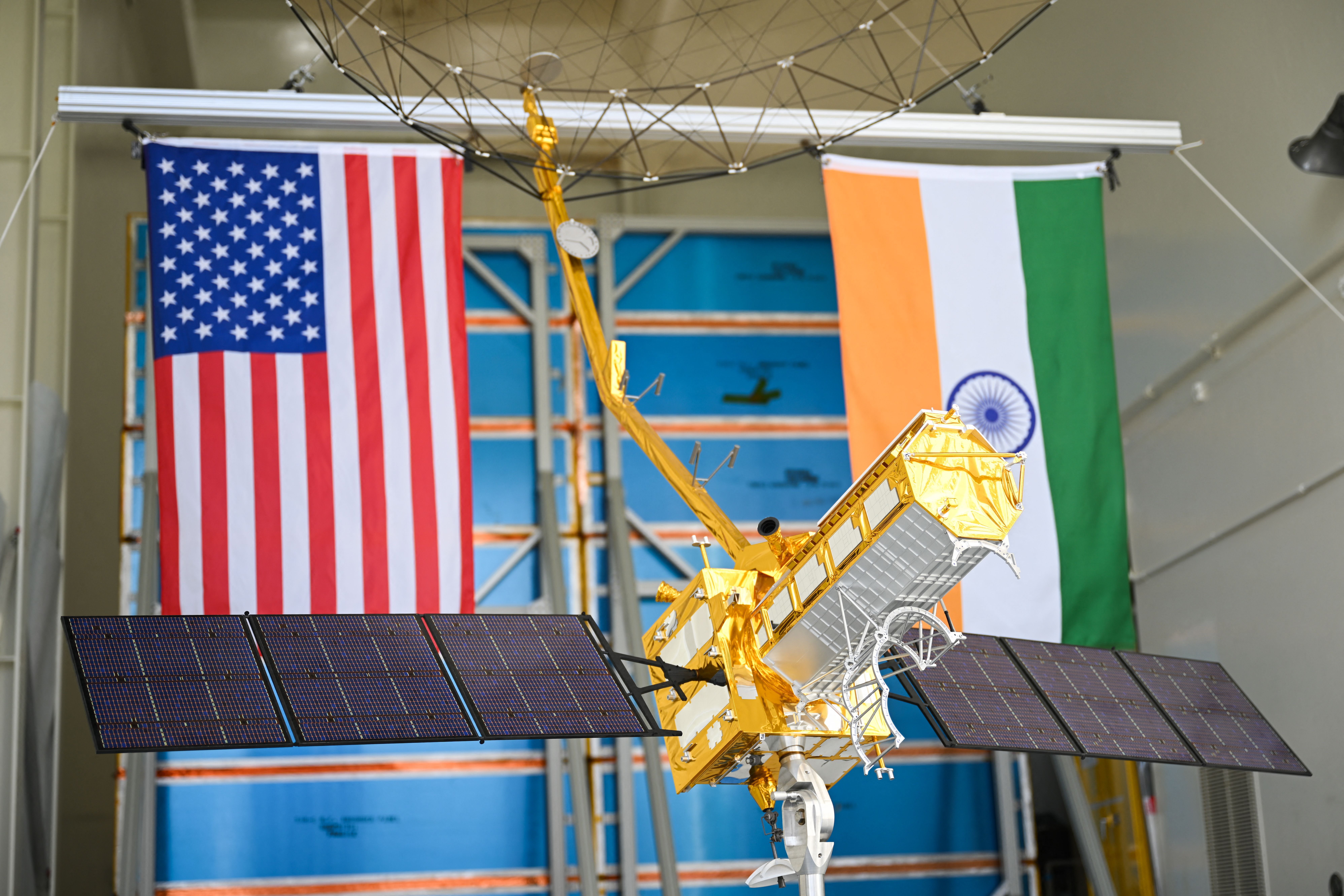
On July 30, 2025, the United States announced 25 percent tariffs on Indian goods. While diplomatic tensions simmered on the trade front, a cosmic calm prevailed at the Sriharikota launch range. Officials from NASA and ISRO were preparing to launch an engineering marvel into space—the NASA-ISRO Synthetic Aperture Radar (NISAR), marking a significant milestone in the India-U.S. bilateral partnership.

Tejas Bharadwaj
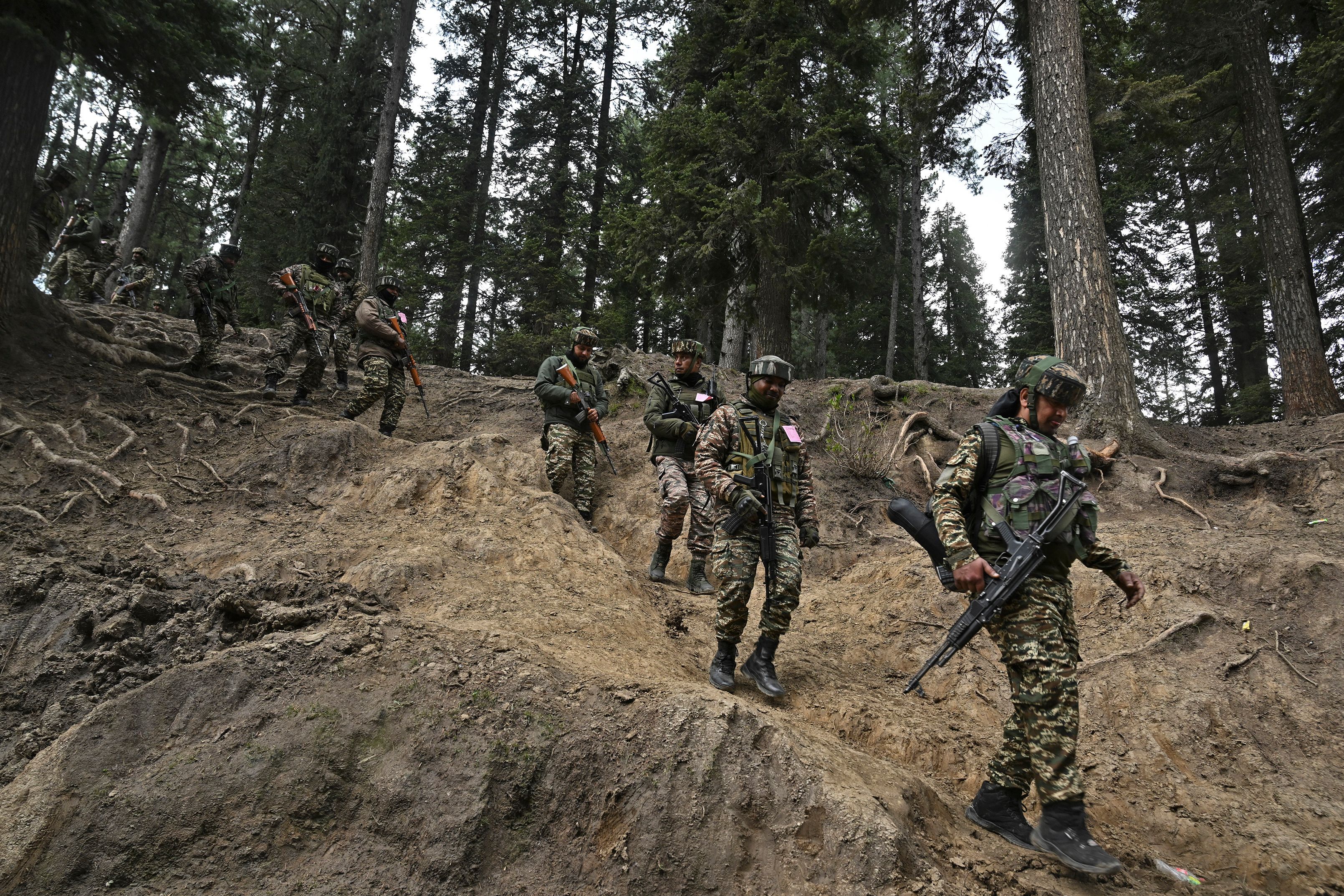
On May 7, 2025, between 1:05 and 1:30 a.m. (IST), airstrikes carried out by the Indian Air Force hit nine locations inside Pakistan and Pakistan occupied Kashmir (PoK). It was codenamed Operation Sindoor.

Rudra Chaudhuri

This compendium brings together three essays by scholars who participated in Carnegie India's Security Studies Dialogue in 2024, each examining a different aspect of China’s policies. Drawing on their expertise and research, the authors offer fresh perspectives on key geopolitical challenges.
Vijay Gokhale, Suyash Desai, Amit Kumar, …

As part of the TRUST initiative, leaders of the two countries committed to building trusted and resilient supply chains, including for semiconductors and critical minerals. India and the United States have made steady progress in this area over the years. This essay explores the takeaways from discussions on semiconductor supply chains that took place at Carnegie India’s 9th Global Technology Summit.

Konark Bhandari