

Other
Anders Aslund
{
  "authors": [
    "Anders Aslund"
  ],
  "type": "legacyinthemedia",
  "centerAffiliationAll": "dc",
  "centers": [
    "Carnegie Endowment for International Peace"
  ],
  "collections": [],
  "englishNewsletterAll": "ctw",
  "nonEnglishNewsletterAll": "",
  "primaryCenter": "Carnegie Endowment for International Peace",
  "programAffiliation": "russia",
  "programs": [
    "Russia and Eurasia"
  ],
  "projects": [],
  "regions": [
    "Caucasus",
    "Russia"
  ],
  "topics": [
    "Trade"
  ]
}
REQUIRED IMAGE
Source: Carnegie
Nezavisimaya gazeta, April 4, 2000
Recently, the Moscow brokerage Brunswick Warburg stunned, by predicting that Russia's gross domestic product will surge by 5 percent this year. The man behind the forecast is Peter Boone, a Harvard Ph.D. and probably the best macroeconomist in Moscow with plenty of post-communist experience. But should this forecast really be taken seriously?
Until now, a broad consensus has forecast 1-2 percent growth for Russia this year. The reason for this consensus forecast is simply that everybody has become so pessimistic about Russia that nobody faces up to the positive facts any longer. The conventional wisdom is that the Russian industrial growth is only an effect of high oil prices and import substitution, facilitated by a great devaluation.
But this makes little sense, considering that Russia's growth was 3.2 percent last year, and a staggering 8.8 percent in the last quarter. Growth is not declining but gaining momentum, and a dynamism on this scale just not stop with anything less than a major shock. Industrial growth was 8.1 percent last year, and it has actually accelerated - to 14 percent in February.
Oil and gas have not led the recovery. On the contrary, oil production stagnated last year. Major industries with 16-22 percent growth were chemicals, light manufacturing, pulp and paper and machine building, that is, intermediary goods and simple manufacturing, exactly the kind of industries we would like to see expanding at this stage. Within each industry, the best enterprises dash ahead, as should be the case when real restructuring is taking place.
Another tired argument is that the growth is superficial and is not generated by investment. However, recovery in transition economies is usually export led, and investments tend to follow recovery, as there is so much underutilized capital around. Even so, investment actually increased by 6 percent in 1999, and it is rising further.
For unclear reasons, everybody seems to worry about Russia's
abundant tax collection.
The issue has rather been excessive expenditures, but last the government put
its finances in order by cutting wasteful and corrupt expenditures, such as
enterprise subsidies, and the total government budget deficit stopped at 1.7
percent of GDP. This year it will be nearly eliminated.
For long, the proliferation of barter and arrears has been a major concern, but since August 1998 all kinds of arrears have fallen by two thirds in real terms and barter by half. One reason was that in 1999 almost 10,000 loss-making Russian enterprises were put into bankruptcy. The financial crash introduced a hard budget constraint on Russian enterprises and they realized that they had to make money, prompting a rapid monetization. Today, we see all the structural changes that we had hoped for much earlier, and Russia seems finally to get some return from the very substantial structural reforms it has actually undertaken.
The last real worry was the foreign balance. Russia has a substantial foreign debt service, but the London Club deal that reduced the Soviet debt to commercial banks by half did much to relieve Russia. A similar deal is likely in the Paris Club for the regulation of debts to governments. During the last few months Russia's international reserves have grown sharply, as one would expect of a country with a staggering trade surplus of $33 billion last year and it is likely to surge over $40 billion this year.
The cause of Russia's so-called capital flight is a poor bank system and a dysfunctional tax system, but fortunately Russia has such a liberal currency regulation that Russians can keep their money in good international banks instead.
The financial crash seems to have been the beginning of the end of the oligarchic era, that was augured in with the presidential elections in 1996. Mr. Putin has no need for them providing him with media support, averting a communist threat or offering a conduit of covert state financing. To him, they are only a nuisance, and most of the are already broken.
Instead, a new group of Russian businessmen, who are mainly manufacturers, are coming to the fore. They produce for the market. Their increasing strength is a reflection of the economic growth, which promotes production for the market rather than sheer redistribution of resources, implying a new sort of politics.
Last October, McKinsey Global Institute published a major empirical report of Russian industry. Its conclusion was that Russia had the real and human capital for a growth rate of 8 percent a year, and that its problem was primarily a distortive tax system, a poorly functioning tax system and the absence of a land market. However, neither the bank system nor the legal system were actually impediments at this stage of development.
These new businessmen are loudly demanding exactly these three reforms. Mr. Putin is no great thinker or reformer, but he is an astute and genuinely popular politician. He is likely to surf on the current wave of economic growth and undertake the most needed reforms. There is a broad consensus about the need for government reform, to clean up the state administration, and a liberal tax reform, while land reform remains controversial.
Frankly, my greatest worry is that Russia will face an excessive inflow of foreign portfolio investment again, as in 1997. Fortunately, the bond markets are dead, and it might take a year to revive them. Their absence makes it difficult to invest too large amounts of money in Russian securities.
Russia's new-found growth is also spreading to other countries in the region. Even Ukraine recorded a surprise growth of industrial production of 15 percent in February. The previous vicious circle of decline in the former Soviet Union might be turning to a virtuous circle of growth.
Something fundamental has changed in the Russian economy. A time comes when all disasters have occurred and all stupidities done. For Russia, August 1998 seems to have marked that line. It was a horrendous shock, imposing great social costs, but it changed the whole mentality, not only the exchange rate.
Former Senior Associate, Director, Russian and Eurasian Program
Recent Work
Anders Aslund
Anders Aslund

This piece examines India’s response to U.S. sanctions and tariffs, specifically assessing the immediate market consequences, such as alterations in import costs, and the broader strategic implications for India’s energy security and foreign policy orientation.

Vrinda Sahai
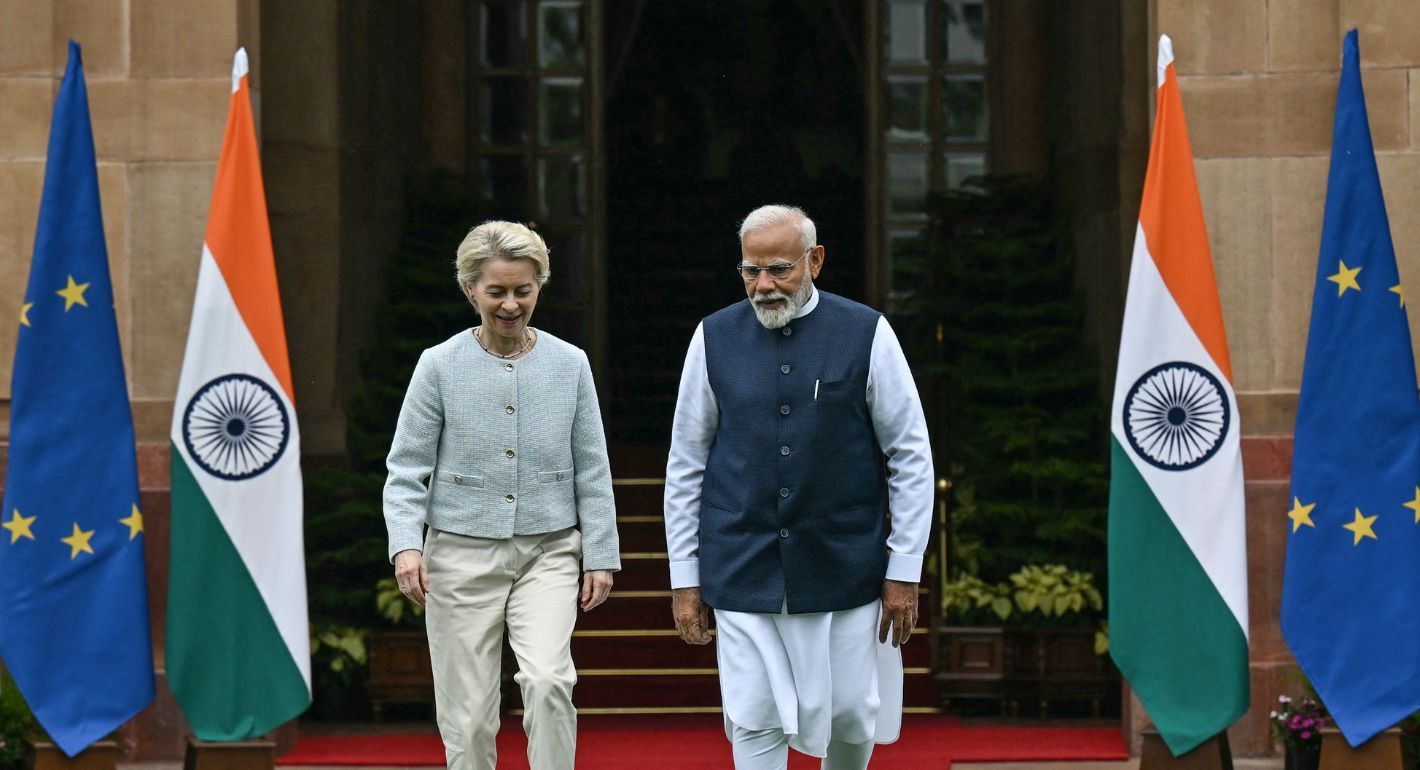
This article argues that the geopolitical circumstances have never been more conducive, not merely for the early conclusion of the free trade agreement (FTA) between India and the EU, but also for crafting a substantive and comprehensive strategic partnership.
Mohan Kumar
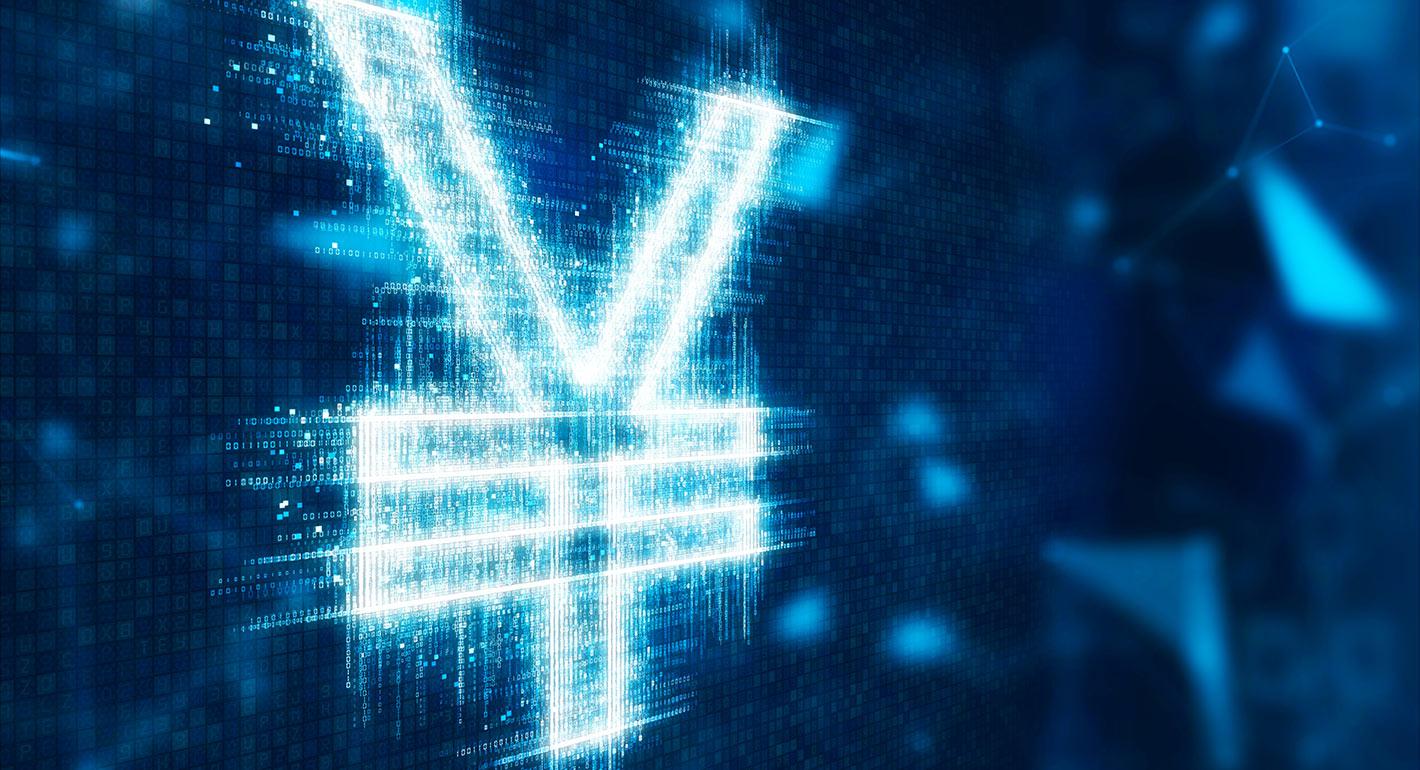
China’s central bank has plans to roll out a digital yuan, which could circumvent the U.S. dollar in important global financial transactions. Here are some ways the digital yuan could pose a challenge to the dollar’s prominence.
Rajesh Bansal, Somya Singh
The World Trade Organization’s Trade Facilitation Agreement has placed trade facilitation initiatives high on the agenda of international governments. This case study of India studies what trade facilitation may mean for a fast-paced economy.


Vijay Singh Chauhan, Sruti Vijayakumar
After the coronavirus pandemic wanes, how will China’s reorientation of the Belt and Road Initiative to address global health concerns influence its relationships with South Asian countries?

Deep Pal, Rahul Bhatia