

Testimony
Anders Aslund
{
  "authors": [
    "Anders Aslund"
  ],
  "type": "other",
  "centerAffiliationAll": "dc",
  "centers": [
    "Carnegie Endowment for International Peace"
  ],
  "collections": [],
  "englishNewsletterAll": "ctw",
  "nonEnglishNewsletterAll": "",
  "primaryCenter": "Carnegie Endowment for International Peace",
  "programAffiliation": "russia",
  "programs": [
    "Russia and Eurasia"
  ],
  "projects": [],
  "regions": [
    "North America",
    "United States",
    "Caucasus",
    "Russia"
  ],
  "topics": [
    "Political Reform",
    "Democracy",
    "Foreign Policy"
  ]
}
REQUIRED IMAGE
Source: Carnegie Endowment
Russia’s regime has gone through a major aggravation during the first year of President Vladimir Putin’s second term. The regime suffers from serious overcentralization of power, which has led to a paralysis of policy making. Putin’s power base has been shrunk to a core of secret policemen from St. Petersburg. Although his popularity remains high, it is falling. Neither unbiased information nor negative feedback is accepted. As a result, the Putin regime is much more fragile than generally understood. Russia’s current abandonment of democracy is an anomaly for such a developed and relatively wealthy country, and it has made Russia’s interests part from those of the United States.
In this new Policy Brief, Carnegie senior associate Anders Aslund asserts that the United States should not hesitate to promote democracy in Russia, while pragmatically pursuing common interests in nonproliferation and energy.
Click on the link above for the full text of this Carnegie publication.
A limited number of print copies are available.
Request a copy
About the Author
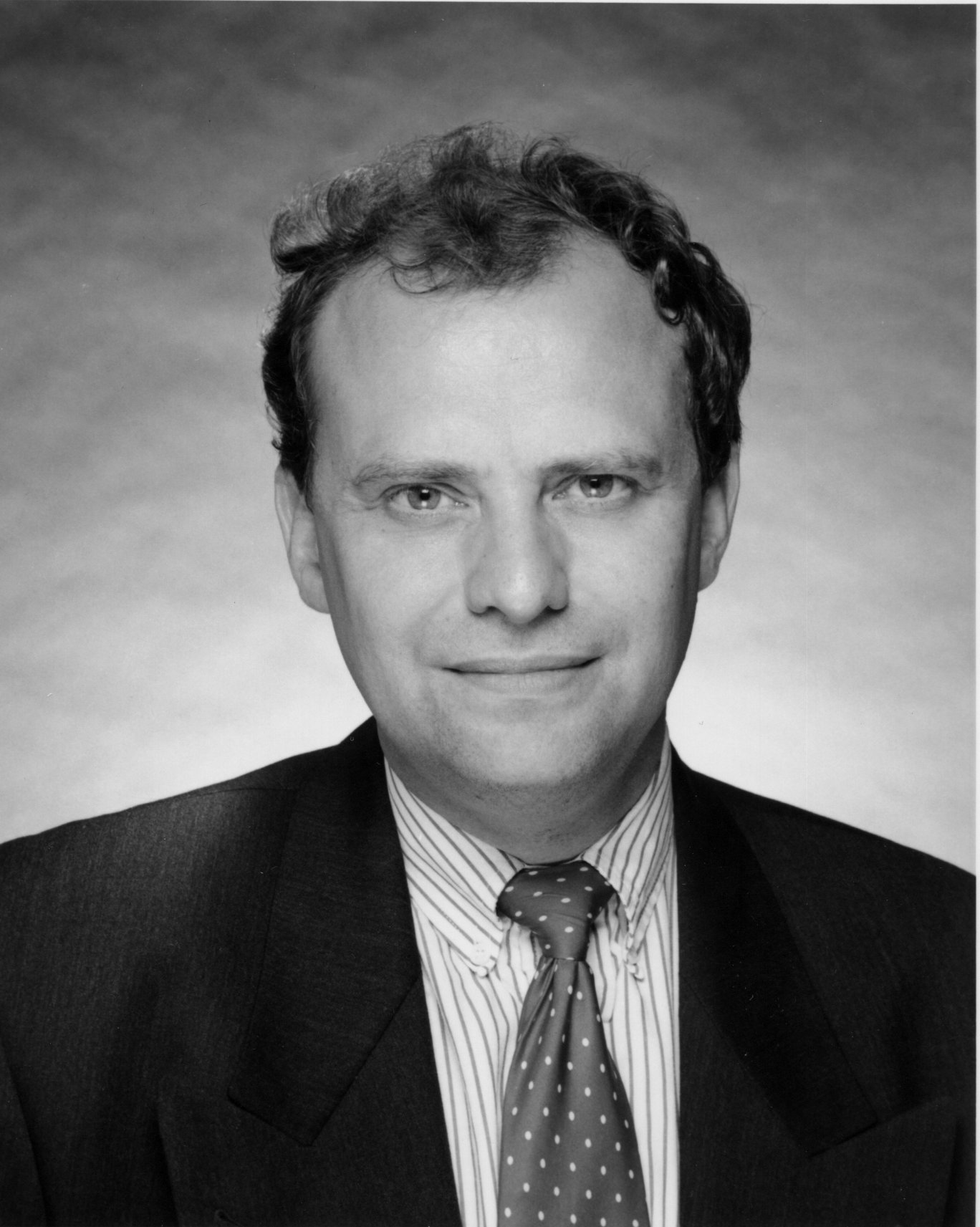
Anders Åslund is the director of the Russian and Eurasian Program and senior associate at the Carnegie Endowment. He is also an adjunct professor at Georgetown University and co-directs the Carnegie Moscow Center's project on Economies of the Post-Soviet States. He is the author of Building Capitalism: The Transformation of the Former Soviet Bloc and Betraying a Revolution (Washington Post, May 2005).
Former Senior Associate, Director, Russian and Eurasian Program
Recent Work
Anders Aslund
Anders Aslund, Oleksandr Paskhaver
Carnegie India does not take institutional positions on public policy issues; the views represented herein are those of the author(s) and do not necessarily reflect the views of Carnegie, its staff, or its trustees.

How is AI reshaping space security, creating governance challenges, and where does international diplomacy stand today?


Tejas Bharadwaj, Almudena Azcárate Ortega

After the chill in ties between 2020 and 2024 that brought India–China relations to their lowest point in several decades, the two countries have engaged each other afresh. This paper argues that there are predominantly four imperatives guiding India’s approach to China, and they exist in an order of priority.

Saheb Singh Chadha

This piece argues that India’s central challenge is not managing a single flashpoint but resolving the underlying tension between expansion and institutional coherency of the BRICS grouping.

Vrinda Sahai

A partnership between India, a country of subcontinental size, and Africa, a continent of fifty-four countries, may seem asymmetric until one notes that both are home to nearly the same number of people—1.4 billion. This essay spells out the existing challenges to the partnership, its optimal potential, and the possible pathways to realize it over the next quarter-century.

Rajiv Bhatia

The U.S.–India semiconductor cooperation story is well-stocked with top-level strategic intent. What remains unresolved, however, are some underlying challenges that will determine whether the cooperation actually functions. Three such friction points stand out.

Shruti Mittal