

Paper
George Perkovich
{
  "authors": [
    "George Perkovich"
  ],
  "type": "legacyinthemedia",
  "centerAffiliationAll": "dc",
  "centers": [
    "Carnegie Endowment for International Peace"
  ],
  "collections": [],
  "englishNewsletterAll": "ctw",
  "nonEnglishNewsletterAll": "",
  "primaryCenter": "Carnegie Endowment for International Peace",
  "programAffiliation": "NPP",
  "programs": [
    "Nuclear Policy"
  ],
  "projects": [],
  "regions": [
    "South Asia",
    "Pakistan"
  ],
  "topics": [
    "Nuclear Policy"
  ]
}
REQUIRED IMAGE
Source: Carnegie
By George Perkovich, Senior Associate
The prospect of a nuclear exchange between India and Pakistan has mobilized the U.S., Britain, Russia and even Iran to pull the two South Asian antagonists back from the brink. At the same time, extremists within Pakistan's unreconstructed intelligence service are pushing President Pervez Musharraf towards unrelenting violence against Indian rule in Kashmir. This explains Gen. Musharraf's convoluted speech on Monday wherein he wrapped an apparent decision to crack down on Kashmir-oriented terrorist groups with defiant rhetoric against India and support for the Muslim people's "freedom struggle" in Kashmir.
Nuclear war is a real prospect in South Asia; to prevent it, the U.S. must relentlessly press and encourage Gen. Musharraf to act decisively against jihadi organizations and rogue elements in Pakistan's intelligence service. These elements threaten the future of Pakistan, the Indian subcontinent, and the U.S. campaign against terrorism. The stakes are so high that the uppermost levels of the U.S. government need to clarify that the war on terrorism in Kashmir is its top priority in relations with Pakistan.
The South Asian crisis has many causes. The most recent are a series of terrorist attacks by pro-Kashmir militants against Indian institutions and civilians. Last Oct. 1, militants attacked the Kashmir legislative assembly in Srinigar, followed on Dec. 13 by a bloody assault on the Indian parliament in New Delhi. On May 15, three reported Pakistanis killed 34 people, mostly women and children related to army personnel in Jammu, in southern Kashmir. Some 700,000 Indian military personnel stand ready to retaliate and "teach Pakistan a lesson" for sponsoring terrorism as soon as the order is given.
Pakistan counters that the violence arises unavoidably and indigenously from frustration and outrage over India's occupation of the Kashmir valley. Gen. Musharraf disclaims Pakistani involvement in the latest incidents, and insists that the end to violence will come only when India engages Pakistan in a dialogue to resolve the conflicting interests and perspectives of India, Pakistan and the Kashmiri people.
Gen. Musharraf may be right that the latest terrorist attacks are aimed at him as well as India. But his government's failure to extirpate groups that infiltrate across the Kashmir divide exposes either duplicity or weakness on his own part. Yes, India's failure to offer decent governance to the Kashmiris created the current mess and makes New Delhi's self-righteousness difficult to swallow. Still, this does not excuse Pakistan's support of terrorist groups and tactics.
Washington is implicated in this fray because its understandable obsession with hunting down al Qaeda operatives in Pakistan has left it reluctant to exert severe pressure on Pakistan to combat terrorism in Kashmir. Gen. Musharraf and others believe that their cooperation in the hunt for the remnants of al Qaeda will protect Pakistan from suspension of new American aid. Indian officials seethe over apparent U.S. willingness to trade battlefield success against al Qaeda for India's security from Pakistan-backed terrorism. Seeing an American double standard, New Delhi wants to rebuff U.S. pleas for Indian restraint.
The American stakes in preventing Indo-Pak war are enormous. Every U.S. government war game involving India and Pakistan has resulted in escalation to nuclear exchanges. Indians and Pakistanis dismiss these outcomes as American folly, but neither side offers any reason to think that it would accept defeat rather than risk escalating the conflict. The world's first nuclear war could not only cause horrendous death and destruction but also jeopardize an international security order created largely by the U.S.
Pakistan would opt out of the war against al Qaeda. Since even a short-term Pakistani victory would merely be a prelude for Indian revenge, Pakistan's attention and resources would focus on India, not al Qaeda. And a war that resulted in a Pakistani defeat of any sort would render Pakistan physically or politically incapable of assisting the U.S. against al Qaeda.
American relations with India would plunge. President Bush has stated that he seeks to "transform" the U.S.-Indian relationship because India is a rising global power, a leading democracy, a growing market and home to nearly two million high-achieving Indian-Americans. If India were to suffer in a war with Pakistan, Indians would blame the U.S. for "allowing" Pakistan to create the conditions for war.
As unthinkable as it seems, Washington must reprioritize its battles in the war on terrorism. Failure to combat terrorism in Kashmir can lead to nuclear war, the collapse of Pakistan and the rupture of U.S.-Indian relations. These threats pose deeper and more lasting danger to the U.S. than the possible loss of Pakistani help in hunting al Qaeda remnants.
Washington must make clear that if Pakistan does not act decisively and enduringly, the U.S. will declare Pakistan a state-sponsor of terrorism and suspend budgetary assistance -- even if Pakistan counters with threats to suspend cooperation in the hunt for remnants of al Qaeda. At the same time, the U.S. must persuade New Delhi to offer Pakistan a definite date and an agenda for high-level dialogue that will include Kashmir. The actual summit would be contingent upon observable and effective Pakistani exertions to stem insurgent violence in Kashmir.
Pakistan has made hopeful promises in the past, only to renege once the pressure lessened. Sustained attention and pressure must be exerted to convince Pakistan to see through its commitments and create the conditions for diplomacy with India.

Japan Chair for a World Without Nuclear Weapons, Senior Fellow
George Perkovich is the Japan Chair for a World Without Nuclear Weapons and a senior fellow in the Carnegie Endowment for International Peace’s Nuclear Policy Program. He works primarily on nuclear deterrence, nonproliferation, and disarmament issues, and is leading a study on nuclear signaling in the 21st century.
Recent Work
George Perkovich
George Perkovich
Carnegie India does not take institutional positions on public policy issues; the views represented herein are those of the author(s) and do not necessarily reflect the views of Carnegie, its staff, or its trustees.

Trump 2.0 has unsettled India’s external environment—but has not overturned its foreign policy strategy, which continues to rely on diversification, hedging, and calibrated partnerships across a fractured order.



Milan Vaishnav, ed., Sameer Lalwani, Tanvi Madan, …
This book examines the impact of cross-border violence on communities living along the Line of Control and the International Border in Jammu and Kashmir, India.



Deep Pal, Surya Valliappan Krishna, Saheb Singh Chadha
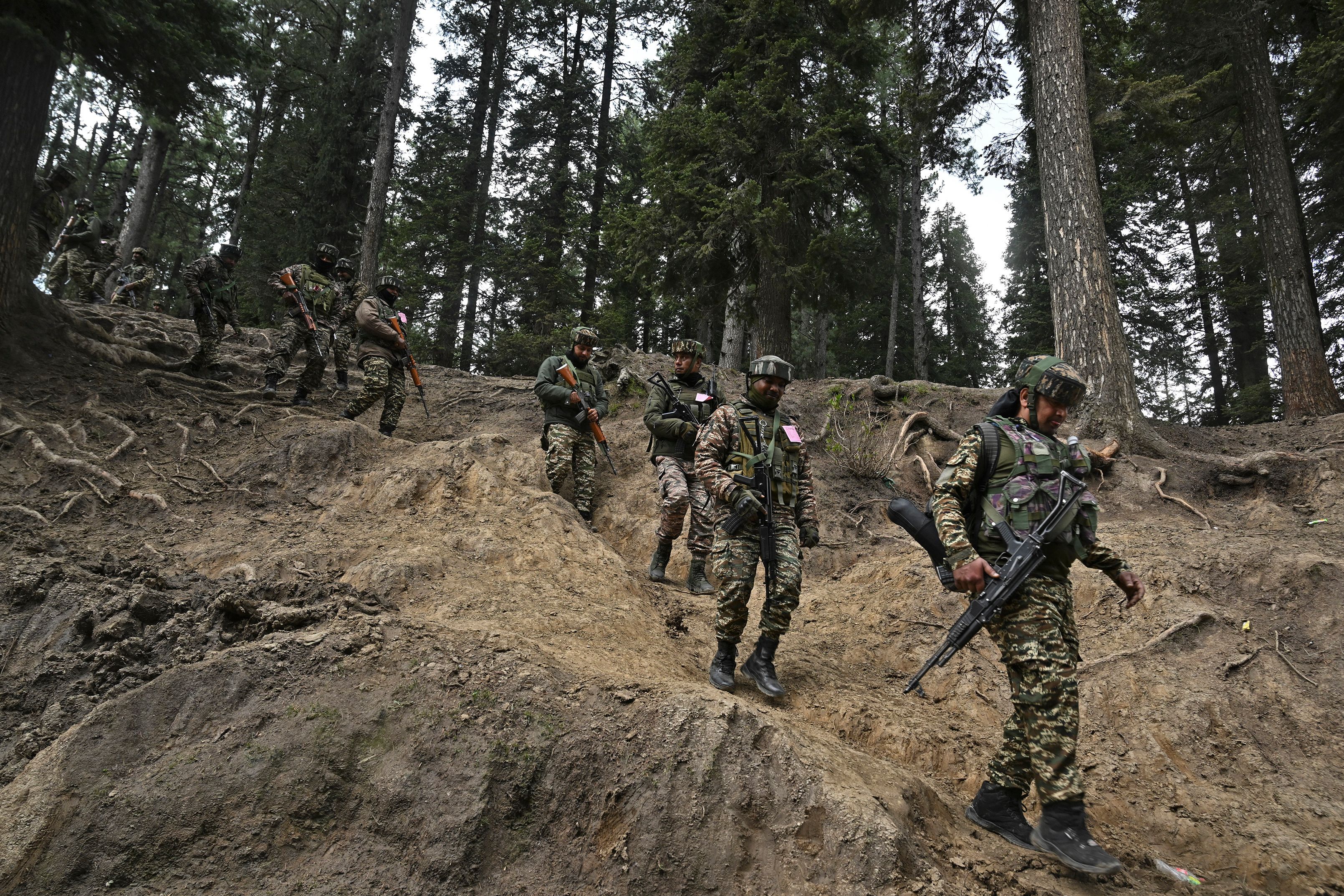
On May 7, 2025, between 1:05 and 1:30 a.m. (IST), airstrikes carried out by the Indian Air Force hit nine locations inside Pakistan and Pakistan occupied Kashmir (PoK). It was codenamed Operation Sindoor.

Rudra Chaudhuri
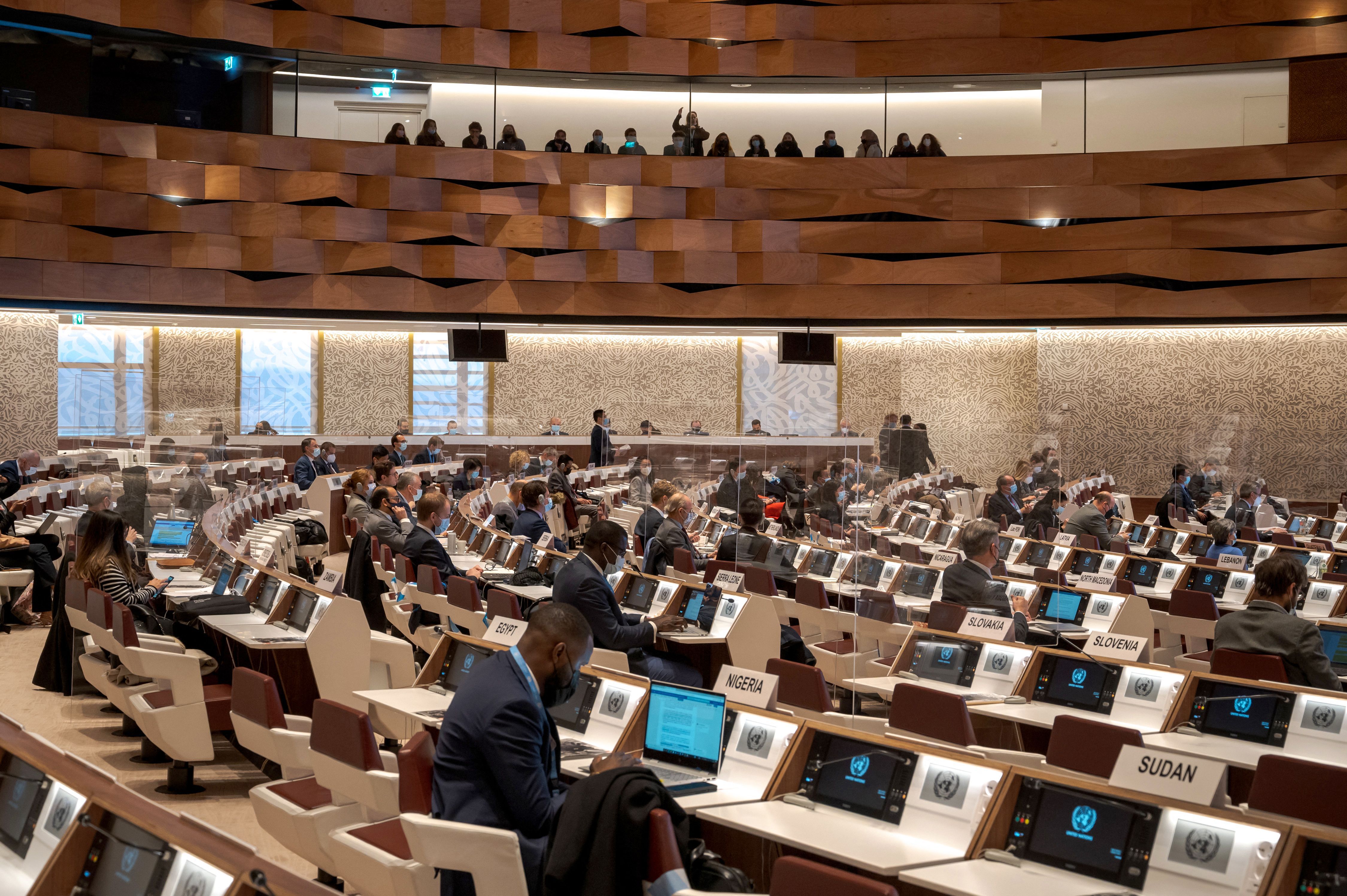
This article explores the global debate on lethal autonomous weapons systems (LAWS), highlighting the convergences, complexities, and differences within and beyond the UN Group of Governmental Experts (GGE) on LAWS. It further examines India’s key position at the GGE and the probable reasons behind them.


Charukeshi Bhatt, Tejas Bharadwaj

This essay is the first of a three-part series that will seek to understand the considerations for building compute capacity and the different pathways to accessing compute in India. This essay delves into the meaning of compute and unpacks the various layers of the compute stack.

Aadya Gupta, Adarsh Ranjan