

Article
Леонид Гозман, Michael McFaul
{
  "authors": [
    "Michael McFaul"
  ],
  "type": "legacyinthemedia",
  "centerAffiliationAll": "dc",
  "centers": [
    "Carnegie Endowment for International Peace"
  ],
  "collections": [],
  "englishNewsletterAll": "ctw",
  "nonEnglishNewsletterAll": "",
  "primaryCenter": "Carnegie Endowment for International Peace",
  "programAffiliation": "russia",
  "programs": [
    "Russia and Eurasia"
  ],
  "projects": [],
  "regions": [
    "Caucasus",
    "Russia"
  ],
  "topics": [
    "Foreign Policy"
  ]
}
REQUIRED IMAGE
Source: Carnegie
The Washington Post, Friday, May 10, 2002; Page A37
Thirty years ago, Sen. Henry "Scoop" Jackson and
Rep. Charles Vanik co-sponsored an amendment to the 1974 Trade Act that must
rank as one of the most successful foreign policy ideas initiated by Congress
during the Cold War. The Jackson-Vanik amendment was a moral act. It explicitly
linked the Soviet Union's trading status to levels of Jewish emigration.
Leonid Brezhnev and the rest of the Soviet Communist Party politburo publicly scorned this linkage as an infringement of their sovereignty. Quietly, however, they responded by increasing Jewish emigration quotas. The legislation produced tremendous results, helping to trigger the emigration of more than a half-million refugees -- including Jews, Catholics and evangelical Christians -- from the Soviet Union and its successor states.
The human rights problems that Jackson and Vanik wanted to address in 1974 still exist today in Russia. Tragically, a decade after the Soviet Union disappeared, the new leaders in the Kremlin still abuse their power to suppress freedom of the press, harass political and social critics, and violate the basic human rights of their own citizens in Chechnya. Local levels of power still restrict the religious rights of some Jewish and Christian organizations.
But Jackson-Vanik -- as currently constituted -- no longer addresses these new strains of democratic infringements. It is time for Congress to "graduate" Russia from Jackson-Vanik -- while at the same time initiating new legislation to deal with these new forms of abuse. The moment for action is the May summit between Presidents Bush and Vladimir Putin. The Jackson-Vanik amendment is obsolete for several reasons. First, there is little evidence to suggest that the current Russian state restricts Jewish emigration. Thirty years ago, the Soviet state imposed all kinds of draconian rules and regulations to prevent Jewish emigration, and viciously punished those Jews who even applied to leave. Today Jews living in Russia must endure several new threats, but state-sponsored restriction on travel is not one of them.
Second, the nature of trade between Russia and the United States has changed substantially since the Cold War. In Soviet times, the state controlled all foreign trade. Thus, linking the Soviet Union's trading status to other state policies regarding human rights made sense. Today, however, private Russian companies do the trading. It is illogical to punish these trading companies for policies the Russian government undertakes.
Third, from the Russian perspective, the continued application of Jackson-Vanik to Russia undermines the claim made by President Bush that the Cold War is over. For the Russian elite, including President Putin, the Jackson-Vanik amendment is a relic of the Cold War. Bush's pledge to assist Russia's entry into the World Trade Organization does not sound credible to Russians when this legacy from a different era in U.S.-Russian relations is still in the books.
Fourth, failure to graduate Russia from Jackson-Vanik will make the U.S. Congress look petty and lacking in principle. Trade disputes between the United States and Russia will continue to flare for decades to come. Whether dealing with steel, bananas or chicken wings, presidential administrations and congressional leaders must always engage our European trading partners -- be they Russians, Germans or the British -- to seek fair trade for American consumers and producers. Such disputes, however, should not be linked to the noble cause that originally inspired the Jackson-Vanik amendment.
For those of us still concerned with the original human rights agenda embodied in the Jackson-Vanik legislation, it is painful to give up one of the most effective weapons for promoting human rights from the Cold War. It seems especially wrong to reward Putin, whose record regarding human rights and democracy is troubling.
As a partial remedy, President Bush and those in Congress still concerned with the status of human rights and religious freedoms in Russia should use the moment of Russia's graduation from Jackson-Vanik to highlight the current violations of human rights still occurring in Russia. While in Moscow this month, President Bush could celebrate the passing of Jackson-Vanik with a public event commemorating the legislation, but then also use the ceremony to highlight the importance of securing individual liberties, religious freedoms and democratic institutions in Russia if Russia desires to be a partner with the United States and a full member of the Western community of democratic states.
Both Russian state officials, including Putin himself, and their harshest critics should be invited to such a ceremony. Congressional leaders could then follow up this event with legislation to create a Jackson-Vanik Foundation, dedicated to the support of human rights and religious freedoms in Russia. This new foundation could be charged with making direct grants to those activists and organizations in Russia still dedicated to the original principles outlined in the 1974 legislation. Such a foundation would offer a much more effective mechanism for supporting human rights and religious activists inside Russia than the outdated Jackson-Vanik amendment.
Russia today bears little resemblance to the Soviet Union of 1974. To reinforce the positive changes there over the past 30 years, while still addressing lingering problems of human rights and democracy, Congress needs to modernize its tools of influence.
The writer, a Hoover Fellow and professor of political science at Stanford University, is a senior associate at the Carnegie Endowment for International Peace.
© 2002 The Washington Post Company
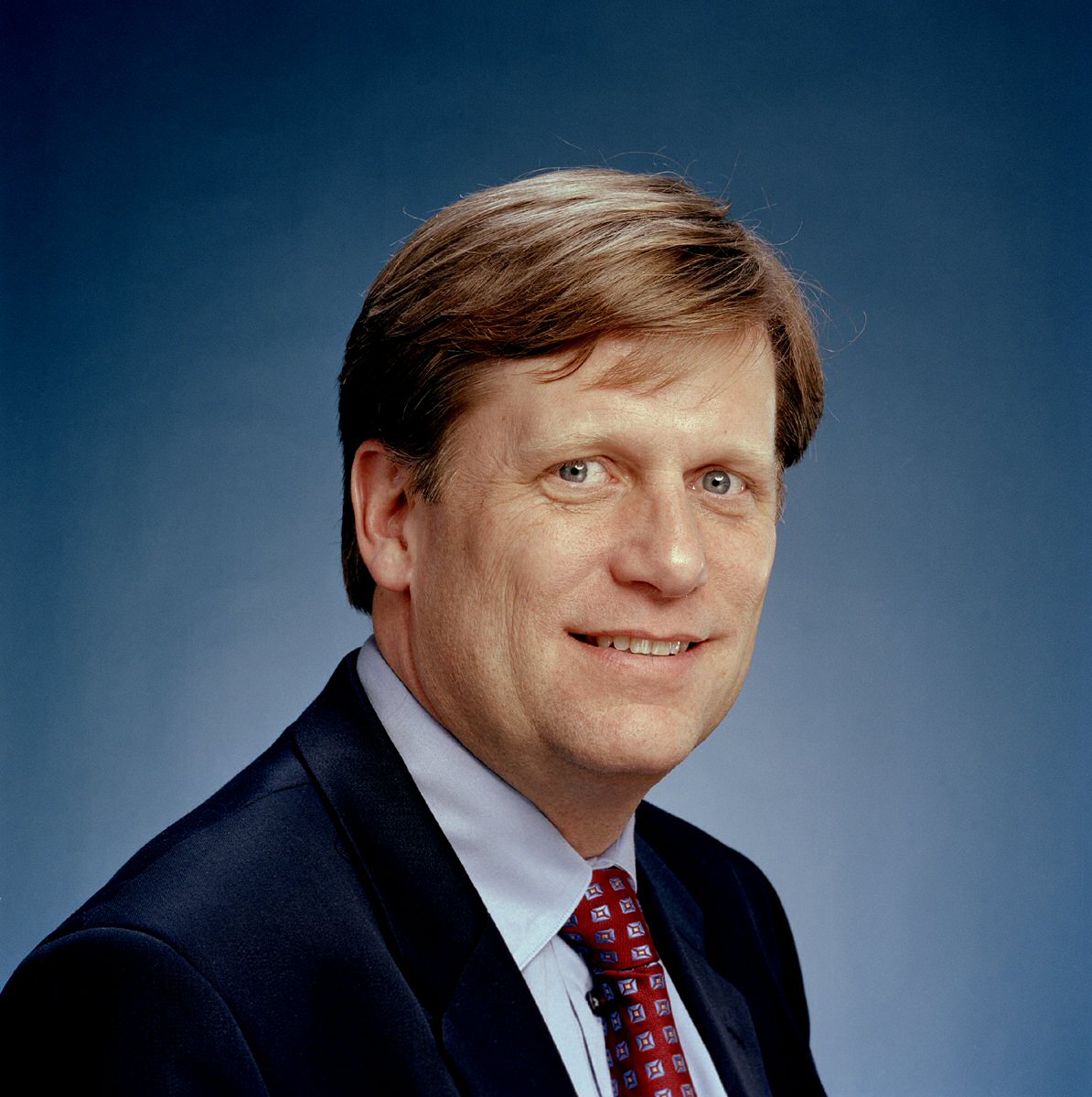
Former Senior Associate
In addition to his role at Carnegie, McFaul is Peter and Helen Bing Senior Fellow at the Hoover Institution and associate professor of political science at Stanford University.
Recent Work
Леонид Гозман, Michael McFaul
Michael McFaul, Sanja Tatic
Carnegie India does not take institutional positions on public policy issues; the views represented herein are those of the author(s) and do not necessarily reflect the views of Carnegie, its staff, or its trustees.

After the chill in ties between 2020 and 2024 that brought India–China relations to their lowest point in several decades, the two countries have engaged each other afresh. This paper argues that there are predominantly four imperatives guiding India’s approach to China, and they exist in an order of priority.

Saheb Singh Chadha

This piece argues that India’s central challenge is not managing a single flashpoint but resolving the underlying tension between expansion and institutional coherency of the BRICS grouping.

Vrinda Sahai

A partnership between India, a country of subcontinental size, and Africa, a continent of fifty-four countries, may seem asymmetric until one notes that both are home to nearly the same number of people—1.4 billion. This essay spells out the existing challenges to the partnership, its optimal potential, and the possible pathways to realize it over the next quarter-century.

Rajiv Bhatia

The India–EU Free Trade Agreement (FTA) is shaping up to be one of the most consequential trade negotiations, both economically and strategically. But, what’s in the agreement, what’s missing, and what will determine its success in the years ahead
Vrinda Sahai, Nicolas Köhler-Suzuki

Trump 2.0 has unsettled India’s external environment—but has not overturned its foreign policy strategy, which continues to rely on diversification, hedging, and calibrated partnerships across a fractured order.



Milan Vaishnav, ed., Sameer Lalwani, Tanvi Madan, …