

Paper
Ms. Shanthi Kalathil, Mr. Taylor Boas
{
  "authors": [
    "Shanthi Kalathil"
  ],
  "type": "legacyinthemedia",
  "centerAffiliationAll": "",
  "centers": [
    "Carnegie Endowment for International Peace"
  ],
  "collections": [],
  "englishNewsletterAll": "",
  "nonEnglishNewsletterAll": "",
  "primaryCenter": "Carnegie Endowment for International Peace",
  "programAffiliation": "",
  "programs": [],
  "projects": [],
  "regions": [
    "China"
  ],
  "topics": [
    "Political Reform"
  ]
}
REQUIRED IMAGE
A freer flow of information and a more critical media in China would help sustain economic growth and strengthen prospects for democracy. The global spread of SARS shows that they could also help to save lives - both in China and abroad.
Source: Carnegie
Originally published in the International Herald Tribune
HONG KONG As a mysterious respiratory illness spreads and causes panic around the world, many here are wondering why didn't we know about this sooner.
Severe acute respiratory syndrome, known as SARS, appears to have claimed its first victims last November in Guangdong Province in southern China. Yet because the Chinese government's first reaction was to attempt to suppress that information, tracking the spread of the disease within and from China has been difficult.
While many countries provided updated statistics on SARS and similar cases to the World Health Organization, China has until recently been less than cooperative. As a result, the WHO has criticized China's handling of the crisis.
Some Chinese officials have denied that a problem exists, however. One Shanghai city health official reportedly criticized foreign journalists for documenting the existence of SARS cases in the city, even though nurses at a local hospital confirmed the presence of patients with symptoms of the ailment.
In China, so-called negative news is seen as harmful to society and to China's image. Officials believe that allowing information about the viral disease to circulate could contribute to social instability. Yet suppressing information, particularly when health issues are concerned, can be fatal.
Information is typically kept on a short leash in authoritarian regimes. The official Chinese media has oscillated between chasing the SARS story and remaining conspicuously silent. Stories that do appear tend to praise China's handling of the crisis.
Lack of reliable information in the media may have contributed to rampant rumors on the Internet in China. Rumors about the disease and possible cures - vinegar, herbal remedies - were circulated in Internet chat rooms, leading to mass buying and shortages of those items. When authoritarian regimes curb the flow of information, the Internet can provide an unofficial source - but it can also contribute to the spread of false notions and panic.
This isn't the first time that an information clampdown in China has exacerbated a health crisis. In the late 1990s, the AIDS virus began to spread through Henan Province in central China. Poor families were selling infected blood to raise money, contributing to the spread of the virus. Yet the crisis did not come to world attention until 2001, when overseas news media began to investigate.
Meanwhile, Chinese media reporting on the subject was curtailed. Local officials denied stories about AIDS even when Beijing began to acknowledge that infection was a serious problem. Although stories on AIDS now appear in the official media, Beijing still does not have an accurate picture of how many people nationwide are infected with the AIDS virus.
Much has been made of the way official restrictions on information are used to buttress China's authoritarian system. Yet information is crucial not just to democratization, but to basic human rights and health.
A freer flow of information and a more critical media in China would help sustain economic growth and strengthen prospects for democracy. The global spread of SARS shows that they could also help to save lives - both in China and abroad.
Former Associate
Recent Work
Ms. Shanthi Kalathil, Mr. Taylor Boas
Carnegie India does not take institutional positions on public policy issues; the views represented herein are those of the author(s) and do not necessarily reflect the views of Carnegie, its staff, or its trustees.

After the chill in ties between 2020 and 2024 that brought India–China relations to their lowest point in several decades, the two countries have engaged each other afresh. This paper argues that there are predominantly four imperatives guiding India’s approach to China, and they exist in an order of priority.

Saheb Singh Chadha

This piece argues that India’s central challenge is not managing a single flashpoint but resolving the underlying tension between expansion and institutional coherency of the BRICS grouping.

Vrinda Sahai

This paper examines the evolution of India-China economic ties from 2005 to 2025. It explores the impact of global events, bilateral political ties, and domestic policies on distinct spheres of the economic relationship.

Santosh Pai
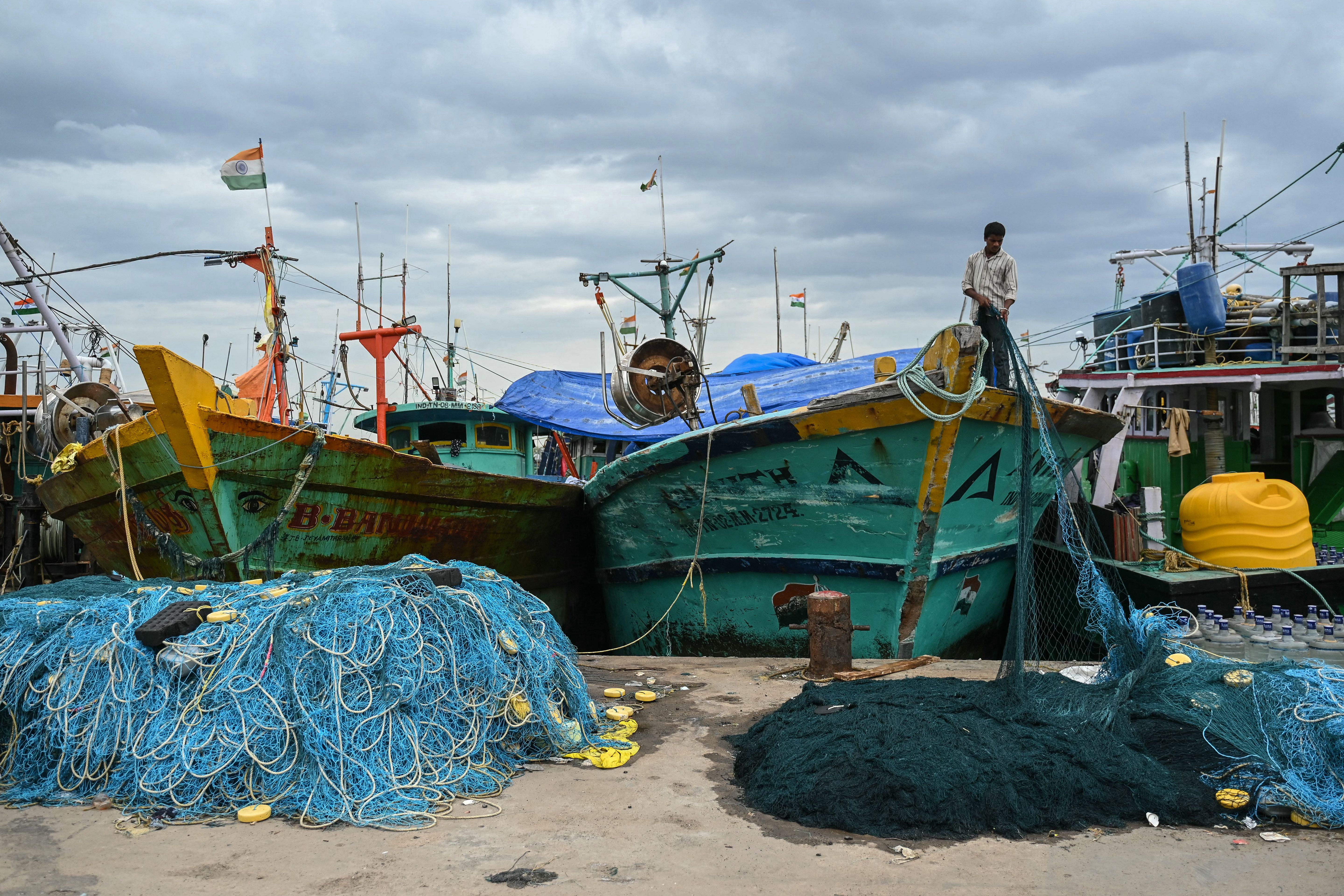
This article examines the scale and impact of Chinese IUU fishing operations globally and identifies the nature of the challenge posed by IUU fishing in the Indian Ocean Region (IOR). It also investigates why existing maritime law and international frameworks have struggled to address this growing threat.


Ajay Kumar, Charukeshi Bhatt

This compendium brings together three essays by scholars who participated in Carnegie India's Security Studies Dialogue in 2024, each examining a different aspect of China’s policies. Drawing on their expertise and research, the authors offer fresh perspectives on key geopolitical challenges.



Vijay Gokhale, Suyash Desai, Amit Kumar, …