

In The Media
Minxin Pei
{
  "authors": [
    "Minxin Pei"
  ],
  "type": "legacyinthemedia",
  "centerAffiliationAll": "dc",
  "centers": [
    "Carnegie Endowment for International Peace"
  ],
  "collections": [],
  "englishNewsletterAll": "asia",
  "nonEnglishNewsletterAll": "",
  "primaryCenter": "Carnegie Endowment for International Peace",
  "programAffiliation": "AP",
  "programs": [
    "Asia"
  ],
  "projects": [],
  "regions": [
    "North America",
    "United States",
    "East Asia",
    "China",
    "Taiwan"
  ],
  "topics": [
    "Security",
    "Military",
    "Foreign Policy"
  ]
}
Source: Getty
The Pentagon's proposal to sell missiles to Taiwan must rank in a league of most ill-considered policy initiatives by itself. Obviously, the timing for pressuring Taiwan to purchase these systems is awkward. The US should seek all the diplomatic and strategic help it can get from China, and clearly it is no time to slap Beijing in the face.
Source: The Straits Times

During the Clinton administration, Washington's ties with Beijing were rocked by constant disputes over human rights, trade, arms proliferation, and allegations of Chinese espionage and political donations. But today, under President George W. Bush, the same thorny issues no longer pose a significant threat to the stability of bilateral relations. Even the Taiwan problem, the most contentious dispute between Beijing and Washington, appears well under control.
Since the Sept 11 attacks, the momentum for improving relations between the United States and China has picked up as the Bush administration shifted its global strategy to fighting terrorism. For the US, China's cooperation is a critical element in its new security focus.
Seizing this rare opportunity, China's leaders have decided to be on the side of the US in the war on terrorism, providing diplomatic support, sharing intelligence, and intensifying efforts against money-laundering. Beijing also took a pragmatic approach to the divisive issue of the Iraq war, maintaining a low profile even though it opposed the war in principle.
China did not want to squander the precious gains it had made in relations with the US since former president Jiang Zemin became the first Asian leader to whom Mr Bush accorded the honour of a Crawford visit last October.
A cooperative US-China relationship now appears to be paying dividends. Washington and Beijing are working closely for a diplomatic solution to the brewing nuclear crisis in North Korea. Given the crucial role of China in defusing the crisis, one would imagine the Bush administration would be doing everything to maintain China's trust and goodwill at this delicate moment.
Apparently, senior US Defence Department officials think rather differently. According to published reports and well-placed sources, the Pentagon is pressuring Taiwan to buy advanced Patriot-3 (PAC-3) anti-missile systems, supposedly to counter the threats posed by several hundred missiles the mainland has in Fujian province.
Such a move makes little sense. It is well known that China hawks populate the senior and middle ranks of the Pentagon, but the missile sale proposal must rank in a league of most ill-considered policy initiatives by itself.
Obviously, the timing for pressuring Taiwan to purchase these systems is awkward. The US should seek all the diplomatic and strategic help it can get from China, and clearly it is no time to slap Beijing in the face.
In addition, cross-strait relations are relatively quiet at the moment. Taipei is more worried about getting an epidemic of severe acute respiratory syndrome (Sars) under control than fending off missiles deployed in Fujian.
Even on military grounds, providing PAC-3 anti-missiles to Taiwan is a dubious proposition. This new system's effectiveness has not been proven. At US$2.7 million (S$4.7 million) each, it makes poor economic sense to purchase this expensive missile to defend against China's much cheaper short and medium-range missiles (each with a price tag of US$1 million). To build a complete anti-missile system based on PAC-3 would cost Taiwan more than US$1.5 billion.
Ironically, having succeeded in getting Washington to agree to sell it nearly all the advanced weapon systems it asked for - with the exception of the Aegis battle-management systems - two years ago, Taiwan now appears either unable or unwilling to pay for them. Taipei has not purchased a single system approved for sale by the Bush administration in 2001, raising doubts in Washington about its commitment to its own defence needs.
The Pentagon's pressure now places Taiwan in a new dilemma. If Taipei declines the 'offer', it risks irking Washington's China hawks and reinforcing their suspicion that it wants to free-ride on American security. If it yields, it will probably waste its limited defence resources on an expensive system with very limited applications.
The Pentagon's move becomes even less defensible if one considers the real possibility of demilitarising cross-strait relations. During Mr Jiang's visit to Crawford, he made a surprise offer. China would remove its missiles along the south-eastern coast if America promised to cease arms sales to Taiwan.
Admittedly, there are several problems with Mr Jiang's proposal. It did not contain enough specifics and China did not test Washington's receptiveness to such a deal beforehand. As a result, the initiative was not taken seriously by the Bush administration.
Nevertheless, it shows that Beijing is now aware of the risks of a cross-strait arms race and willing to work with Washington to get it under control. In this context, the Pentagon's plan on PAC-3 can be cast in the worst light possible - it may be viewed in Beijing as an implicit but clear rejection of its offer to de-escalate the arms build-up.
It is likely that the Pentagon's initiative is motivated by no more than profits for America's arms industry. There is no sign to indicate that this move is fully backed by the White House. The conventional wisdom in Washington is that the proposed sale would not cause severe damage to US-China relations because China has drawn the line at the sale of the Aegis system, not PAC-3 missiles.
But an arms race has its own logic. Even if Beijing chooses not to make a huge fuss, the Chinese military may use Taiwan's acquisition of PAC-3 to press for more missiles as a countermeasure.
This would not only increase the risk of conflict, but would be counter to Washington's stated policy of maintaining peace and stability in the Taiwan Strait.
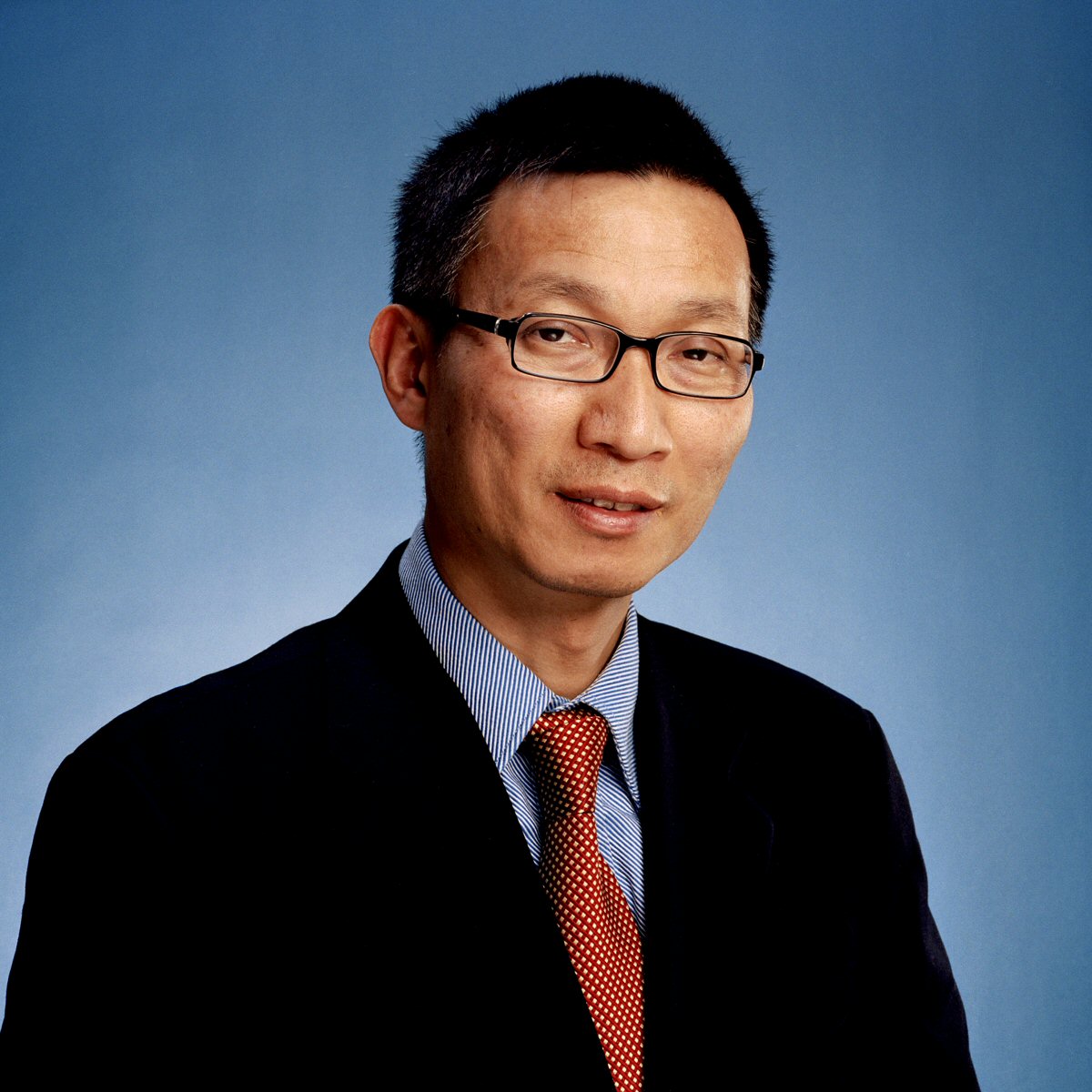
Former Adjunct Senior Associate, Asia Program
Pei is Tom and Margot Pritzker ‘72 Professor of Government and the director of the Keck Center for International and Strategic Studies at Claremont McKenna College.
Recent Work
Minxin Pei
Minxin Pei
Carnegie India does not take institutional positions on public policy issues; the views represented herein are those of the author(s) and do not necessarily reflect the views of Carnegie, its staff, or its trustees.

In any defense establishment, change is an ongoing process. However, despite the best of intentions, existing bureaucracies, bound by habit and years of socialization, have their limits in implementing transformative change.

Anit Mukherjee

How is AI reshaping space security, creating governance challenges, and where does international diplomacy stand today?


Tejas Bharadwaj, Almudena Azcárate Ortega

After the chill in ties between 2020 and 2024 that brought India–China relations to their lowest point in several decades, the two countries have engaged each other afresh. This paper argues that there are predominantly four imperatives guiding India’s approach to China, and they exist in an order of priority.

Saheb Singh Chadha

This piece argues that India’s central challenge is not managing a single flashpoint but resolving the underlying tension between expansion and institutional coherency of the BRICS grouping.

Vrinda Sahai

A partnership between India, a country of subcontinental size, and Africa, a continent of fifty-four countries, may seem asymmetric until one notes that both are home to nearly the same number of people—1.4 billion. This essay spells out the existing challenges to the partnership, its optimal potential, and the possible pathways to realize it over the next quarter-century.

Rajiv Bhatia