

Report
- +2
George Perkovich, Jessica Tuchman Mathews, Joseph Cirincione, …
{
  "authors": [
    "Jon Wolfsthal"
  ],
  "type": "legacyinthemedia",
  "centerAffiliationAll": "dc",
  "centers": [
    "Carnegie Endowment for International Peace"
  ],
  "collections": [
    "Korean Peninsula"
  ],
  "englishNewsletterAll": "ctw",
  "nonEnglishNewsletterAll": "",
  "primaryCenter": "Carnegie Endowment for International Peace",
  "programAffiliation": "NPP",
  "programs": [
    "Nuclear Policy"
  ],
  "projects": [],
  "regions": [
    "South Korea"
  ],
  "topics": [
    "Nuclear Policy",
    "Nuclear Energy"
  ]
}
REQUIRED IMAGE
North Korea has taken a series of actions in the past few months that in normal times would have provoked a major international crisis. Yet, the Bush administration is unconcerned about these moves that directly threaten American security and the security of key US allies South Korea and Japan. The U.S. now appears resigned to the fact that North Korea has the ability to make nuclear weapons and is not prepared to take coercive steps or otherwise to prevent it from consolidating its status as a nuclear weapon state.
This article first appeared in the Munhwa Ilbo.
North Korea has taken a series of actions in the past few months that in normal times would have provoked a major international crisis. Yet, the Bush administration is unconcerned about these moves that directly threaten American security and the security of key US allies South Korea and Japan. The U.S. now appears resigned to the fact that North Korea has the ability to make nuclear weapons and is not prepared to take coercive steps or otherwise to prevent it from consolidating its status as a nuclear weapon state.
On February 10, North Korea's Foreign Ministry claimed in the clearest terms yet that it had produced nuclear weapons. While there is still no publicly available evidence that North Korea has actually produced a nuclear weapon, Pyongyang's access to additional plutonium since evicting IAEA inspectors in December 2002 gives some credibility to their claim.
The worst case estimate now suggests that North Korea has enough plutonium available to produce nine nuclear weapons. It is unclear if North Korea made the statement to extract greater concessions from China and the United States before re-entering the six party talks or to consolidate the impression that it was able to deter an attack by the United States.
It was then revealed in April that North Korea had shut down its plutonium production reactor at Yongbyon. Stopping operations at the reactor would be a first step to removing the spent fuel inside and gaining access to the plutonium it now contains. US non-governmental experts estimate that the spent fuel at the reactor now could contain an additional 12-19 kilograms of plutonium, bringing the upper limit of North Korea's potential nuclear arsenal to perhaps 14 weapons. It is not clear that North Korea has begun removing fuel from the reactor or has immediate plans to reprocess that fuel. However, both steps could take place without warning or without the outside world finding out until after those steps were taken.
Thus, in the time George Bush has been President, North Korea has gone from possibly having access to 1-2 nuclear weapons worth of plutonium to very likely having access to enough to produce over a dozen nuclear weapons. Despite considerable efforts by U.S. Ambassador Chris Hill to restart the six party talks, there is little sign of life in those negotiations and it is unlikely they will ever resume. Thus, with little hope for a negotiated settlement and a considerable nuclear arsenal at the disposal of the North, it is clear that the current U.S. policy to prevent North Korea from establishing itself as a nuclear state is now a complete failure. There is no hope that the U.S. President will acknowledge the failure openly, and it is unclear if the administration will take any real steps to change its policy any time soon.
But this is not the most surprising part of the picture, however. Presidents rarely note their own failures and U.S. policy changes only slowly. What is surprising is that the U.S. government, press and public have reacted by not reacting at all. The U.S. Government
and people seem to now accept that North Korea is a nuclear state and is going to try and live with the dangers that reality entails.
The only thing the U.S. has indicated would change its state of affairs would be if North Korea tried to export nuclear weapons or plutonium. Yet even with the growing capabilities of the Proliferation Security Initiative there is little hope that such an export could be detected and stopped by the U.S. and its allies. The risk that North Korea might export nuclear weapons must be taken seriously, but equal concern must be paid to the danger that North Korea may try to take advantage of its perceived nuclear position. This could come at the expense of South Korean security, or at a time and place of North Korea's choosing, a thought that should make no one comfortable. If North Korea is intent on getting America's attention, it could soon have 5 more nuclear weapons at its disposal to do just that. The question is, will America pay attention, even then?

Former Nonresident Scholar, Nuclear Policy Program
Jon Wolfsthal was a nonresident scholar with the Nuclear Policy Program.
Recent Work


George Perkovich, Jessica Tuchman Mathews, Joseph Cirincione, …
Jon Wolfsthal
Carnegie India does not take institutional positions on public policy issues; the views represented herein are those of the author(s) and do not necessarily reflect the views of Carnegie, its staff, or its trustees.
Asia’s two largest nuclear powers have never threatened each other with nuclear weapons. How much will the recent deadly border clashes between China and India change the security landscape?


Toby Dalton, Tong Zhao, Rukmani Gupta
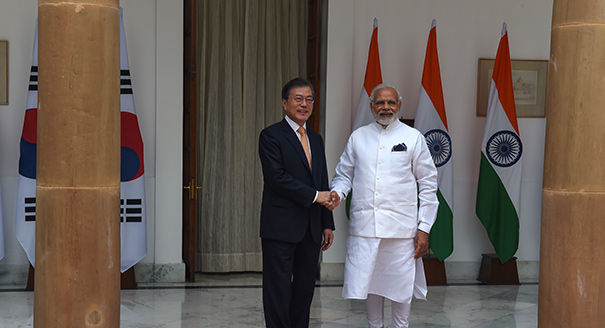
New Delhi and Seoul should focus on building flexible middle power coalitions in Asia to limit the impact of the current volatility in the relations between the United States and China.
C. Raja Mohan
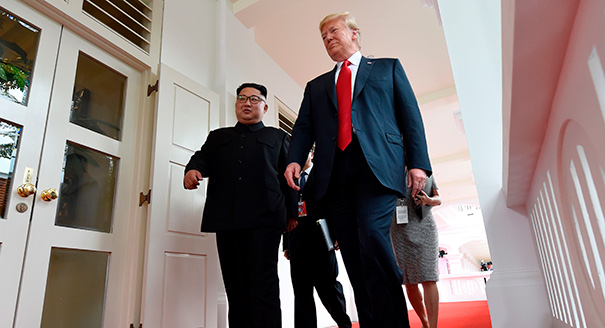
In the course of one morning in Singapore, U.S. President Donald Trump and the North Korean leader Kim Jong-un have begun to loosen a deeply entrenched and hostile relationship.
C. Raja Mohan
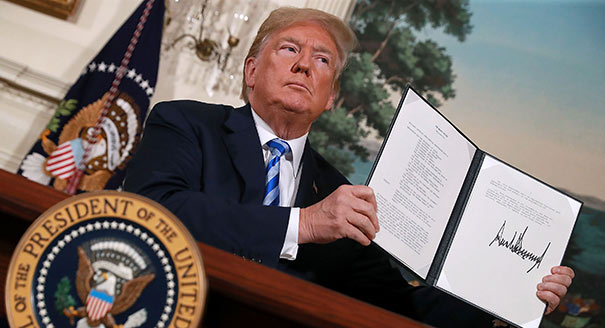
U.S. President Donald Trump’s decision to pull out of the Iran nuclear deal appears to have put regime change at the very center of the new American power play against Tehran.
C. Raja Mohan
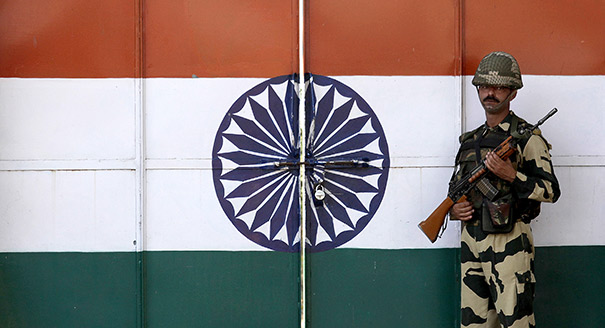
The South Asian stalemate is likely to endure even as South and North Korea appear poised to turn the page.
C. Raja Mohan