

Article
Леонид Гозман, Michael McFaul
{
  "authors": [
    "Michael McFaul"
  ],
  "type": "legacyinthemedia",
  "centerAffiliationAll": "dc",
  "centers": [
    "Carnegie Endowment for International Peace"
  ],
  "collections": [],
  "englishNewsletterAll": "ctw",
  "nonEnglishNewsletterAll": "",
  "primaryCenter": "Carnegie Endowment for International Peace",
  "programAffiliation": "russia",
  "programs": [
    "Russia and Eurasia"
  ],
  "projects": [],
  "regions": [
    "Caucasus",
    "Russia"
  ],
  "topics": [
    "Political Reform",
    "Democracy"
  ]
}
REQUIRED IMAGE
Source: Washington Post
PUTIN'S RUSSIA
Life in a Failing Democracy
By Anna Politkovskaya
Metropolitan. 274 pp. $25
Since coming to power in 2000, Russian President Vladimir Putin has had one clear central objective: strengthening the Russian state, at home and abroad. For Putin, Russia's second post-Soviet leader and a former KGB official, the disappearance of the Soviet Union in 1991 was a tragedy that produced anarchy, corruption, instability and uncertainty. He pledged to end the chaos by restoring the state power that had been lost under his predecessor, Boris Yeltsin. Everything else, such as free-market economic reforms or careful, balancing diplomacy, was a means to this end.
Above all, Putin believed that the way to make Russia stronger was to shift more authority to the Kremlin. Motivated by this conception of state-building, Putin has shrunk or eliminated every serious check on presidential power. Russia's two houses of parliament, its independent media, regional governors, the prime minister's office, independent political parties and civil society -- all are weaker today than they were in 2000, leaving the presidency as the country's sole meaningful center of decision-making.
Putin's more autocratic state is supposed to be a more effective state. But has it delivered? In "Putin's Russia," Anna Politkovskaya answers with an emphatic no. A courageous investigative journalist who has produced jarring and tragic accounts of Putin's brutal war in Chechnya, Politkovskaya makes her case against Putin not by systematically cataloguing the democratic rollbacks that he has successfully pursued in the past six years; on the contrary, despite the book's subtitle, it contains almost no direct discussion of Russia's increasingly autocratic politics. Instead, she focuses on dark dramas of individuals in the Putin era. If a theme unites the snippets of everyday life stitched together in this volume, it is that the state is not effective but corrupt -- unable and unwilling to provide basic public goods to the suffering people of Russia. "Putin's Russia" suggests that fear is the only public good that today's Kremlin provides effectively.
Politkovskaya devotes considerable space to showing how Putin's government does little to provide the most basic of state services: a professional army capable of defending the country. Instead, Russia's army "is mostly a prison camp behind barbed wire where the country's young are locked up without trial." Rather than protecting civilians from terrorism or violent crime, the Russian armed services, Politkovskaya argues hotly, have themselves become a perpetrator of terrorism -- first through their activities in Chechnya, where civilians are tortured, raped and murdered, and second through a brutal and unaccountable system of initiating draftees (known as dedovshina ) that reportedly kills and wounds hundreds every year.
Effective states have independent courts capable of enforcing the rule of law, but Politkovskaya makes the case that Russia has no such institutions. She tells the (overly) detailed story of a violent fight for property among thugs in Yekaterinburg, a city in the Ural Mountains, to demonstrate how Russia's courts serve the interests of criminals and oligarchs, not the rule of law.
Effective states draw borders between the activities of the government and the private sector. Politkovskaya argues that in Putin's Russia, one can become rich only by maintaining close relations with the authorities. Corruption, a problem Putin pledged to fight by building a stronger state, has instead exploded during his tenure.
Effective states provide their citizens a basic level of subsistence. Not Putin's Russia. To make the point, Politkovskaya tells of a World War II veteran who froze to death in his apartment in Irkutsk because local government authorities would not repair a broken heating pipe.
Putin and his comrades simply do not care about people, in Politskovskaya's account: "Their line is wholly neo-Soviet: humans have no independent existence; they are cogs in a machine whose function is to implement unquestionably whatever political escapade those in power have dreamed up. Cogs have no rights, not even to dignity in death." This is strong stuff, from a woman who obviously feels passionately for her people and her country. In the tradition of the great Soviet dissidents, Politkovskaya is unwavering in telling the gruesome truth about the injustices that she has witnessed.
She also unapologetically criticizes Putin and the political and economic system that he has consolidated. Her stories are certainly true, but they are not the only dramas unfolding in today's Russia. Every day that an army private is hazed to death, a middle-class family in Moscow drives to Ikea to purchase furniture for their newly renovated dacha. Every day a veteran dies tragically from the state's neglect, millions of other retirees receive their state pensions on time, something that rarely occurred under Yeltsin. In the aggregate, Russians are wealthier today than they were when Putin took office. Driven by high oil prices (not Putin's state-building), Russia's GDP has grown steadily for the past six years, investment is booming, and the Russian stock market was among the hottest in the world last year. The number of people below the poverty line has dropped significantly, and consumer spending is skyrocketing.
Of course, the trends of state corruption and decay outlined in Politkovskaya's book do threaten the more positive economic story. As this clash between bad political trends and good economic trends deepens, the evidence in "Putin's Russia" suggests that the dark side -- the forces for a non-transparent government and a noncompetitive economy dominated by the state -- will win out.
And yet hidden within Politkovskaya's bleak stories are flashes of individual inspiration. The dominant tone in "Putin's Russia" is one of despair that echoes the Soviet era. But a few of the victims-turned-heroes in Politkovskaya's stories are taking actions that no Soviet citizen would ever have contemplated. For instance, Nina Levurda, a Russian mother whose son died in Chechnya, is trying to sue the state -- not in response to the tragic loss of her son but because of the inhumane manner in which the state reported (or did not report) his death to her. Judge Vladimir Bukreev -- another courageous, very un-Soviet citizen described in these pages -- dared to convict a decorated soldier of the rape and murder of a Chechen woman, despite pressure from the Ministry of Defense. That Politkovskaya herself has withstood poisoning and harassment to tell the truth about Putin's Russia should give even the most pessimistic observer of current Russian affairs some hope.
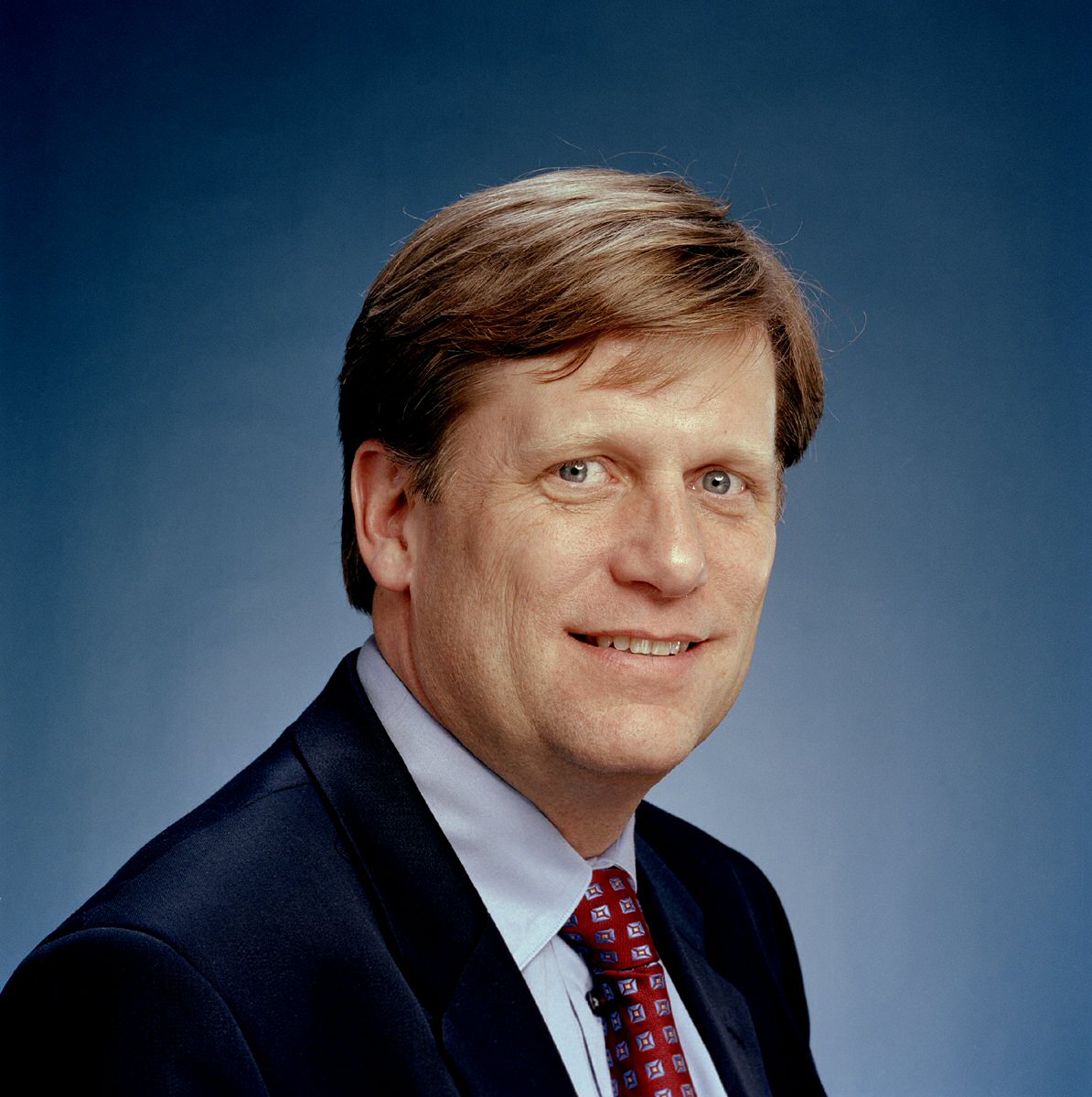
Former Senior Associate
In addition to his role at Carnegie, McFaul is Peter and Helen Bing Senior Fellow at the Hoover Institution and associate professor of political science at Stanford University.
Recent Work
Леонид Гозман, Michael McFaul
Michael McFaul, Sanja Tatic
Carnegie India does not take institutional positions on public policy issues; the views represented herein are those of the author(s) and do not necessarily reflect the views of Carnegie, its staff, or its trustees.

This piece argues that India’s central challenge is not managing a single flashpoint but resolving the underlying tension between expansion and institutional coherency of the BRICS grouping.

Vrinda Sahai
Experts weigh in on whether the United States is too hostile toward China.

Stephen Wertheim, Evan S. Medeiros, Vijay Gokhale
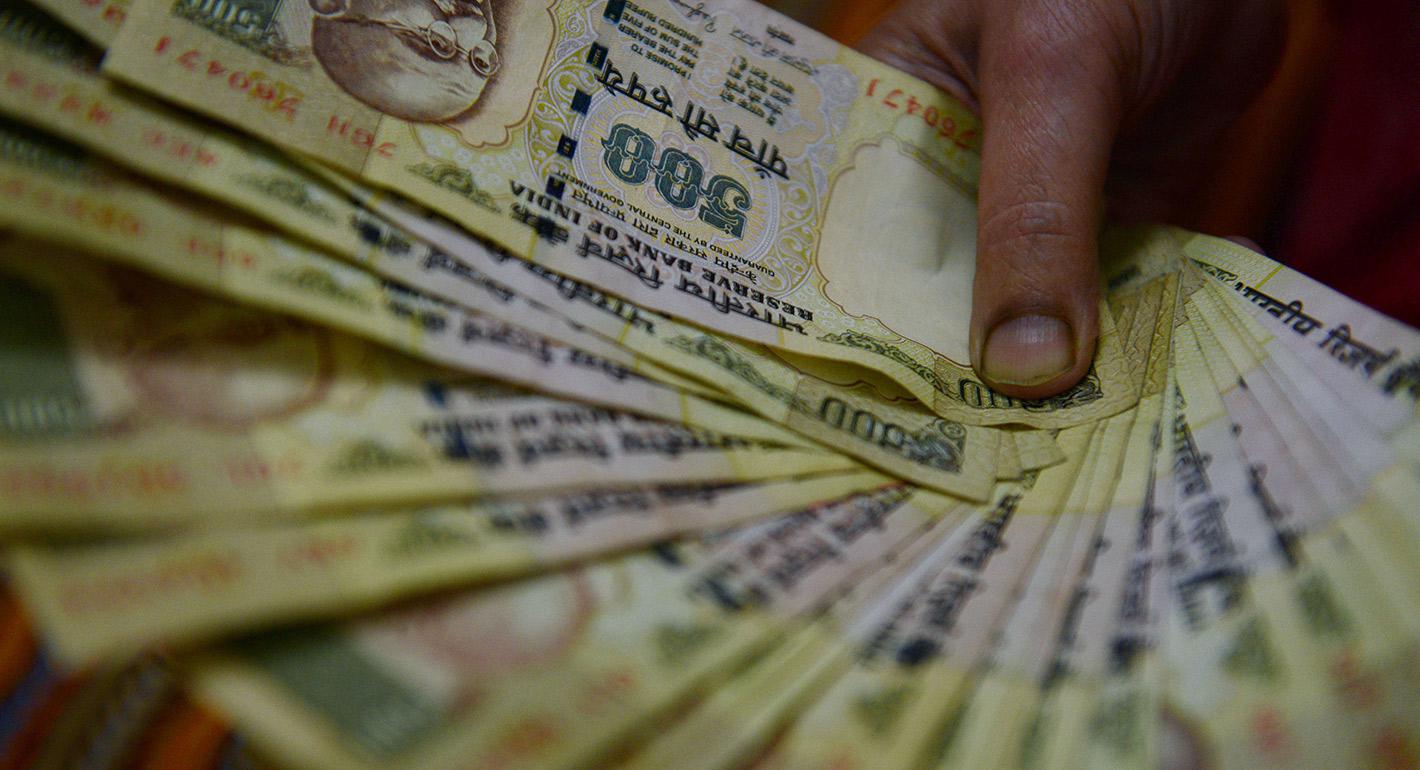
As India’s economy recovers from the coronavirus pandemic, Indian businesses need efficient financial structures to regain their ground. Key reforms to India’s Insolvency and Bankruptcy Code could fill these gaps.

Anirudh Burman

Access to cross-border data is an integral piece of the law enforcement puzzle. India is well placed to lead the discussions on international data agreements subject to undertaking necessary surveillance reforms.

Smriti Parsheera, Prateek Jha
After the coronavirus pandemic wanes, how will China’s reorientation of the Belt and Road Initiative to address global health concerns influence its relationships with South Asian countries?
Deep Pal, Rahul Bhatia