
• Research
  • About
  • Experts
Carnegie India logoCarnegie lettermark logo
{
  "authors": [],
  "type": "other",
  "centerAffiliationAll": "dc",
  "centers": [
    "Carnegie Endowment for International Peace"
  ],
  "collections": [],
  "englishNewsletterAll": "ctw",
  "nonEnglishNewsletterAll": "",
  "primaryCenter": "Carnegie Endowment for International Peace",
  "programAffiliation": "SAP",
  "programs": [
    "South Asia"
  ],
  "projects": [],
  "regions": [
    "South Asia",
    "India"
  ],
  "topics": [
    "Foreign Policy",
    "Nuclear Policy"
  ]
}

Source: Getty

Other

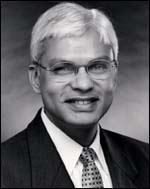
Ashley J. Tellis: Key Figure in the U.S.-India Nuclear Deal

Link Copied
Published on Mar 3, 2006

President Bush, on his first visit to India, sealed the U.S.-India Nuclear Deal. Carnegie Senior Associate Ashley J. Tellis has been widely recognized as one of the core individuals who made this deal possible. Tellis was drafted in advance of President Bush's visit to India to serve as a senior advisor to the Under Secretary of State for Political Affairs, R. Nicholas Burns. In this position, Tellis provided support of various State Department activities relating to U.S.-Indian relations and brought his unique understanding of the establishments in New Delhi and Washington to finalize the deal.

In an interview with rediff-India Abroad R. Nicholas Burns said,

"Ashley has worked for the United States government at several junctures -- at the White House staff as well as in New Delhi -- and he knows more about India's nuclear program than any other living American. [And so, I wanted to...] I have great respect for him, for his creativity and ingenuity and also for his knowledge and technical expertise, and I felt that he would be a great addition to our staff and our delegation, and he was. He was instrumental in getting a decision."

Click below to read more about Tellis' role in the historic U.S.-India Nuclear Deal: 

People Behind  the Deal (Times of India, March 3, 2006)

Those Who Made the Deal Happen (Indian Express, March 4, 2006)
Click on the right to access article

All the PM's Men (Hindustan Times, March 5, 2006)
Click on the right to access article 

Foreign PolicyNuclear PolicySouth AsiaIndia

Carnegie India does not take institutional positions on public policy issues; the views represented herein are those of the author(s) and do not necessarily reflect the views of Carnegie, its staff, or its trustees.

More Work from Carnegie India

  • Article
    What Could a Reciprocal Defense Procurement Agreement Do for U.S.-India Ties?

    India and the United States are close to concluding a Reciprocal Defense Procurement Agreement (RDPA) that will allow firms from the two countries to sell to each other’s defense establishments more easily. While this may not remedy the specific grievances both sides may have regarding larger bilateral issues, an RDPA could restore some momentum, following the trade deal announcement.

      Konark Bhandari

  • Commentary
    India Signs the Pax Silica—A Counter to Pax Sinica?

    On the last day of the India AI Impact Summit, India signed Pax Silica, a U.S.-led declaration seemingly focused on semiconductors. While India’s accession to the same was not entirely unforeseen, becoming a signatory nation this quickly was not on the cards either.

      Konark Bhandari

  • Commentary
    The PSLV Setback: Restoring India’s Workhorse

    On January 12, 2026, India's "workhorse," the Polar Satellite Launch Vehicle, experienced a consecutive mission failure for the first time in its history. This commentary explores the implications of this incident on India’s space sector and how India can effectively address issues stemming from the incident.

      Tejas Bharadwaj

  • Commentary
    AI Adoption Journey for Population Scale

    Connecting real-world AI use cases across sectors such as health, education, agriculture, and livelihoods can help policymakers, innovators, and institutions align around a shared goal. This article looks at a framework ensuring that AI works for everyone.

      Shalini Kapoor, Tanvi Lall

  • Commentary
    The Impact of U.S. Sanctions and Tariffs on India’s Russian Oil Imports

    This piece examines India’s response to U.S. sanctions and tariffs, specifically assessing the immediate market consequences, such as alterations in import costs, and the broader strategic implications for India’s energy security and foreign policy orientation.

      Vrinda Sahai

Get more news and analysis from
Carnegie India
Carnegie India logo, white
Unit C-4, 5, 6, EdenparkShaheed Jeet Singh MargNew Delhi – 110016, IndiaPhone: 011-40078687
  • Research
  • About
  • Experts
  • Projects
  • Events
  • Contact
  • Careers
  • Privacy
  • For Media
Get more news and analysis from
Carnegie India
© 2026 Carnegie Endowment for International Peace. All rights reserved.







