

Commentary
Nathan J. Brown
{
  "authors": [
    "Nathan J. Brown"
  ],
  "type": "other",
  "centerAffiliationAll": "dc",
  "centers": [
    "Carnegie Endowment for International Peace"
  ],
  "collections": [],
  "englishNewsletterAll": "democracy",
  "nonEnglishNewsletterAll": "",
  "primaryCenter": "Carnegie Endowment for International Peace",
  "programAffiliation": "DCG",
  "programs": [
    "Democracy, Conflict, and Governance",
    "Middle East"
  ],
  "projects": [],
  "regions": [
    "Middle East",
    "Israel"
  ],
  "topics": [
    "Political Reform",
    "Democracy",
    "Military",
    "Foreign Policy"
  ]
}
REQUIRED IMAGE
By isolating the new Hamas government diplomatically and financially, the US and its allies have succeeded in bringing the Palestinian Authority to the brink of collapse. In addition, government and opposition leaders in the Middle East regard the West's reaction to Hamas as a test of its sincerity in the push for regional political reform.
By isolating the new Hamas government diplomatically and financially, the US and its allies have succeeded in bringing the Palestinian Authority to the brink of collapse. In a new policy brief, Living with Palestinian Democracy, Carnegie Senior Associate Nathan Brown predicts that the West Bank and Gaza, already in a deep depression, will descend into political chaos that serves nobody’s interest. Government and opposition leaders in the region regard the West's reaction to Hamas as a test of its sincerity in the push for regional political reform.
Brown, a leading expert on Palestinian politics, argues that a longer-term strategy based on support for Palestinian democracy is part of the solution to the impasse. Brown acknowledges the serious international complications triggered by the Hamas victory, but argues that it also presents an opportunity for meaningful political reform.
Click on the link above for the full text of this policy brief.
A limited number of print copies are available.
Request a copy
Nathan Brown is a senior associate in the Democracy and Rule of Law Program at the Carnegie Endowment. He is an expert on Palestinian reform and Arab constitutionalism.

Nonresident Senior Fellow, Middle East Program
Nathan J. Brown, a professor of political science and international affairs at George Washington University, is a distinguished scholar and author of nine books on Arab politics and governance, as well as editor of five books.
Recent Work
Nathan J. Brown
Nathan J. Brown
Carnegie India does not take institutional positions on public policy issues; the views represented herein are those of the author(s) and do not necessarily reflect the views of Carnegie, its staff, or its trustees.

After the chill in ties between 2020 and 2024 that brought India–China relations to their lowest point in several decades, the two countries have engaged each other afresh. This paper argues that there are predominantly four imperatives guiding India’s approach to China, and they exist in an order of priority.

Saheb Singh Chadha

This piece argues that India’s central challenge is not managing a single flashpoint but resolving the underlying tension between expansion and institutional coherency of the BRICS grouping.

Vrinda Sahai

A partnership between India, a country of subcontinental size, and Africa, a continent of fifty-four countries, may seem asymmetric until one notes that both are home to nearly the same number of people—1.4 billion. This essay spells out the existing challenges to the partnership, its optimal potential, and the possible pathways to realize it over the next quarter-century.

Rajiv Bhatia

The India–EU Free Trade Agreement (FTA) is shaping up to be one of the most consequential trade negotiations, both economically and strategically. But, what’s in the agreement, what’s missing, and what will determine its success in the years ahead
Vrinda Sahai, Nicolas Köhler-Suzuki
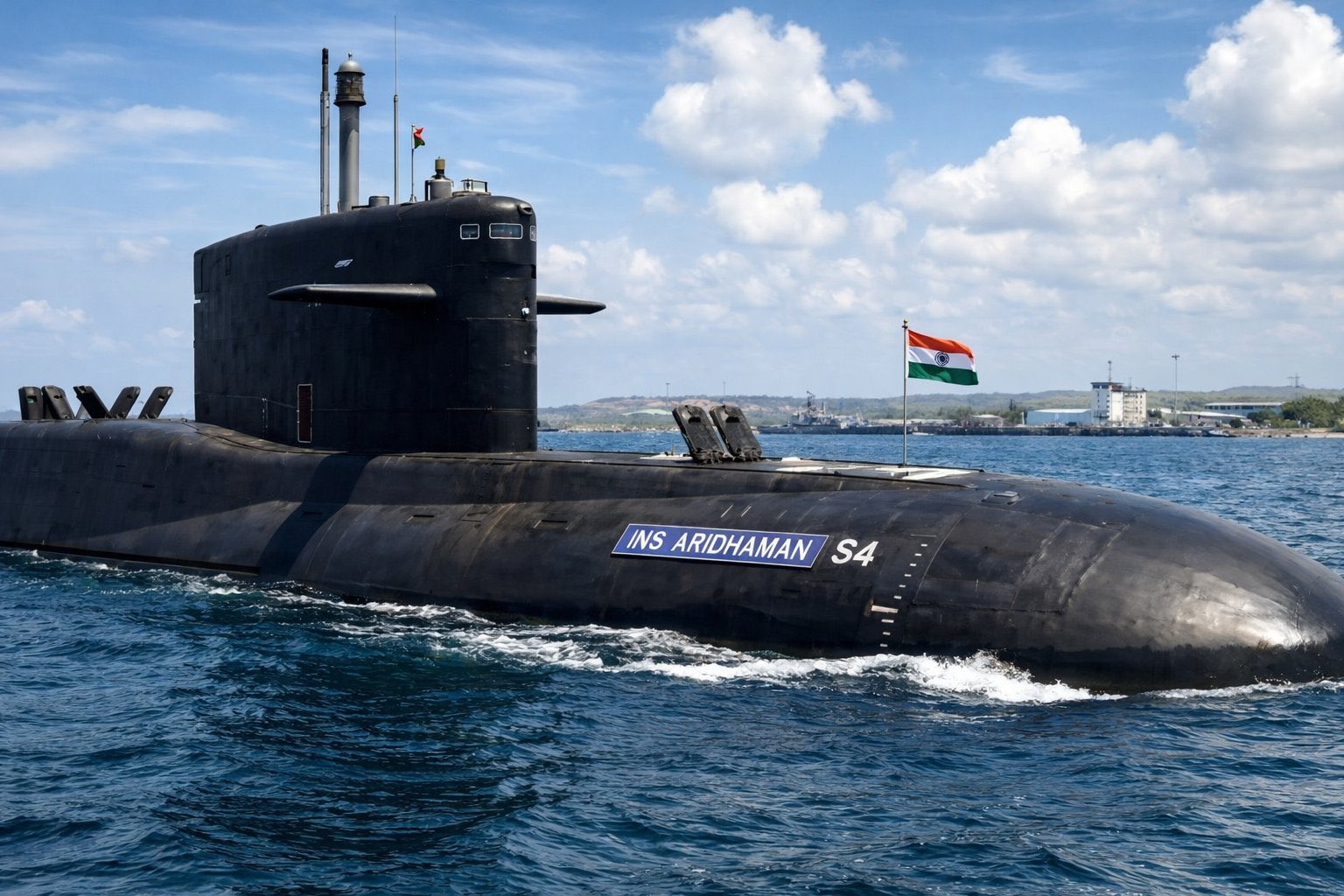
The induction of INS Aridhaman, which features several technological enhancements, now gives India the third nuclear ballistic missile submarine to ensure continuous at-sea deterrent.

Dinakar Peri