

Research
- +6
Yasmine Farouk, Nathan J. Brown, Maysaa Shuja Al-Deen, …
{
  "authors": [
    "Michele Dunne"
  ],
  "type": "testimony",
  "centerAffiliationAll": "dc",
  "centers": [
    "Carnegie Endowment for International Peace"
  ],
  "collections": [],
  "englishNewsletterAll": "democracy",
  "nonEnglishNewsletterAll": "",
  "primaryCenter": "Carnegie Endowment for International Peace",
  "programAffiliation": "DCG",
  "programs": [
    "Democracy, Conflict, and Governance",
    "Middle East"
  ],
  "projects": [],
  "regions": [
    "Middle East",
    "Egypt"
  ],
  "topics": [
    "Political Reform",
    "Democracy",
    "Foreign Policy"
  ]
}
Source: Getty
Egypt made progress in political liberties in 2005 over the course of presidential and parliamentary elections, despite many flaws. The developments of 2005 did not, however, put Egypt firmly on a path toward democracy nor did they demonstrate a clear commitment to such a path on the part of the ruling establishment.
Source: House International Relations Committee Hearing

Hearing on Review of U.S. Assistance Programs to Egypt
Madame Chairman and Members of the Subcommittee, thank you for inviting me to testify. Egypt made progress in political liberties in 2005 over the course of presidential and parliamentary elections, despite many flaws. The developments of 2005 did not, however, put Egypt firmly on a path toward democracy nor did they demonstrate a clear commitment to such a path on the part of the ruling establishment. In addition, there have been significant setbacks to political liberties in late 2005 and the first half of 2006, including the conviction of opposition politician Ayman Nour, cancellation of municipal elections, renewal of the state of emergency, and disciplinary measures against judges. It seems that the ruling establishment decided to apply the brakes to what had become a fast-moving political scene in 2004 and 2005.
The central problem for Egypt and for the U.S.-Egyptian relationship now is that there is no clear sense of where Egypt is going. In the last few years the Egyptian leadership has taken a few steps toward political reform and more toward economic reform, but at no time has President Mubarak sketched out for Egyptians his vision for the country and how he hopes to transform the polity and economy over a defined period. Instead, reform measures have been introduced piecemeal within the framework of vague goals such as “expanding the scope of liberties and enhancing the participation of citizens in political life.”1 The failure to show Egyptians what their political and economic system might look like in five or ten years creates suspicion that what they are headed for is not a truly open, competitive system but rather consolidation of authoritarian rule through limited liberalization.
When the U.S.-Egyptian relationship blossomed in the mid 1970s, President Sadat had a clear and compelling vision of where he wanted to take his country: peace with Israel, military cooperation with the United States, and economic liberalization and development. It was in support of this idea that the United States extended a large assistance package and the two countries built a broad and deep relationship. Egypt has indeed maintained peace with Israel, worked with the United States in modernizing its military, and at least partially reformed its economy. But as the years have worn on, the rationale for the bilateral relationship has begun to fray around the edges, as demonstrated by recent debates held in the House of Representatives. What is needed to renew the U.S.-Egyptian relationship is exactly what Egyptians are looking for from their leadership: a clear plan for political and economic reform, from which can proceed a new understanding about how the United States can support Egypt in its chosen path.
Since the election of Hamas in Palestine and the strong showing of the Muslim Brotherhood in Egypt, legitimate concerns have arisen about whether U.S. advocacy of political reform plays into the hands of Islamists. Indeed, democratization in the Middle East will not be possible without Islamists playing a significant role. Once the political space is opened, it will be populated by the political forces that are present in the society, among which Islamists are often the most organized. Opening the political space in a country such as Egypt also offers the possibility of rectifying a problem of long standing, which is that the Muslim Brotherhood has flourished underground while other opposition forces who tried to organize legal political parties have been co-opted or harassed by the ruling establishment. Egyptians need to work out the rules of their own political game, so that all political forces—Islamists as well as secularists—can compete on a level field within a system that provides stability and guarantees the rights of all citizens. A process of informal but dynamic dialogue among various political forces has begun in Egypt and can bear fruit if it is allowed to do so.
As the United States considers how best to support constructive change in Egypt, it is important to bear in mind several principles. First, whatever hesitations the United States might have about the repercussions of reform, is not possible to turn back the clock. Due to the rise of a new generation and several other factors, change is afoot in Egypt and will come one way or another. Second, the United States should be realistic about the degree of its influence in Egypt, but also realize that U.S. influence and assistance cannot be neutral. If the United States does not use its influence to support constructive, meaningful change, then by default it supports continued authoritarian rule. Third, over the last few years Egyptians have begun to formulate their own agenda for change. In contacts with the Egyptian government and in assistance programs, the United States should keep the main focus on issues that Egyptian reform advocates are stressing: strengthening judicial independence, lifting the state of emergency, instituting presidential term limits, and redistributing some powers from the executive to the legislative branch.
How exactly should the United States employ its influence in Egypt to encourage constructive change? The United States has a wide range of tools at its disposal, from policy decisions about senior official visits to and from Egypt, military relations, and trade relations, to the military and economic assistance packages. It might well be necessary to condition military or economic assistance on political reforms at some juncture, although it will be difficult to carry off successfully. At this moment, when Egypt will soon be facing a leadership transition, what the United States should be doing is conveying the message in private that it is time to reach a broad new understanding within which to renew the relationship, an understanding that includes the political reforms demanded by the Egyptian people.
Thank you for this opportunity to address the Subcommittee. As a supplement to my testimony, I would like to leave a copy of my recent paper, “Evaluating Egyptian Reform” (Carnegie Endowment for International Peace, Working Paper 66, January 2006), which contains more detailed analysis and policy recommendations.

Former Nonresident Scholar, Middle East Program
Michele Dunne was a nonresident scholar in Carnegie’s Middle East Program, where her research focuses on political and economic change in Arab countries, particularly Egypt, as well as U.S. policy in the Middle East.
Recent Work



Yasmine Farouk, Nathan J. Brown, Maysaa Shuja Al-Deen, …
Robert Springborg, Emile Hokayem, Becca Wasser, …
Carnegie India does not take institutional positions on public policy issues; the views represented herein are those of the author(s) and do not necessarily reflect the views of Carnegie, its staff, or its trustees.

This piece examines India’s response to U.S. sanctions and tariffs, specifically assessing the immediate market consequences, such as alterations in import costs, and the broader strategic implications for India’s energy security and foreign policy orientation.

Vrinda Sahai
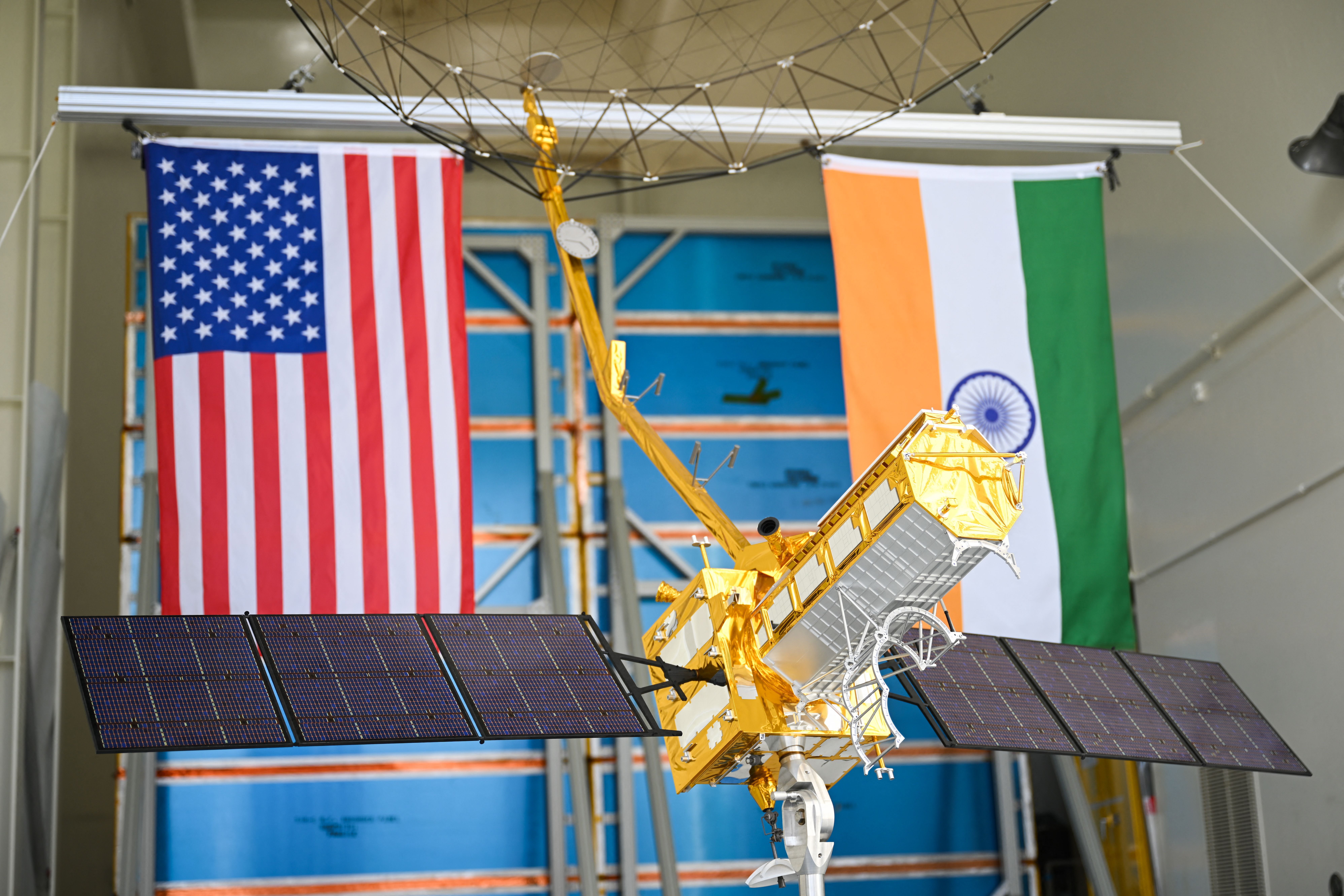
On July 30, 2025, the United States announced 25 percent tariffs on Indian goods. While diplomatic tensions simmered on the trade front, a cosmic calm prevailed at the Sriharikota launch range. Officials from NASA and ISRO were preparing to launch an engineering marvel into space—the NASA-ISRO Synthetic Aperture Radar (NISAR), marking a significant milestone in the India-U.S. bilateral partnership.

Tejas Bharadwaj
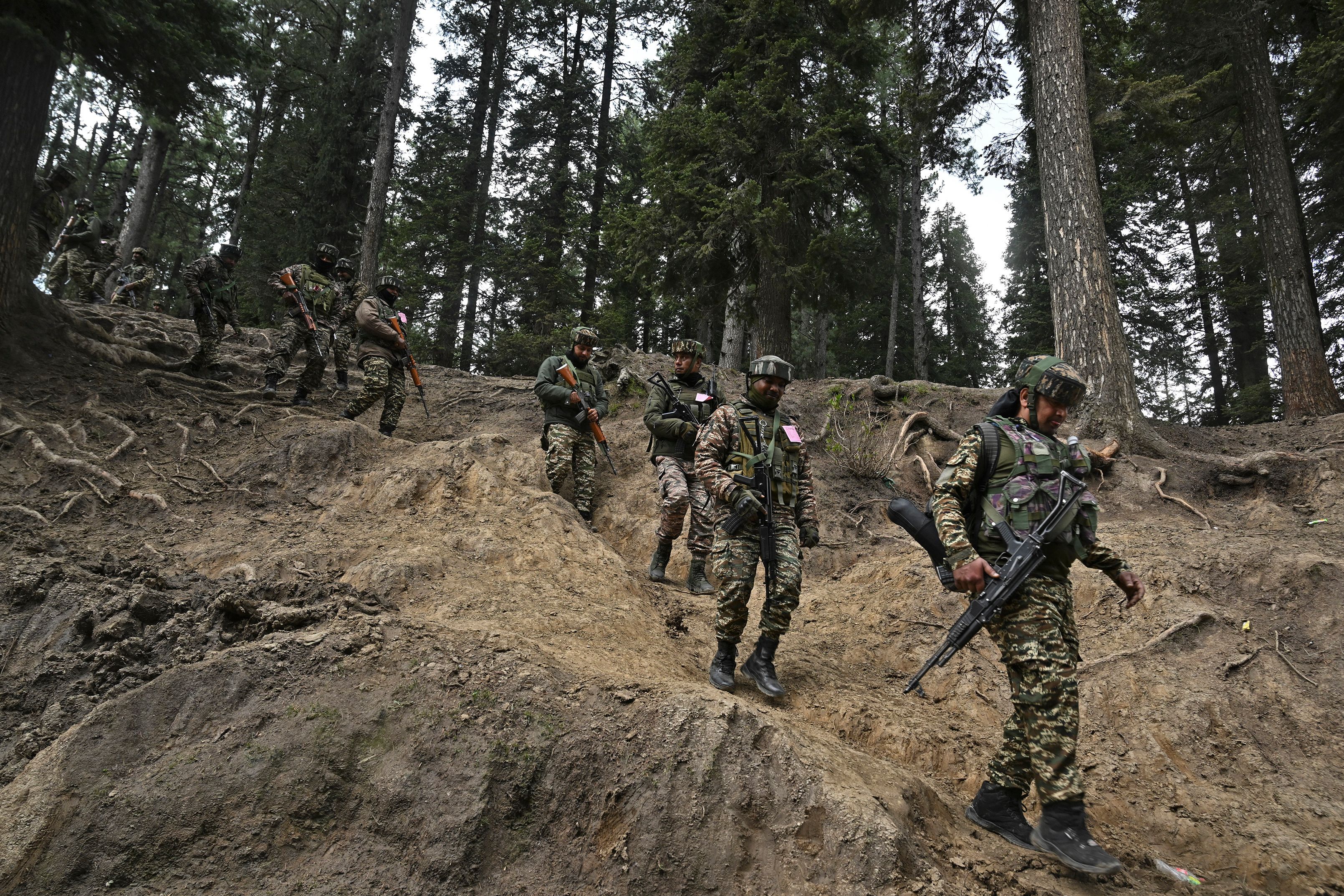
On May 7, 2025, between 1:05 and 1:30 a.m. (IST), airstrikes carried out by the Indian Air Force hit nine locations inside Pakistan and Pakistan occupied Kashmir (PoK). It was codenamed Operation Sindoor.

Rudra Chaudhuri

This compendium brings together three essays by scholars who participated in Carnegie India's Security Studies Dialogue in 2024, each examining a different aspect of China’s policies. Drawing on their expertise and research, the authors offer fresh perspectives on key geopolitical challenges.
Vijay Gokhale, Suyash Desai, Amit Kumar, …

As part of the TRUST initiative, leaders of the two countries committed to building trusted and resilient supply chains, including for semiconductors and critical minerals. India and the United States have made steady progress in this area over the years. This essay explores the takeaways from discussions on semiconductor supply chains that took place at Carnegie India’s 9th Global Technology Summit.

Konark Bhandari