• Research
  • About
  • Experts
Carnegie India logoCarnegie lettermark logo
AI
{
  "authors": [],
  "type": "pressRelease",
  "centerAffiliationAll": "dc",
  "centers": [
    "Carnegie Endowment for International Peace"
  ],
  "collections": [],
  "englishNewsletterAll": "asia",
  "nonEnglishNewsletterAll": "",
  "primaryCenter": "Carnegie Endowment for International Peace",
  "programAffiliation": "AP",
  "programs": [
    "Asia"
  ],
  "projects": [],
  "regions": [
    "North America",
    "United States",
    "China"
  ],
  "topics": [
    "Political Reform",
    "Economy",
    "Trade",
    "Military",
    "Foreign Policy"
  ]
}
REQUIRED IMAGE

REQUIRED IMAGE

Press Release

Press Release: Stepping Back from the Brink

Link Copied
Published on Jan 23, 2007

FOR IMMEDIATE RELEASE: January 23, 2007


Sensitivities and suspicions between Washington and Beijing have heightened as China’s global power and influence have grown. Arguably, this new international order could increase the chances of a political-military crisis—or perhaps outright conflict—between the two powers.  Recent events, notably the testing of Chinese anti-satellite technologies, continue to raise the question about the potential for future conflicts and what steps, if any, can be taken to diffuse or avoid a serious crisis.

Managing Sino-American Crisis is a compelling new book that provides policymakers and leaders with valuable information about the potential for future conflict and recommendations to help decrease the number and severity of these events.

The product of a unique U.S.-China collaborative effort, Managing Sino-American Crises features case studies and analysis written by Chinese and American participants in past confrontations, as well as scholars from both countries, to explore the changing features of crisis behavior and their implications for defusing future encounters.

“This is an important and timely book that sheds new light on what will be the most important strategic relations of the 21st century...The rich historical details, combined with the unique perspectives of both practitioners and scholars, make this volume invaluable for both policymakers and students of US-Chinese relations.”
—James B. Steinberg, former deputy national security advisor to President Clinton

Notes:

1. Dr. Michael Swaine, co-editor, is a senior associate in the China Program at Carnegie, specializing in Chinese security and U.S.-China relations. He has written numerous articles on the region, most recently, “Military Modernization in Taiwan,” in Strategic Asia 2005-2006: Military Modernization in an Era of Uncertainty (National Bureau of Asian Research, 2005).

2. Zhang Tuosheng, co-editor, is senior fellow and director of the department of Research and Foreign Policy Studies at the China Foundation of International and Strategic Studies, Beijing.

3. Visit http://www.carnegieendowment.org/publications for ordering information.

December 2006, 536 pp.

Paper: 0-87003-228-3, $24.95

Cloth: 0-87003-229-1, $62.95

4. Press Contact: Trent Perrotto, 202/939-2265, tperrotto@ceip.org

###

Political ReformEconomyTradeMilitaryForeign PolicyNorth AmericaUnited StatesChina

Carnegie India does not take institutional positions on public policy issues; the views represented herein are those of the author(s) and do not necessarily reflect the views of Carnegie, its staff, or its trustees.

More Work from Carnegie India

  • Article
    India’s Press Note 3 Gamble: Opening the FDI Door to China

    On March 10, 2026, India’s Union Cabinet approved amendments to Press Note 3, a regulation that mandated government approval on all foreign direct investment (FDI) from countries sharing a land border with India. This amendment raises questions primarily about whether its stated benefits will materialize and if the risks have been adequately weighed. This piece will address the same.

      Konark Bhandari

  • Commentary
    The Coming of Age of India’s Nuclear Triad

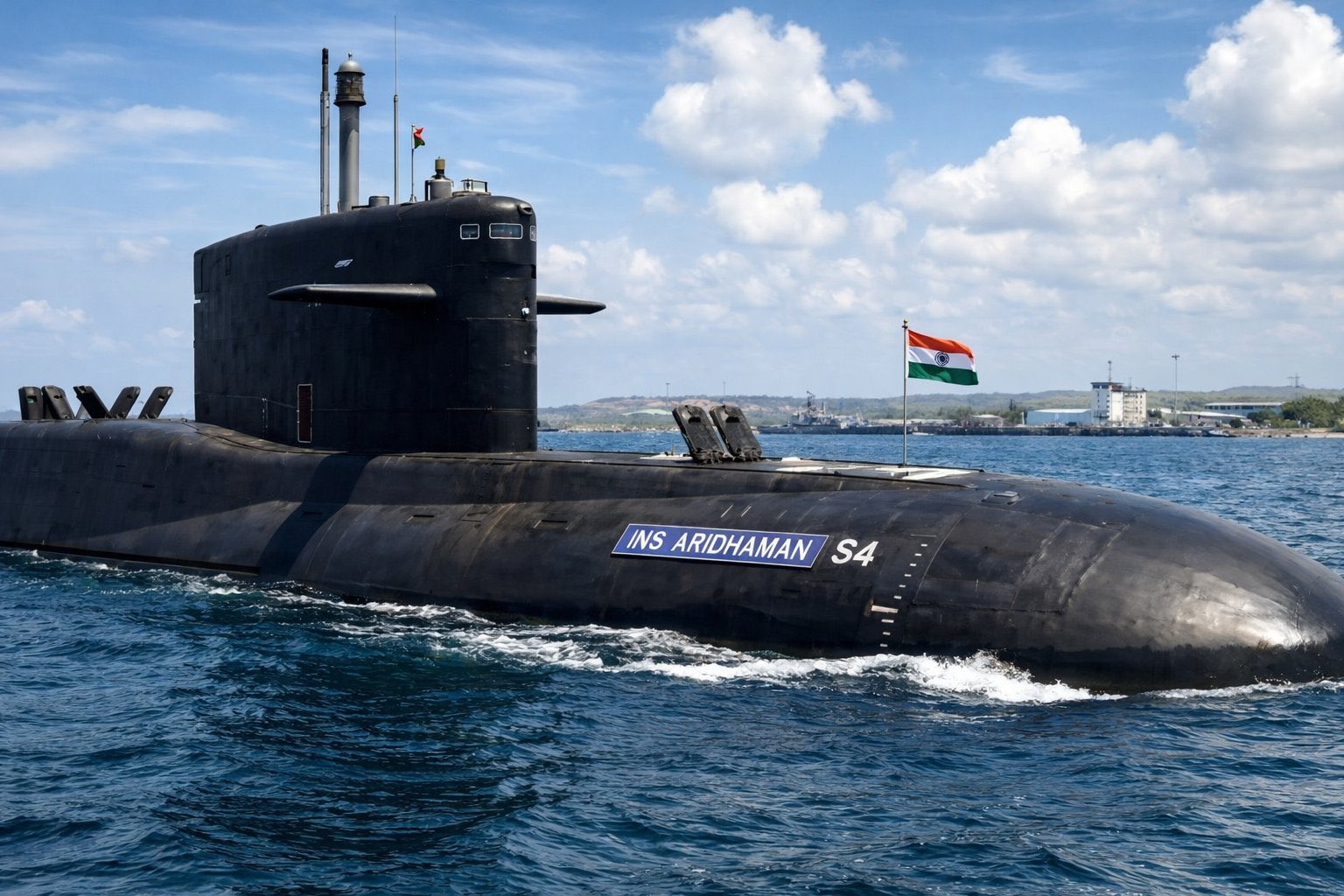
    The induction of INS Aridhaman, which features several technological enhancements, now gives India the third nuclear ballistic missile submarine to ensure continuous at-sea deterrent.

      Dinakar Peri

  • Article
    What Could a Reciprocal Defense Procurement Agreement Do for U.S.-India Ties?

    India and the United States are close to concluding a Reciprocal Defense Procurement Agreement (RDPA) that will allow firms from the two countries to sell to each other’s defense establishments more easily. While this may not remedy the specific grievances both sides may have regarding larger bilateral issues, an RDPA could restore some momentum, following the trade deal announcement.

      Konark Bhandari

  • Commentary
    India Signs the Pax Silica—A Counter to Pax Sinica?

    On the last day of the India AI Impact Summit, India signed Pax Silica, a U.S.-led declaration seemingly focused on semiconductors. While India’s accession to the same was not entirely unforeseen, becoming a signatory nation this quickly was not on the cards either.

      Konark Bhandari

  • Commentary
    The Impact of U.S. Sanctions and Tariffs on India’s Russian Oil Imports

    This piece examines India’s response to U.S. sanctions and tariffs, specifically assessing the immediate market consequences, such as alterations in import costs, and the broader strategic implications for India’s energy security and foreign policy orientation.

      Vrinda Sahai

Get more news and analysis from
Carnegie India
Carnegie India logo, white
Unit C-4, 5, 6, EdenparkShaheed Jeet Singh MargNew Delhi – 110016, IndiaPhone: 011-40078687
  • Research
  • About
  • Experts
  • Projects
  • Events
  • Contact
  • Careers
  • Privacy
  • For Media
Get more news and analysis from
Carnegie India
© 2026 Carnegie Endowment for International Peace. All rights reserved.